Insights
Industry insights, integration guides, and product updates from the CXTMS team.

Voice-Controlled Warehouse Robots: How Hands-Free Picking Is Solving Cold Storage's Hardest Automation Problem
Vecna Robotics and Lucas Systems launch CaseFlow Voice, the first voice-integrated robot-assisted picking system purpose-built for cold storage warehouses where touchscreens and scanners fail.
 CXTMS InsightsApril 3, 20266 min read
DHL Deploys SVT Robotics SOFTBOT Platform: How Plug-and-Play Middleware Is Deploying Warehouse Robots 12x Faster
DHL Supply Chain's deployment of SVT Robotics' SOFTBOT platform cuts warehouse robot integration from weeks to hours. Learn how plug-and-play middleware is solving the multi-vendor robotics bottleneck.
CXTMS InsightsApril 2, 2026 · 5 min read
EPG AURA Launches at IntraLogisteX: Why AI-Native Supply Chain Execution Environments Are Replacing Traditional WMS Architectures
EPG AURA's launch at IntraLogisteX 2026 signals a fundamental shift from bolt-on AI analytics to AI-native supply chain execution environments. Here's what the architectural evolution means for warehouse operations and why traditional WMS platforms face a reckoning.
CXTMS InsightsApril 2, 2026 · 6 min read
Europe's Climate-Neutral Rail Freight Push: How Electric Traction and Green Corridors Are Creating a Decarbonized Cargo Network
Europe is accelerating its rail freight decarbonization agenda with battery-electric locomotives, climate-neutral transport corridors, and coordinated policy reform. Here's what global shippers need to know.
CXTMS InsightsApril 2, 2026 · 7 min read
Gartner's 2026 Source-to-Pay Magic Quadrant: How Agentic AI Is Redefining the End-to-End Procurement Lifecycle
Gartner's 2026 Magic Quadrant for Source-to-Pay Suites names Oracle and Ivalua as Leaders. Learn how agentic AI is transforming procurement from task automation to autonomous process orchestration.
CXTMS InsightsApril 2, 2026 · 7 min read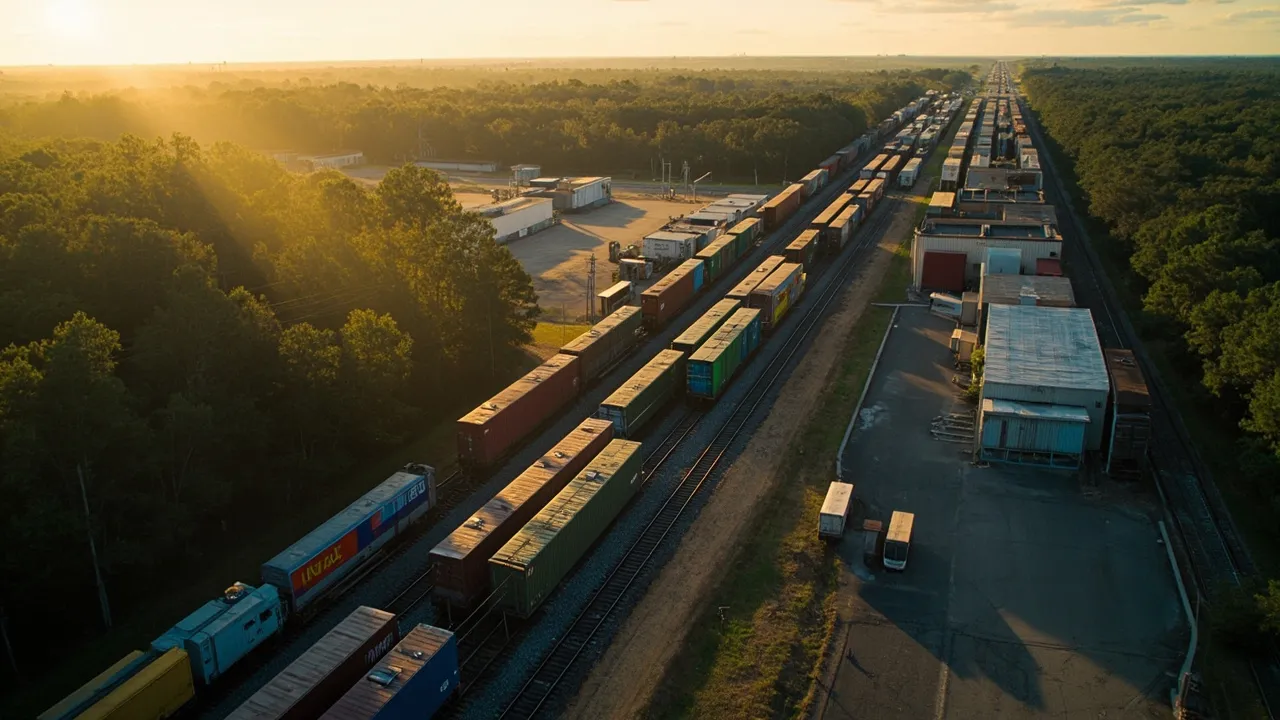
Georgia Ports Opens Gainesville Inland Terminal in May 2026: How the Inland Port Model Is Reshaping Southeast Freight Networks
Georgia Ports Authority's $134M Gainesville Inland Port opens May 4, 2026, with 200,000-container capacity and Norfolk Southern rail service. Here's how the inland port model is cutting drayage costs and reshaping Southeast freight strategy.
CXTMS InsightsApril 2, 2026 · 7 min read
The Heavy-Duty Truck Repair Technician Crisis: Why 54% of Shops Are Understaffed Despite 68% Revenue Growth
Fullbay's 2026 State of Heavy-Duty Repair report reveals a paradox shaping freight capacity: shops are posting record revenue while 54% can't find enough technicians. Here's what it means for shippers.
CXTMS InsightsApril 2, 2026 · 7 min read
The Hidden Regulatory Cost Layer in Ocean Freight: How ETS, IMO, and Security Surcharges Are Adding 15-20% to Base Container Rates in 2026
EU ETS, IMO carbon regulations, war risk surcharges, and environmental compliance fees are stacking to add 15-20% on top of base ocean freight rates in 2026. Learn how to separate regulatory cost exposure from base rate negotiations.
CXTMS InsightsApril 2, 2026 · 8 min read
Predicting Freight Failure Before Pickup: How Tender Rejection Analytics Are Closing the Last Blind Spot in Transportation Risk Management
Tender rejection analytics and predictive reliability scoring are closing the pre-pickup blind spot in transportation risk management. Learn how machine learning models predict freight failure before it happens.
CXTMS InsightsApril 2, 2026 · 8 min read
The Q2 2026 Multimodal Freight Market Divergence: Why Trucking, Maritime, and Air Cargo Are Moving in Opposite Directions
Trucking capacity is tightening with tender rejections at 14%, ocean freight faces overcapacity with rates down 70% from peak, and air cargo demand surged 11.2% YoY. Here's how shippers can exploit Q2 2026's modal divergence.
CXTMS InsightsApril 2, 2026 · 7 min read