Oracle Is Trucking Natural Gas to Data Centers: Treat Temporary Power as a Fuel-Supply Chain

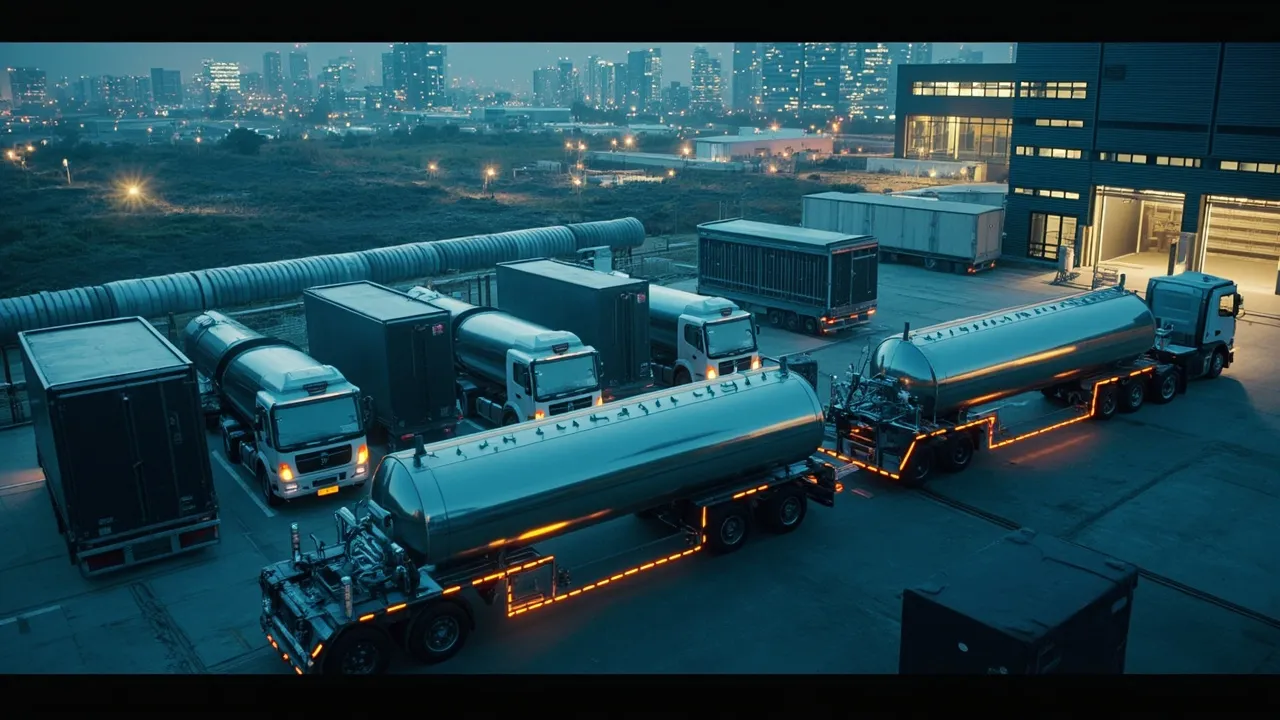
Oracle is turning a utility delay into a transportation operation. By moving compressed natural gas (CNG) to data centers by truck, the company can energize part of a campus before a permanent pipeline is ready. But the workaround also makes computing capacity dependent on trailer availability, highway conditions, unloading equipment, site access, and a precise sequence of deliveries.
That is not simply temporary power. It is a continuous fuel-supply chain, and it needs the same planning discipline as any other mission-critical inbound flow.
A pipeline delay becomes a truck schedule
SupplyChainBrain reports that truck deliveries supported an Oracle data center near Salt Lake City for more than a year while a pipeline was built and connected. Oracle has also used the approach at a Texas campus being built for OpenAI and is considering it for the New Mexico development known as Project Jupiter.
The business case is speed, not cheap energy. According to the report, delivered CNG costs roughly four times the price of gas at a major pipeline hub after labor, specialized equipment, and truck fuel are included. Yet the premium may be rational when delayed electrical capacity would leave billions of dollars of servers and construction investment unable to produce revenue.
The scale makes casual dispatching impossible. An energy analyst cited by SupplyChainBrain estimated that if CNG supplied just 100 megawatts—about 4% of Project Jupiter's planned 2.45-gigawatt footprint—one large trailer would provide only about 40 minutes of electricity. That implies approximately 36 trailer-equivalents per day before allowing for reserve, variable demand, loading delays, or losses. Actual trailer payload, generator efficiency, operating pressure, and burn rate must determine the production plan, but the estimate shows the order of magnitude.
The broader capacity race raises the consequence of missed fuel. Reuters reported that Oracle and OpenAI planned another 4.5 gigawatts of Stargate capacity within an initiative envisioned at up to $500 billion and 10 gigawatts. Even where trucked gas covers only startup loads, the logistics supporting those loads cannot be improvised.
Model fuel as inventory in motion
Start with hourly gas consumption at each operating state: commissioning, partial computing load, peak load, restart, and emergency stabilization. Convert that demand into usable energy per trailer, not nominal trailer capacity. Temperature, pressure, residual gas, decompression performance, and generator efficiency can all reduce what the site can actually consume.
Then work backward from the burn rate. A useful operating model should include:
- loading and compression time at the supply point;
- round-trip transit time by route and time of day;
- gate, inspection, staging, connection, decompression, and release time;
- the number of tractors, qualified drivers, tube trailers, and unloading positions available;
- legal driving-hour and equipment-maintenance constraints; and
- reserve inventory expressed in hours of generation, not only trailer count.
Trailer turns matter more than a simple daily delivery target. If a seven-hour cycle slips to nine hours, the same fleet produces fewer loaded arrivals. The plan should therefore calculate minimum fleet size against a conservative cycle time and identify the point at which a delayed trailer creates an energy shortfall.
Staging space is another hard constraint. A site cannot solve variability by ordering unlimited early arrivals. It needs defined parking positions, traffic separation, safe setback distances, a first-in/first-out sequence, and a maximum dwell time for loaded equipment. Delivery appointments should be matched to unloading capacity so trucks do not queue on public roads or circulate among construction vehicles.
Design resilience around credible disruptions
Temporary fuel plans should be tested against events that affect transportation and consumption simultaneously. Severe cold can increase energy demand while slowing road operations. A highway closure can extend cycle time. A compressor outage at the source can strand an otherwise available fleet. A failed decompression unit can stop several trailers from feeding generators even when fuel is physically on site.
Set reserve policy by recovery time. If the backup supply point takes eight hours to activate and reach the campus, an eight-hour reserve leaves no operating margin. Add time for detection, escalation, dispatch, congestion, inspection, and unloading. Define escalation thresholds in hours remaining—for example, normal, constrained, critical, and load-shed—along with the actions and decision owner at each level.
Do not rely on one aggregate percentage. Track usable gas on site, loaded gas in transit, empty equipment returning, and confirmed supply awaiting pickup. Those states have different levels of certainty. A trailer planned but not loaded should never be counted like connected inventory.
Qualify the carrier and control every handoff
CNG movements require specialized equipment and trained personnel. Procurement should verify operating authority, insurance, driver qualifications, equipment inspection and maintenance records, emergency-response capability, and subcontractor controls. Site teams should approve routes and access windows, confirm that arrival checks match the site's safety plan, and prevent unauthorized substitutions.
Each movement needs a custody record: supply location, trailer and tractor identifiers, driver and carrier, loaded quantity, pressure and temperature where relevant, seal or connection controls, departure time, route, arrival time, inspection result, unloading start and completion, remaining product, and release. Exceptions such as an unexpected stop, route deviation, late arrival, failed inspection, leak alarm, or equipment swap should generate an immediate workflow rather than disappear into a phone call.
Construction and data-center operations must also share a site plan. Fuel trucks compete with cranes, concrete deliveries, server equipment, and contractor traffic. A gate appointment is useful only if the path to the fuel staging area remains clear and the authorized receiving team is ready.
Put burn rate and inbound milestones in one view
CXTMS can connect each fuel movement to its source, carrier, equipment, route, appointment, custody events, and receiving status. Integrating generator burn-rate data or scheduled consumption lets planners compare projected hours of supply with confirmed inbound fuel. The system can flag a trailer that has not loaded, a late departure, an ETA that breaches the reserve threshold, or a site queue that threatens the next turn.
The goal is one constraint view for energy, construction, and computing schedules. Operations should be able to see not just that 12 loads were ordered, but which are usable on site, which are moving, when the reserve crosses a critical threshold, and what response is already underway.
Trucked natural gas can bridge an infrastructure gap. It works only when the temporary solution is managed as permanent-grade logistics: measured consumption, qualified capacity, controlled custody, realistic reserves, and rapid exception handling.
Request a CXTMS demo to see how inbound fuel milestones, trailer turns, site appointments, and supply exceptions can be managed in one operational workflow.