Michael Kors Turns to Air Freight After Port Delays: Put Expediting Behind a Margin Gate

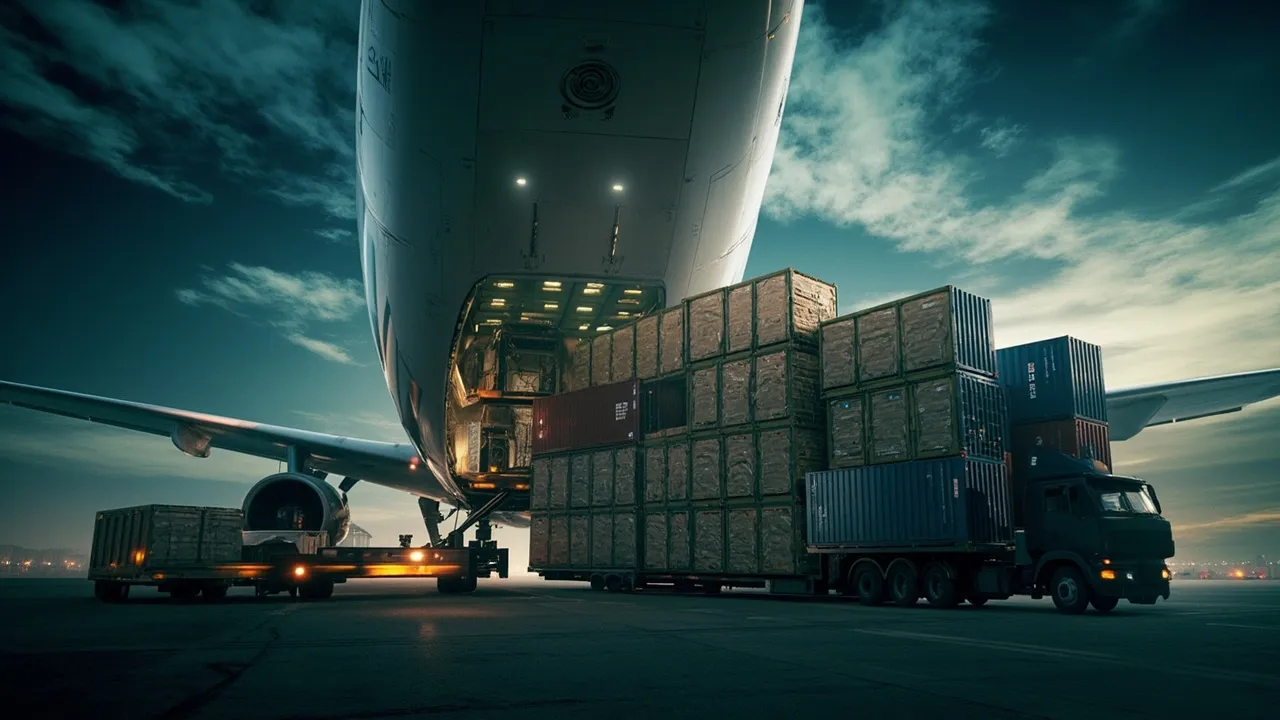
When port congestion delays a fashion launch, the fastest transportation option is tempting—but speed alone does not make an expedite profitable. Premium freight should recover more margin than it consumes. That requires a decision at the SKU and purchase-order level, not a blanket instruction to “move everything by air.”
Capri Holdings is confronting exactly this problem at Michael Kors. Supply Chain Dive reported that congestion at certain Asian ports lengthened transit times during the company’s first quarter. Management responded by selectively using air freight, working with forwarders, and placing goods on faster vessels.
The situation offers a useful operating lesson for every importer: put each expedite behind a margin gate that compares the value at risk with the full cost of intervention.
Inventory Delay Is a Revenue Problem, Not Just a Transit Problem
Capri’s quarter ended June 27 with inventory down 20% year over year to $624 million, while Michael Kors inventory declined 25%. The company also reduced its financial outlook by $50 million because inventory levels were lower than anticipated. Those figures show why doing nothing can be expensive. A delayed high-demand handbag is not simply late freight; it can become a missed full-price sale, an incomplete assortment, or a unit that arrives only in time for clearance.
Yet the remedy has its own cost. Air transport can compress weeks of ocean transit into days, but the premium may overwhelm the contribution from bulky, low-margin, or slow-moving products. Faster ocean service or a priority load may preserve enough selling time at a smaller premium. Some orders may produce the best result by remaining on their current routing.
The decision therefore needs four comparable scenarios:
- Keep the shipment on its planned service.
- Upgrade to a faster vessel or priority ocean product.
- Split the shipment and fly only the inventory needed to protect availability.
- Convert the entire eligible quantity to air freight.
The objective is not the earliest possible arrival. It is the highest expected recovered margin after transportation, handling, and commercial risk.
Build the Expedite Margin Gate
A useful gate starts with expected value. For each SKU and destination, calculate:
Recovered value = protected full-price sales + avoided markdowns + avoided stockout effects − incremental freight and handling cost.
Approve an expedite only when recovered value clears a defined hurdle and the underlying data is credible. The hurdle should be higher when demand is uncertain or arrival timing remains volatile.
Four inputs deserve particular attention:
- Unit margin: Use net contribution after duties, commissions, fulfillment, returns, and the proposed premium freight—not retail price.
- Launch or selling-window date: Seasonal merchandise loses value quickly. Record the latest useful receipt date, not merely the requested delivery date.
- Inventory cover: Compare available and inbound stock with forecast demand by location. A network-level shortage can hide excess inventory in the wrong market.
- Remaining transit time: Use the shipment’s current milestone and realistic port, customs, and inland lead times. Do not charge the expedite case with delay that has already occurred and cannot be recovered.
For example, suppose 1,000 units have a $90 contribution before premium freight. Arriving by air is expected to protect 500 full-price sales that would otherwise suffer a $35 markdown, creating $17,500 in avoided markdowns. If the incremental air and handling bill is $12,000, the direct expected benefit is $5,500 before uncertainty. If demand confidence is only 70%, the adjusted benefit may no longer clear the company’s hurdle. Flying a smaller quantity could be the better decision.
Ocean Conditions Make the Baseline Dynamic
The comparison cannot rely on last quarter’s freight assumptions. A separate Supply Chain Dive market update placed Asia–U.S. East Coast spot rates at $9,144 per FEU on Aug. 11, up 1% week over week. Asia–U.S. West Coast rates reached $6,826 per FEU, up 11% in one week.
The same report projected U.S. imports of 2.22 million TEUs in August, following an estimated 2.21 million in July. Sustained volume can keep vessel space and port operations tight, so the “do nothing” ETA must reflect current congestion rather than a standard lead-time table. At the same time, a high ocean baseline does not automatically justify air: teams must compare incremental costs from the shipment’s present state.
That makes a transportation management system valuable as a decision record. It can connect booking status, milestones, alternative quotes, inventory needs, and commercial deadlines before approval.
Use an Approval Workflow That Learns
An expedite request should identify the SKU, quantity, purchase order, origin, destination, current ETA, required date, inventory cover, expected demand, unit contribution, alternative modes, and incremental cost. Finance or commercial leadership should approve requests above a value threshold; transportation should validate capacity and achievable arrival dates.
Each decision also needs a reason code, such as launch protection, stockout avoidance, markdown avoidance, customer commitment, or production recovery. That prevents vague “urgent” labels from becoming permanent policy.
Most importantly, close the loop after arrival. Record actual freight cost, delivery date, sell-through, markdown rate, and margin recovered. Compare those outcomes with the approval forecast. Over time, planners can see which products, lanes, and reason codes consistently create value—and which expedites merely move the same problem faster.
Make Air Freight the Exception With Evidence
Capri expects its inventory position to normalize through the second quarter and the back half of the year. That temporary framing matters. Emergency air freight can bridge a disruption, but without governance it can become an expensive habit hidden inside routine transportation spend.
A margin gate turns expediting into a controlled commercial choice. It directs scarce air capacity to the SKUs whose selling windows and economics truly justify it, while sending other goods to faster ocean services or leaving them on plan.
CXTMS brings shipment milestones, costs, exceptions, and approval history into one transportation workflow. Request a CXTMS demo to build a measurable expedite process that protects margin instead of merely buying speed.