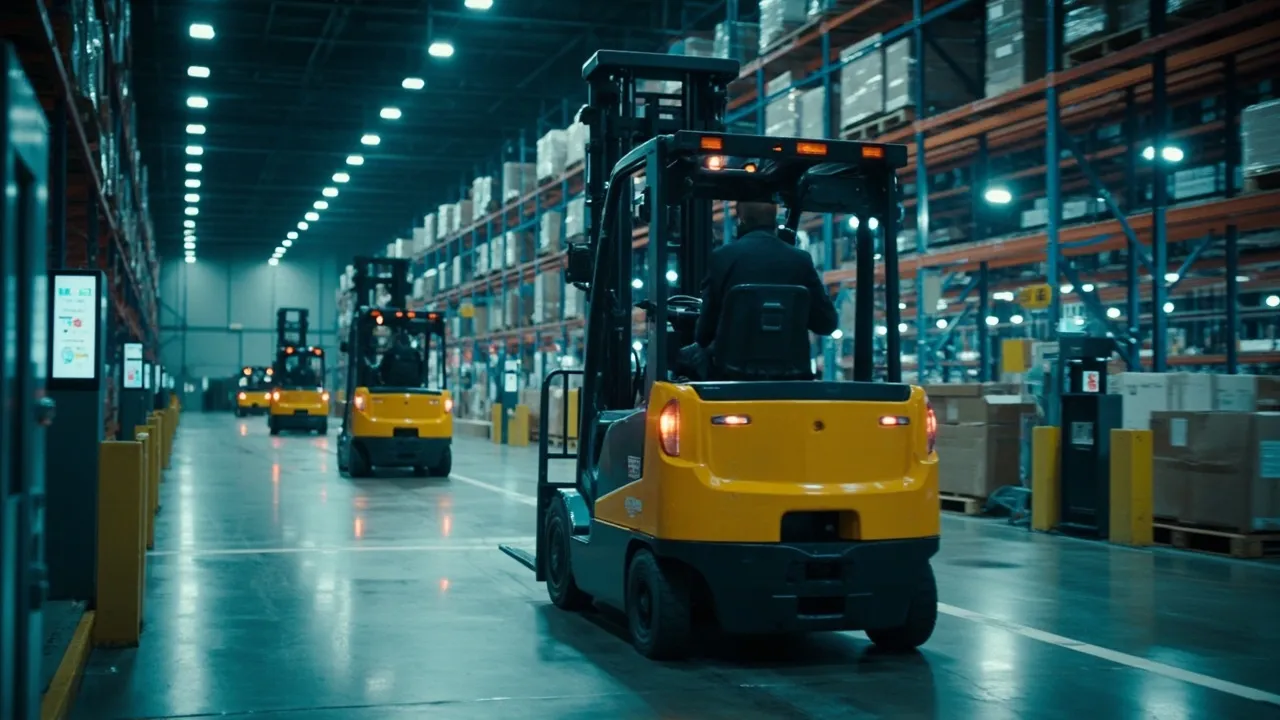
A $255.8B Material-Handling Market Needs an Automation Capacity Registry

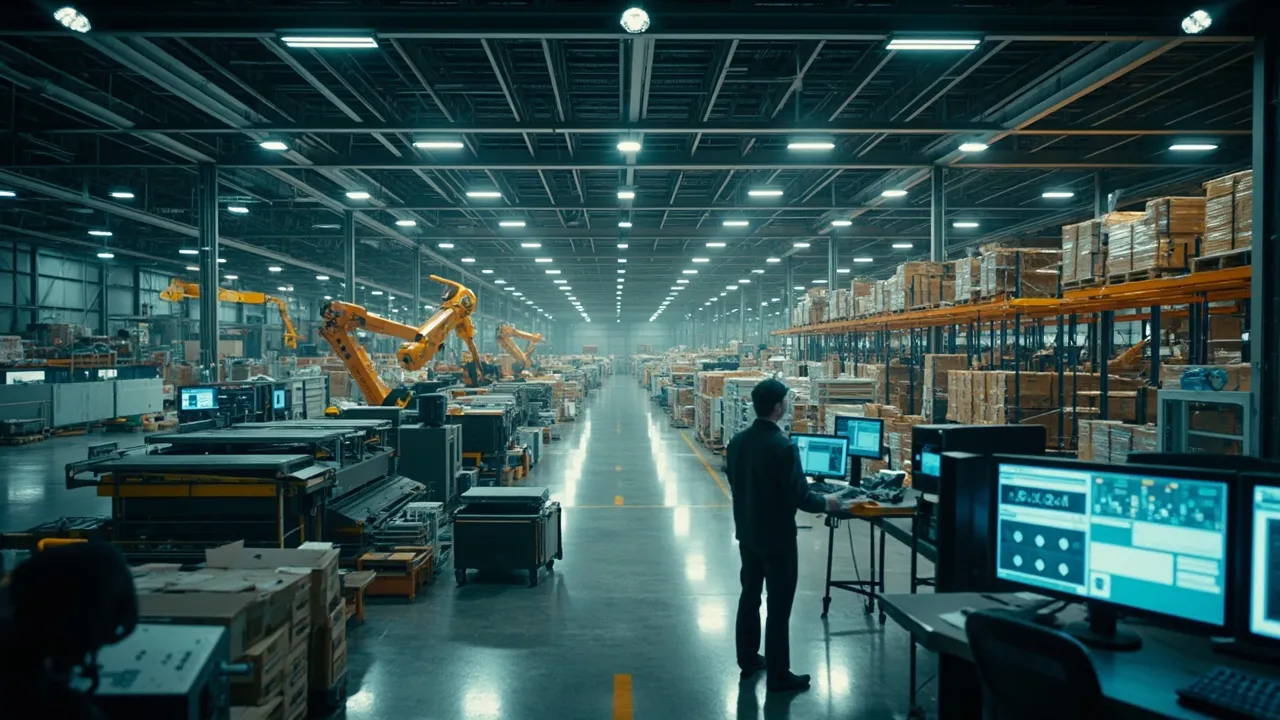
Warehouse automation is entering another investment cycle, but equipment spending alone does not create usable capacity. A distribution center can add robots, conveyors, sorters, or storage systems and still miss its service targets because the new equipment feeds an existing bottleneck, depends on incompatible software, or lacks a workable recovery mode.
The scale of the market makes that governance problem urgent. Modern Materials Handling reports that the global material-handling equipment market reached $255.80 billion in 2025 and is projected to reach $414.16 billion by 2034, representing a 5.5% compound annual growth rate from 2026 through 2034. That projection implies more equipment, more control layers, and more dependencies inside warehouses.
Operators need an automation capacity registry: a controlled inventory of every material-handling asset, the work it can perform, its demonstrated throughput, its constraints, and the fallback process available when it fails.
Count Executable Capacity, Not Nameplate Capacity
An equipment list answers “what do we own?” A capacity registry answers “what can this building reliably process during the next operating window?” Those are very different questions.
A sorter rated for 12,000 units per hour does not provide 12,000 units of practical capacity if induction can only feed 8,000, downstream packing can absorb 7,000, or the product mix regularly forces recirculation. Likewise, 100 autonomous mobile robots are not 100 units of capacity when some are charging, awaiting maintenance, excluded from particular zones, or unable to handle the required load profile.
For each conveyor, sorter, AS/RS aisle, shuttle, crane, robot fleet, palletizer, print-and-apply station, and control layer, record:
- manufacturer, model, serial number, location, and commissioning date;
- supported load dimensions, weights, packaging, and handling restrictions;
- design rate, tested peak rate, and sustainable operating rate;
- upstream and downstream dependencies;
- control software, version, interfaces, and support status;
- scheduled availability, current condition, and maintenance windows;
- manual or alternate routing mode and the capacity available during recovery.
The sustainable rate should be based on observed performance over a defined interval, not a sales specification. It should also be segmented by product and order profile. A system's rate for uniform cartons may say little about its performance with fragile items, irregular packaging, mixed pallets, or high-priority single-line orders.
Map Compatibility as a Capacity Constraint
Equipment is only useful when orders, inventory, labor, and controls can reach it. The registry should therefore capture compatibility across the WMS, warehouse control system, warehouse execution system, robot orchestration layer, programmable logic controllers, and transportation workflows.
For every asset or automation cell, document which message formats, item masters, location rules, routing logic, and release methods it supports. Note any vendor-specific interface, unsupported software version, expiring service agreement, or integration that depends on a single specialist. A machine can be mechanically healthy and still be unavailable to the operation because its controller cannot accept the current work queue.
This reflects a wider shift toward connected operations. MHI's annual industry report program frames supply-chain improvement as an end-to-end digital ecosystem, while SupplyChainBrain describes modern warehouses as environments that use real-time data to improve decisions and responsiveness. The practical lesson is simple: physical and digital capacity must be governed together.
Measure Utilization Without Rewarding Congestion
High utilization is not automatically good. Running a critical sorter near its limit for an entire shift may look efficient while eliminating the buffer needed to absorb a late inbound wave or urgent customer order.
Track utilized capacity against sustainable capacity by 15-minute or hourly interval. Pair that measure with queue depth, dwell time, recirculation, fault minutes, blocked time, starvation time, and downstream work-in-process. These measures distinguish a genuinely productive asset from one that is busy because work cannot flow away from it.
Set operating bands rather than one universal target. A noncritical process may tolerate sustained high utilization. A single-point-of-failure asset should retain a deliberate capacity cushion. The registry should show both the nominal spare capacity and the recoverable spare capacity after product compatibility, staffing, routing, and changeover time are considered.
Make Recovery Modes Part of the Design
Every automated process needs a documented degraded mode. Record the trigger for switching modes, who authorizes it, the physical route, labor required, safety controls, restart sequence, and expected throughput.
For example, if a sorter stops, can cartons bypass it to a manual lane? How many people are trained to operate that lane? Where will completed orders be staged? Can the WMS preserve shipment identity and carrier service while labels are applied manually? How long can the fallback sustain volume before floor space becomes the next constraint?
Test these scenarios instead of treating them as documentation exercises. A quarterly recovery drill can reveal locked gates, missing scanners, outdated work instructions, or interfaces that fail when automation is bypassed. Store the measured recovery rate and restoration time in the registry so planners can model disruption with evidence.
Use the Registry to Rank Investments
Capital planning should start with the end-to-end flow. Link forecast demand and service windows to each required process, then compare the load with sustainable and recovery capacity. The best investment is the one that removes the binding constraint or reduces a material resilience risk—not necessarily the machine with the largest advertised throughput gain.
Use a common investment score that includes:
- projected constraint relief at peak and average volume;
- service-level effect, including order cutoff and dispatch performance;
- integration work and compatibility risk;
- labor, maintenance, energy, and support requirements;
- redundancy created or single-point-of-failure risk removed;
- usable capacity gained after upstream and downstream limits;
- cost per unit of sustainable capacity.
This prevents redundant purchases. Adding picking robots may create no benefit when packing stations already constrain output. Expanding AS/RS storage may worsen retrieval queues if lifts are saturated. A registry makes those interactions visible before a purchase order is signed.
Connect Warehouse Capacity to Transportation Execution
Warehouse capacity decisions ultimately affect dock appointments, carrier cutoffs, trailer dwell, and customer delivery. Link the registry's operating rates and outage status to wave planning and transportation milestones. If a critical cell loses capacity, teams should immediately see which orders, dock doors, routes, and carrier pickups are at risk.
CXTMS can provide the transportation side of that control loop by connecting shipment priorities, appointments, carrier commitments, and exceptions to warehouse release performance. The result is a shared operational picture: not simply whether equipment is running, but whether the network can still execute the customer promise.
As the material-handling market grows toward $414.16 billion, warehouses will accumulate more automation choices and more hidden dependencies. An automation capacity registry turns that complexity into a governed operating model—one that directs investment toward real bottlenecks, preserves recovery options, and measures capacity in terms the customer actually experiences.
Ready to connect warehouse constraints with shipment execution? Request a CXTMS demo to see how capacity signals, appointments, and freight exceptions can work in one operational view.