Maersk Raises Its Outlook Again: Turn Port Congestion Into a Lane-Level Cost Trigger

Maersk's latest earnings revision is more than a carrier story. It is a warning to shippers that congestion can keep total transportation costs elevated even when demand conditions look uneven.
Reuters reported that Maersk raised its 2026 profit guidance for the third time as port congestion and demand linked to artificial intelligence infrastructure supported container freight rates. The carrier now expects underlying earnings before interest, taxes, depreciation, and amortization of $14 billion to $14.5 billion, up from its previous $10.5 billion to $12.5 billion range. That is a $3.5 billion increase at the bottom of the range and a $2 billion increase at the top.
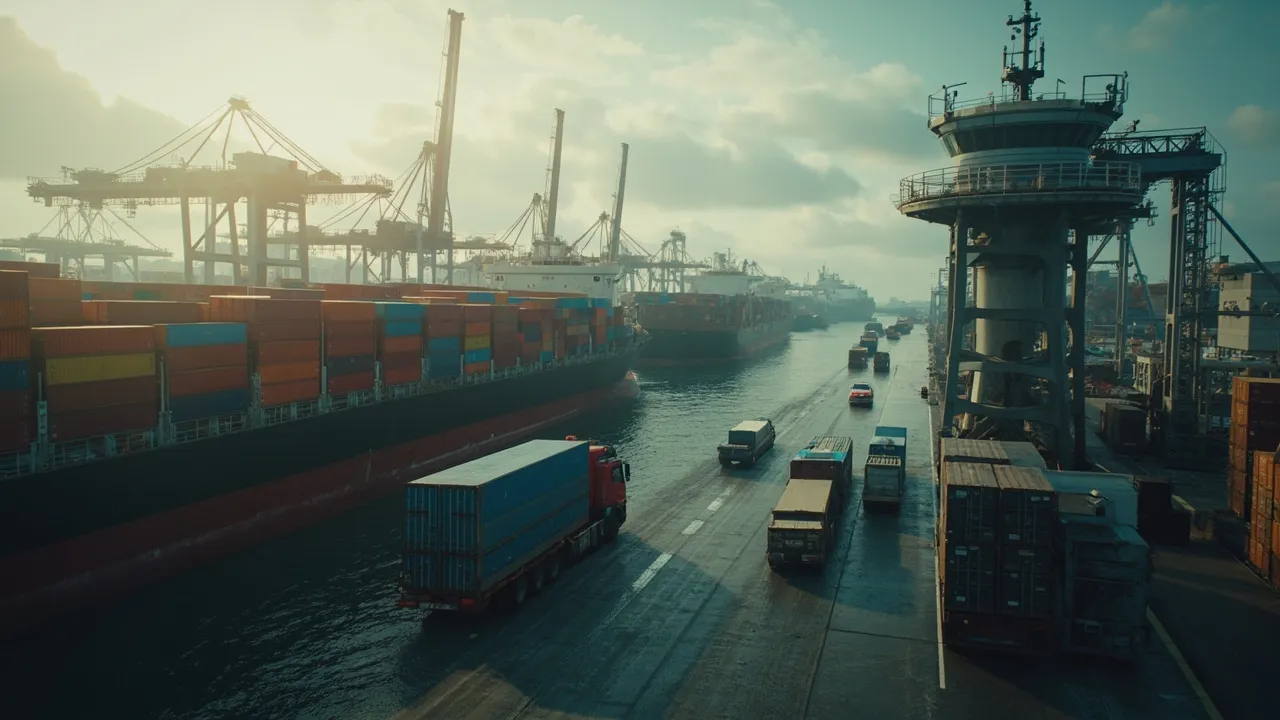
The operational signal is equally important. Congestion does not have to shut a port to become expensive. It removes effective capacity, disrupts vessel schedules, extends container cycles, and pushes costs into terminals, inland transportation, and inventory. A shipper that watches only the ocean base rate will see the problem too late.
The better approach is to create a lane-level cost trigger: a dated rule that combines all congestion-related costs and initiates a routing, port, mode, or inventory decision when exposure crosses an approved threshold.
Start with the full congestion bill
A base rate is only the first line of the landed-cost calculation. Every monitored lane should separate at least five cost categories:
- Ocean base rate: the contracted or spot price for port-to-port transportation.
- Congestion surcharge: a carrier or terminal charge applied when disruption raises operating costs.
- Dwell cost: storage, chassis, labor, appointment, and drayage expense created while cargo waits.
- Demurrage and detention: charges for containers that remain at the terminal or outside it beyond free time.
- Inventory carrying cost: capital, insurance, obsolescence, and service risk accumulated during extra transit days.
This separation prevents false savings. A port option that reduces the line-haul rate by $150 per container is not cheaper if it adds two days of dwell, a missed delivery appointment, and $400 in demurrage exposure. Conversely, one bad week should not automatically force an expensive permanent reroute.
Recent operating reports illustrate why local measurement matters. SupplyChainBrain noted that an extended import peak was easing while transportation networks still faced localized capacity constraints, elevated operating costs, and weather disruption. In a separate report, the publication cited more than 13,000 containers with rail dwell longer than nine days at two ports. The global market can soften while a specific gateway remains operationally costly.
Build a lane-level threshold
For each origin-destination pair, calculate a congestion exposure value per container:
Congestion exposure = surcharge + expected dwell expense + expected demurrage and detention + incremental inland cost + inventory cost of delay.
Expected cost should reflect probability, not only the worst case. If there is a 30% chance of incurring $1,000 in demurrage, the expected exposure is $300. Inventory cost should include both ordinary carrying cost and the business consequence of missing a production, installation, or customer-delivery milestone.
Set three thresholds rather than one. A watch threshold prompts a daily review and validates terminal data. An intervention threshold requires quotes for alternate ports, services, or modes. A change threshold authorizes execution when the avoided exposure exceeds the switching cost by an agreed margin.
For example, suppose a lane's normal congestion exposure is $180 per container. The team could set watch at $350, intervention at $600, and change at $900. If an alternate gateway costs $500 more but reduces expected congestion exposure from $1,100 to $250, the $850 avoided risk justifies the $500 switch. Those figures must be calibrated to the shipper's cargo value, service promise, and tolerance for disruption—not copied across the network.
Define the action before the threshold fires
A trigger without a preapproved response merely creates another alert. Each lane should have a short decision ladder:
- Confirm that the delay is persistent rather than a single-vessel event.
- Protect free time by aligning customs clearance, appointments, chassis, and drayage capacity.
- Shift between available services or terminals at the same gateway.
- Route through an alternate port when inland cost and transit reliability support it.
- Change mode only for cargo whose delay consequence exceeds the air, rail, or expedited trucking premium.
The ladder should also name an owner and an approval deadline. Procurement can validate rates and surcharges; operations can confirm dwell and appointment constraints; finance can establish inventory carrying cost; customer teams can quantify service penalties. CXTMS can bring these inputs together at the shipment and lane level instead of leaving them in separate spreadsheets and email threads.
Put an expiration date on every exception
Temporary congestion responses have a habit of becoming expensive habits. Every reroute, premium service, or extra inventory buffer should record the data used, approval history, effective date, and review date.
Use rolling averages rather than daily noise. A trigger might require the seven-day expected cost to remain above the change threshold for three consecutive business days. A reversal rule might require two weeks below the intervention threshold before freight returns to the original gateway. This creates stability without locking the network into yesterday's disruption.
Assumptions also need dates. Free-time terms change. Surcharges expire. Drayage quotes age. Customer priorities shift. If the source data is older than the lane's review interval, the system should flag the decision for refresh rather than quietly reuse it.
Turn carrier guidance into shipper control
Maersk's higher outlook indicates that capacity friction and elevated rates can persist even in a mixed market. Shippers cannot control port queues, but they can control when congestion becomes a financial decision.
The practical goal is not to avoid every delay. It is to identify the point at which waiting costs more than changing the plan, make that point visible by lane, and preserve the evidence needed to reverse the response later.
Ready to manage ocean costs with lane-level visibility and governed exception workflows? Request a CXTMS demo and see how your team can turn congestion signals into timely transportation decisions.