The World's Longest Freight Train Test: When Train Length Stops Improving Throughput

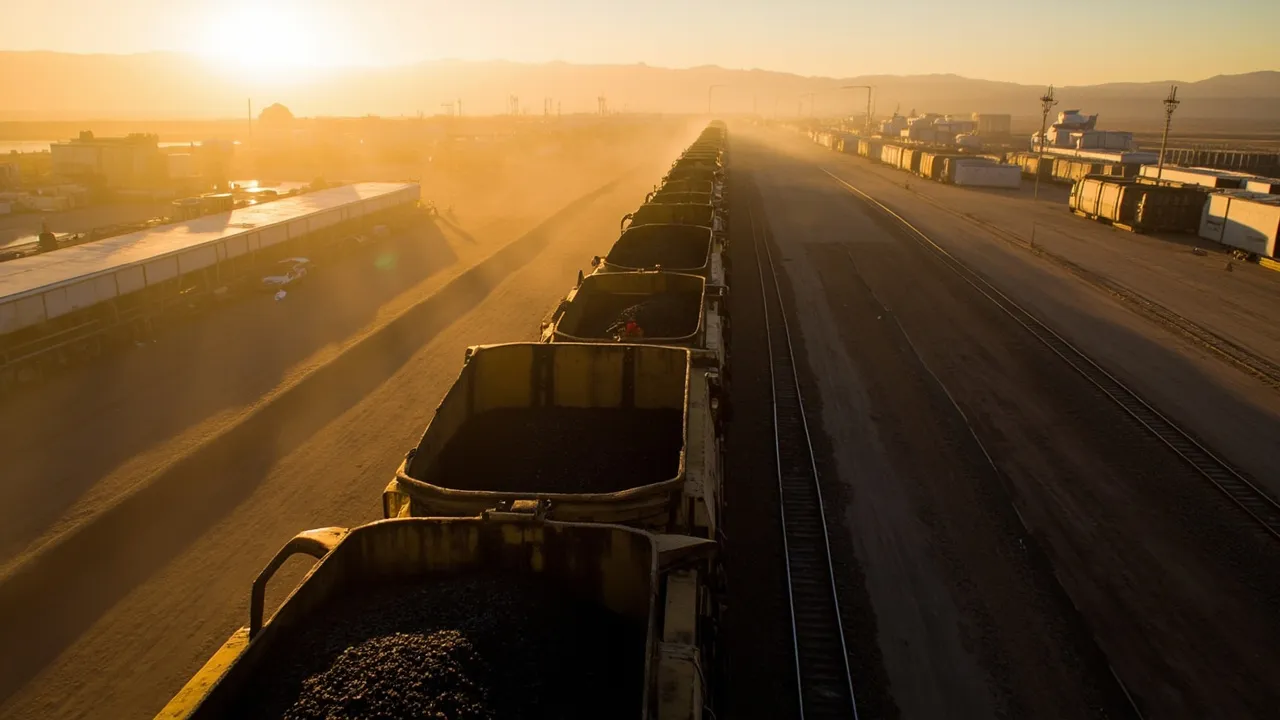
A record-breaking freight train makes a striking photograph. It does not automatically make a more productive railway.
South African rail operator Transnet recently tested a train measuring 4.7 miles and comprising 696 wagons. According to SupplyChainBrain, it completed a 534-mile journey between the Sishen mining area and the export port at Saldanha Bay. The trial was presented as a world record, but its more useful interpretation is as a full-corridor capacity experiment.
Longer trains can move more tons with fewer train starts, crews, and locomotive sets. Yet those line-haul gains matter only if sidings, yards, inspection teams, dumpers, stockpiles, and vessels can absorb each larger arrival. Once a train overwhelms any of those interfaces, the railway merely shifts congestion downstream.
Train length improves one part of the equation
The basic economic case is compelling. Combining wagons into fewer departures can reduce crew starts per ton, improve locomotive utilization, and consume fewer timetable slots. On a dedicated heavy-haul corridor, those savings may be substantial because the traffic is uniform and origin-to-destination handling is relatively controlled.
The Transnet test illustrates the scale. Its 696 wagons were roughly three times the 232-wagon consists commonly associated with the Sishen-Saldanha iron ore corridor. The train's 4.7-mile length also far exceeds typical North American operations. FreightWaves reported that the average Class I train in 2021 was 5,400 feet; 10% exceeded 9,800 feet, and fewer than 1% exceeded 14,000 feet.
But tons per train is only the numerator. Corridor throughput depends on how quickly the entire asset set completes a cycle. If doubling train size causes assembly, inspection, meet delays, unloading, or empty-car return time to more than double, the apparent productivity gain disappears.
Infrastructure creates hard length limits
Every passing siding shorter than the train becomes an operating restriction. Dispatchers may need to hold opposing traffic farther away, create longer windows, or route the record-length consist only under special conditions. A single delay can then propagate across more trains because the oversized movement cannot clear the main line at ordinary locations.
Braking and train handling also become more demanding. Brake-pipe signals take longer to propagate through an exceptionally long consist. In-train forces rise as grades, curves, locomotive placement, wagon loads, and coupler slack interact. Distributed power can manage those forces, but it adds requirements for compatible locomotives, communications, testing, and crew competence.
Length also affects roads and communities. A stopped train can occupy grade crossings longer and may block several crossings simultaneously. Emergency access and recovery plans therefore belong in the capacity case, even when the route is primarily industrial.
These constraints explain why a successful test run is evidence of technical feasibility, not proof of repeatable commercial performance. The relevant question is whether the same movement can operate through routine disruptions without degrading the rest of the network.
The terminal can erase line-haul savings
Bulk terminals operate to a cadence: receive the train, inspect it, position wagon groups, unload them through a dumper or tippler, move material by conveyor, manage stockpiles, and load vessels. A 696-wagon arrival creates a much larger work packet than a normal train.
If receiving tracks cannot hold the consist, crews must split it. That introduces extra moves, switch-engine time, handoffs, inspections, and safety checks. If the dumper processes wagons at a fixed rate, unloading time rises almost directly with wagon count. If conveyors or stockpile areas are constrained, the train may wait even though the main line delivered it efficiently.
This distinction matters because dwell can be hidden. A railway may report lower terminal dwell after holding trains just outside terminal limits, or improve train velocity while customer facilities accumulate queues. A corridor review should measure arrival-to-release time across the physical boundary, including approach queues and staged sections—not only time recorded inside the yard.
The destination's vessel schedule matters too. Large, less frequent train arrivals can create inventory peaks followed by gaps. Unless rail arrivals, stockpile capacity, and ship-loading windows are synchronized, a terminal may hold more inventory while vessels still wait for the required grade or blend.
Use a corridor scorecard, not a record book
Operators and shippers evaluating longer trains should compare a controlled pilot with the existing operating plan. At minimum, the scorecard needs four dimensions:
- Tons moved: net tons per train, tons per crew start, locomotive-hours per thousand tons, and weekly corridor tonnage.
- Cycle time: origin assembly, inspection, line-haul, destination queue, unloading, empty release, and return time.
- Reliability: arrival variance, recrews, unplanned stops, train separations, crossing-blockage minutes, and recovery time after disruption.
- Terminal utilization: receiving-track occupancy, dumper throughput, stockpile utilization, vessel delay, and queue length outside terminal limits.
Safety should be a gating condition, not a weighted benefit. A larger train should not advance merely because lower crew cost offsets more braking events, infrastructure failures, or blocked crossings.
The scorecard must also distinguish averages from tails. A five-minute improvement in average transit offers little value if the 95th-percentile cycle expands by hours. Because each very long train carries so much volume, one failure can remove a large share of the corridor's daily output.
Set promotion thresholds before the test
A pilot is most useful when decision rules are agreed in advance. Define a maximum end-to-end cycle time, minimum weekly tonnage, terminal queue ceiling, reliability target, and safety stop conditions. Run enough trips to cover normal demand, maintenance windows, weather, and competing traffic. Then compare performance per ton—not simply per train.
Scenario tests should include a failed locomotive, unavailable siding, dumper outage, delayed vessel, and crew-hours limit. If the operating plan works only when every asset is available, it is a demonstration rather than a resilient service design.
Train length remains a valuable lever. Transnet's test shows what coordinated locomotives, wagons, track, and teams can accomplish across an 861-kilometer heavy-haul route—a distance also documented by Reuters. The operational win, however, will come from repeatable tons delivered through the terminal per week, not from the number of wagons coupled together once.
Ready to evaluate rail options with complete lane, milestone, cost, and exception data? Request a CXTMS demo and build transportation decisions around end-to-end throughput.