Logistics Automation Is a $90.72B Market—Budget for Integration, Not Just Machines

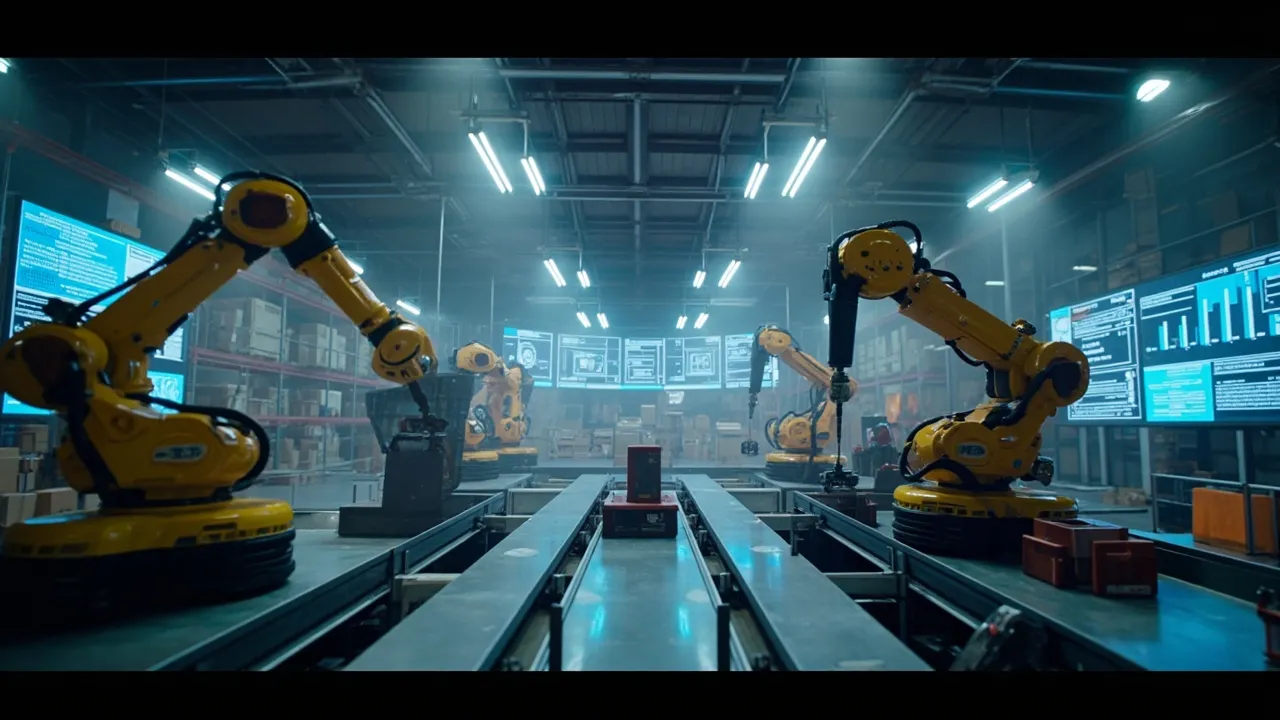
Logistics automation has moved from isolated conveyor projects to a broad investment category spanning autonomous mobile robots, automated storage and retrieval, sortation, robotic picking, vision systems, and orchestration software. Mordor Intelligence estimates the market at $90.72 billion in 2026 and forecasts it will reach $132.74 billion by 2031, a compound annual growth rate of 7.91%.
That growth will put more options in front of warehouse and logistics leaders. It will also make one budgeting mistake more expensive: treating the equipment quote as the project cost. Hardware may be the most visible line item, but integration, commissioning, testing, training, maintenance, and disruption determine whether the investment actually delivers its promised throughput.
The right business case measures the cost of creating a dependable operating system, not merely the cost of buying machines.
Market Growth Does Not Guarantee Project ROI
The logistics automation market forecast reflects strong demand for faster fulfillment, greater accuracy, and less dependence on hard-to-fill manual roles. Yet a growing market is not evidence that every deployment will earn an acceptable return.
Modern Materials Handling's 2026 automation study found that 77% of respondents focused on total cost of ownership, ROI, and maintenance costs when evaluating solutions. Another 74% considered parts availability and obsolescence risk, while 68% examined warranty programs. Those priorities show that experienced buyers are looking well beyond purchase price.
Earlier MMH survey results reinforce the operational reason: 93% of respondents rated durability, reliability, and uptime as very important, and 83% emphasized support and service response time. A fast machine that cannot exchange clean data, recover from faults, or receive timely support can reduce the performance of the entire facility.
Build the Budget Around the Full Lifecycle
A credible automation budget should separate at least seven cost categories.
Equipment and controls include robots, conveyors, storage equipment, scanners, programmable logic controllers, safety devices, charging infrastructure, and local control software.
Software and systems integration cover interfaces with the warehouse management system, transportation management system, order platform, labor tools, and reporting stack. This work includes data mapping, middleware, event design, authentication, monitoring, and error handling—not just an API license.
Site preparation may require power upgrades, floor repairs, racking changes, network coverage, fire-code modifications, guarding, or redesigned pick and staging areas.
Commissioning and testing include installation, calibration, acceptance testing, peak-load trials, safety validation, and parallel operation. The plan should reserve time for correcting defects rather than assuming every test passes on its first run.
Training and change management must cover operators, supervisors, maintenance technicians, IT support, and temporary labor. Teams need to know how to recognize degraded performance and recover work, not only how to start the system.
Ongoing support includes preventive maintenance, spare parts, software subscriptions, security updates, vendor support, and eventual component replacement.
Transition risk captures lost output during installation, cutover, stabilization, and unexpected downtime. If the operation needs overflow labor or third-party capacity during that period, include it explicitly.
Model these costs across the expected asset life. A five-year total-cost view is far more useful than a comparison of vendor quotes that exclude different responsibilities.
Define Performance Before Selecting Technology
Automation projects become vague when teams begin with a product category: “We need robots” or “We need automated storage.” Start instead with a measurable operating constraint.
Document the baseline for orders, lines, cartons, pallets, travel distance, labor hours, error rates, backlog, and cutoff performance. Then define the future-state requirement by interval, not only by daily average. A system sized for 20,000 orders per day may still fail if half the demand arrives in a four-hour wave.
At minimum, establish targets for:
- Sustained and peak throughput by process step
- Order-cycle time and carrier-cutoff attainment
- Inventory and pick accuracy
- Equipment availability and mean time to recovery
- Manual interventions per 1,000 transactions
- Labor hours per order, carton, or pallet
- Maximum acceptable backlog after a fault
Include an agreed method for measuring each target in the supplier acceptance criteria. Otherwise, vendors and operators may use different definitions of “throughput” and “uptime” precisely when accountability matters most.
Design Integration Around Events and Exceptions
Automation depends on instructions from business systems and produces events those systems must understand. The interface design should therefore follow the lifecycle of work.
For a customer order, define when the WMS releases a task, how automation acknowledges it, what confirms inventory movement, and how shortages or unreadable labels are reported. For outbound freight, specify how carton completion, pallet closure, staging location, weight, dimensions, and load readiness reach the TMS. These events let transportation planners assign capacity using real operational status rather than assumptions.
Happy-path messages are only half the design. Every interface needs rules for duplicates, missing data, delayed responses, out-of-sequence events, and system outages. Assign ownership for each exception and give operators a queue that shows what failed, why it failed, and which recovery action is safe.
Recovery procedures should answer practical questions: Can work be rerouted to a manual station? How are transactions reconciled after connectivity returns? Who can release a blocked order? Which inventory record is authoritative? Test these scenarios before go-live with real operators at production-like volumes.
Make Downtime an Operating Scenario
Downtime should not appear in a business case only as an annual percentage. Translate it into operational consequences. Estimate orders delayed per hour, labor left idle, premium freight exposure, customer cutoff risk, and time required to clear the accumulated queue.
Then fund the controls that limit the impact: critical spares on site, support response commitments, redundant network components, trained maintenance coverage, documented manual fallbacks, and restart checklists. Track mean time between failures and mean time to recovery after launch. Availability without recovery speed can hide long, damaging interruptions behind an acceptable annual average.
Approve the System, Not the Machine
The strongest automation investment case connects capital spending to measurable flow and reliable recovery. It includes every layer required to turn equipment into an operating capability: facility preparation, software integration, validation, people, service, and fallback capacity.
As the market expands toward $132.74 billion, buying automation will get easier. Integrating it into dependable warehouse and transportation workflows will remain the differentiator. Budget accordingly, define success before vendor selection, and make exception recovery part of the design—not an improvised response after go-live.
Ready to connect warehouse execution events with transportation planning and exception management? Request a CXTMS demo to see how unified logistics workflows can improve shipment visibility, handoffs, and control.