International Paper's Mississippi Plant: Build a Rail-Ready Packaging Capacity Ramp

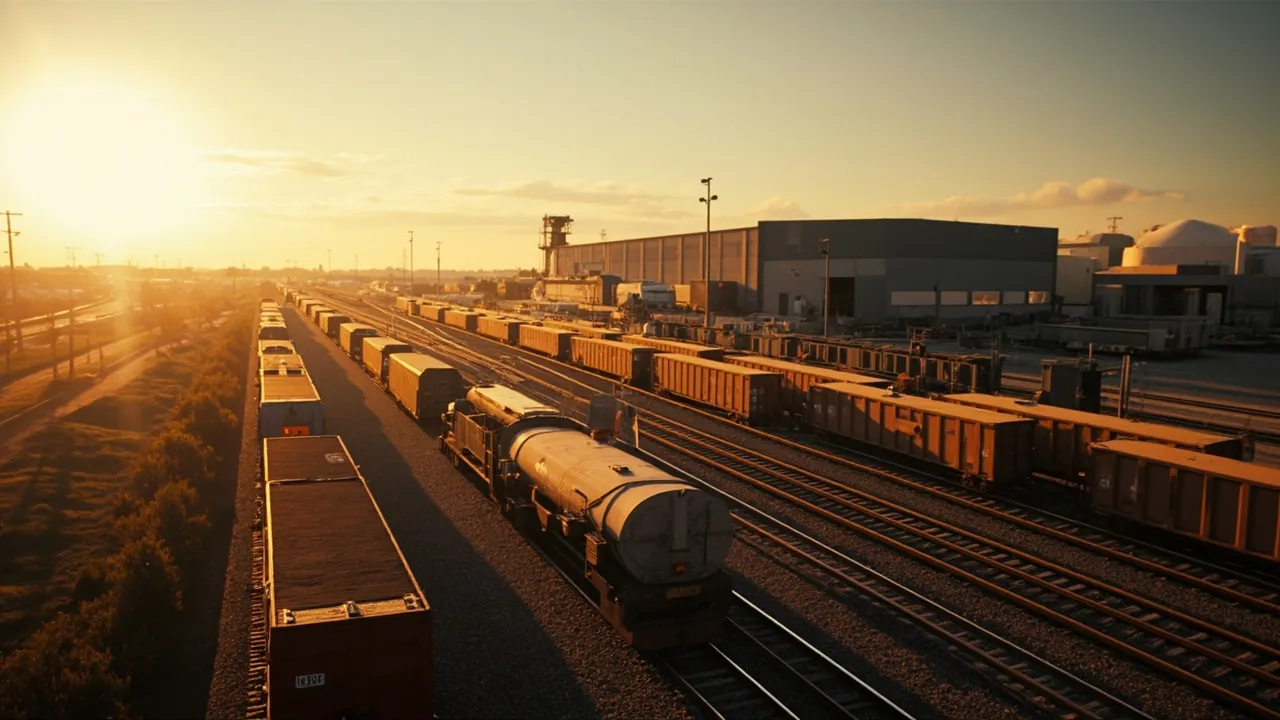
International Paper's planned packaging facility in Rankin County, Mississippi, will begin life with a significant logistics advantage: direct rail access. But steel in the ground does not automatically create a reliable supply chain. The plant must synchronize railcar availability, raw-material flow, production yield, warehouse space and outbound customer service before it can safely release capacity.
The right startup plan is therefore not a single production target. It is a gated capacity ramp built around the weakest connected constraint. If the corrugator is ready but inbound cars are late, finished-goods space is full or customer lanes are unstable, headline output will only move congestion to another part of the network.
Direct rail access changes the operating model
Supply Chain Dive reports that the 468,000-square-foot facility is expected to become operational in the fourth quarter of 2027. Canadian Pacific Kansas City will manage inbound raw materials and outbound distribution, and the site will connect directly to CPKC's single-line network across Canada, the United States and Mexico.
Single-line access can reduce interchange handoffs, handling and variability on eligible lanes. It also makes rail performance part of the plant's production system from day one. Arrival patterns determine how much fiber, containerboard and other material must be buffered. Switching windows affect dock and crew plans. Empty-car placement competes for siding capacity with loaded arrivals and outbound moves.
That dependency should be designed explicitly. Map every physical flow before startup: inbound paper or fiber inputs, chemicals and operating supplies; empty and loaded railcars; finished corrugated packaging; truck transfers; rejected material; and reusable equipment. For each flow, define its origin, mode, lead-time range, storage location, consumption rate, owner and recovery path.
Build a constraint map before setting volume targets
Start with the customer mix and work backward. Translate forecasted orders into finished-product families, production hours, containerboard consumption, railcars and truckloads by week. Do not rely on monthly averages. Packaging demand can shift by customer promotion, agricultural season, product launch or a change in retail inventory policy.
The constraint map should connect five clocks:
- Customer order and delivery windows
- Production campaigns, changeovers and maintenance
- Inbound rail transit, switching and unloading
- Warehouse putaway, staging and dwell
- Outbound carrier appointment and transit schedules
Model both rate and space. A plant may have enough annual rail capacity but too little siding length for a clustered arrival. It may have enough warehouse square footage but too few open staging positions during a product-mix change. Record practical capacity after accounting for safety clearances, inspection, damaged inventory and normal variability—not theoretical maximums.
Release the ramp through measurable gates
A useful ramp has several stages, each with entry criteria and rollback rules. Begin with controlled receipts and trial production, then add products, shifts, customers and lanes separately. That makes failures diagnosable and prevents simultaneous changes from obscuring the cause.
At every gate, measure:
- Railcar order fulfillment, arrival variance and placement time
- Siding and unloading dwell for loaded and empty equipment
- Raw-material days of supply and consumption accuracy
- Production schedule adherence, first-pass yield and scrap
- Warehouse occupancy, dock utilization and finished-goods aging
- Outbound tender acceptance, on-time departure and on-time delivery
Set hard thresholds before volume arrives. For example, the next stage might require several consecutive weeks within the approved arrival-variance band, stable production yield and warehouse occupancy below a defined ceiling. It should also require proof that empties are released promptly; an empty car left in the wrong place consumes physical capacity just as surely as a loaded one.
Use a daily control tower during startup. The view should reconcile orders, inventory, production status, railcar location, switching plans, warehouse constraints and outbound commitments. Exceptions need named owners and resolution deadlines. A dashboard without decision rights merely documents a late response.
Protect the ramp from uneven demand
The facility is entering a packaging market where strategic focus and demand discipline matter. Reuters reported that International Paper planned to separate its European packaging business as it sharpened its North American focus. Reuters later reported a 2026 adjusted-earnings forecast of $3.2 billion to $3.5 billion amid cost pressure. Those figures reinforce the need to earn utilization through service and margin rather than chase output for its own sake.
Segment demand into committed base volume, probable volume and upside. Reserve production and transport capacity differently for each tier. A large forecast should not trigger raw-material receipts or finished-goods builds without a defined customer signal. Track forecast bias by customer and product family, and adjust buffers where error is persistent.
Use postponement where practical. Holding versatile input material longer and converting it closer to confirmed demand can reduce finished-goods exposure. Where customer specifications make that impossible, establish maximum inventory and aging rules before the launch.
Rehearse disruption before commercial startup
Direct access to one rail network simplifies movement, but it also concentrates dependency. The contingency plan must cover a line interruption, missed switching window, equipment shortage, plant outage, warehouse constraint and sudden demand drop.
Prequalify alternate truck and transload options for critical inbound and outbound lanes. Identify which customers can accept a different origin, later delivery or substitute specification. Define minimum raw-material buffers by recovery time rather than a universal days-of-supply target. Test communications among the railroad, plant, carriers, suppliers and customer teams through tabletop exercises.
Each playbook should state the trigger, decision owner, available capacity, incremental cost and customer priority rule. Then run at least one live recovery drill with limited volume. A contingency that exists only in a presentation has not been tested against appointment systems, loading labor or real transit time.
The Mississippi site has the infrastructure to become a highly connected packaging node. Its successful launch will depend on treating rail, production and customer fulfillment as one capacity system. A measured ramp—released only when equipment, yield, space and service are stable—will turn direct rail access into dependable growth rather than another source of startup volatility.
Planning a manufacturing or distribution ramp? Request a CXTMS demo to connect inbound freight, facility capacity, outbound execution and service performance in one operating view.