Intermodal Records Meet a 63,000-Driver Gap: Treat Drayage as the Rail Capacity Constraint

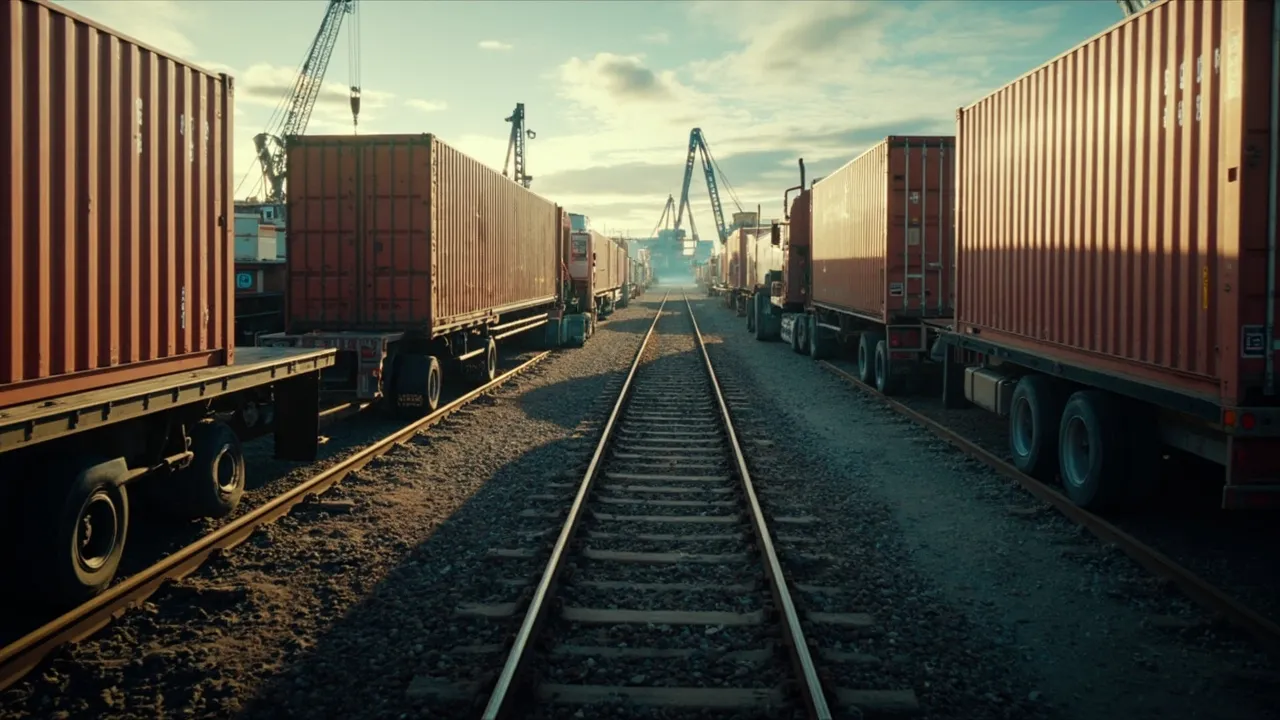
Intermodal rail is setting records at the same moment its first- and last-mile labor pool is shrinking. That apparent contradiction matters because a train slot is not door-to-door capacity. A container still needs a driver, chassis, terminal appointment, legal driving hours, and an open receiving dock before the rail move creates value for a shipper.
The demand signal is real. FreightWaves reports that domestic intermodal volume reached all-time highs with 8% year-over-year growth, while truckload tender rejection rates held near 14%. Another FreightWaves market update put domestic intermodal containers above 21,000 for a new annual high. Yet the same reporting warns that the drayage pool has lost 63,000 drivers in two years.
That combination changes the planning question. Shippers should stop asking only whether rail has room and start asking whether the entire terminal-to-door chain can absorb another container without turning linehaul savings into dwell, storage, detention, or emergency trucking.
Rail capacity is only one link in the move
An intermodal quote can look compelling on a spreadsheet because rail linehaul is compared with a truckload rate. The comparison is incomplete when it ignores the operational dependencies at both ramps.
At origin, the load must be ready early enough for pickup, move through traffic, secure a terminal appointment where required, and clear the cutoff. At destination, a driver and compatible chassis must be available when the unit grounds. The customer must also accept delivery before free time expires. A failure at any point can add a day even when the train itself runs exactly as planned.
The cost opportunity can still be substantial. FreightWaves identified a 43% intermodal saving on the Harrisburg-to-Atlanta corridor, while its intermodal savings dataset covers 63 individual lanes. But a headline percentage is a screening signal, not a guaranteed realized saving. The relevant measure is the landed cost after drayage, fuel, chassis, appointments, dwell, storage, accessorials, and recovery risk.
Build the ramp plan before booking
Every proposed conversion should have an executable ramp plan attached to it. At minimum, that plan should answer six questions:
- Terminal cutoff: What is the true latest pickup time after allowing for traffic, queueing, inspection, and gate processing?
- Chassis: Is equipment supplied by the carrier, terminal pool, or dray provider, and what is the fallback if the preferred pool is empty?
- Appointments: Are pickup and return slots available at the times assumed in the transit plan?
- Free time: How many hours or days are available, when does the clock start, and who receives the warning before charges accrue?
- Driver hours: Can the assigned driver complete the terminal turn and delivery legally, including likely queue time?
- Receiving window: Will the consignee accept the container when it is available, including weekends or after a late train arrival?
These are not dispatch details to resolve after the booking. They determine whether the service promise is feasible. A transportation management system should store them as constraints tied to the lane, facility, provider, and shipment—not as notes buried in email.
Use conversion gates, not blanket mode shifts
A shipper attracted by record rail performance may be tempted to convert a broad group of truckload lanes. A gated rollout is safer. Start with repeatable freight, adequate lead time, predictable facilities, and dense dray markets. Then require each lane to pass four tests.
First, the schedule gate: planned door-to-door transit must include realistic cutoff and availability times, not simply rail transit. Second, the capacity gate: named primary and backup dray carriers must confirm drivers and chassis for the expected weekly volume. Third, the economics gate: modeled savings must remain positive after expected accessorials and a reasonable disruption allowance. Fourth, the service gate: the lane must meet an agreed on-time threshold during a controlled pilot before more volume is released.
The threshold should reflect the cost of failure. A lane showing a large theoretical saving may tolerate some variance; a time-sensitive replenishment lane may not. On the Harrisburg-to-Atlanta example, a 43% headline advantage creates room to absorb some extra cost, but it does not justify unmanaged dwell. Conversely, a lane with only a narrow linehaul advantage should be rejected if one storage event can erase a month of savings.
Monitor handoffs as operational events
Intermodal visibility must extend beyond train departure and arrival. Useful milestones include empty pickup, shipper arrival, loaded departure, terminal ingate, train departure, destination grounding, availability, appointment confirmation, outgate, consignee arrival, empty return, and proof of delivery.
Each event needs a latest acceptable time and an owner. If a unit is grounded but no driver has accepted the move, the system should escalate before free time is consumed. If a receiving appointment falls outside the free-time window, planners should see the conflict while they can still reschedule, pre-pull, or use a drop yard.
Track performance by ramp pair and dray provider, not just by railroad or overall mode. Core measures should include terminal turn time, grounded-to-outgate hours, appointment success, chassis exceptions, free-time utilization, accessorial cost per load, recovery-truck frequency, and true door-to-door on-time delivery. Those measures reveal whether apparent rail capacity is actually usable.
Treat drayage as the constraint that controls release
Record intermodal demand and tight truckload capacity make rail conversion attractive. The 63,000-driver contraction makes indiscriminate conversion dangerous. The correct response is not to avoid intermodal; it is to release volume only when the drayage and receiving plan is as credible as the rail booking.
CXTMS connects bookings, milestones, provider capacity, appointments, costs, and exception workflows so teams can qualify intermodal lanes using the complete door-to-door move. Request a CXTMS demo to see how constraint-based planning can protect rail savings before a container reaches the ramp.