ICE Raids Are Delaying Thousands of Cattle: Protect the Beef Cold Chain From Labor Shocks

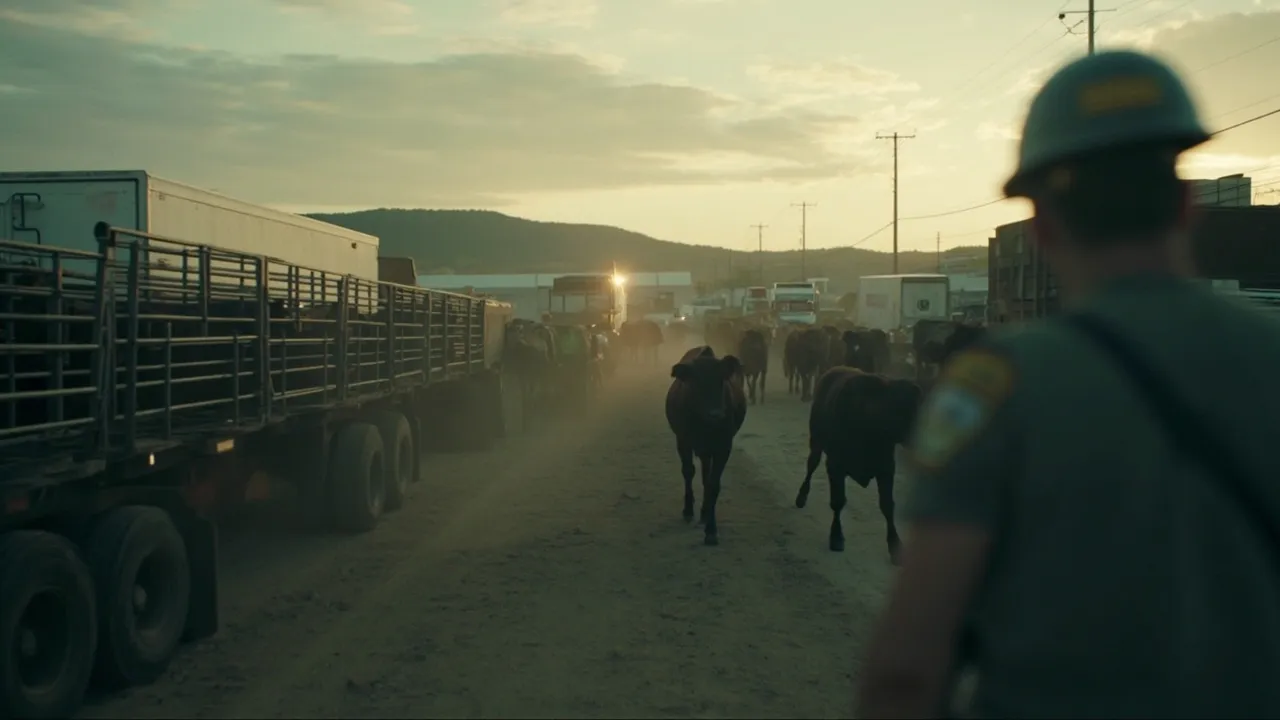
Labor disruption in cattle country can become a food-logistics emergency within hours. In late September, cattle associations in Texas, Kansas, and Oklahoma warned that U.S. Immigration and Customs Enforcement operations had delayed shipments involving thousands of cattle and disrupted labor at feedyards, dairies, processors, feed suppliers, transportation hubs, and community services.
This is not simply a staffing issue inside one meat plant. It is a synchronized flow problem spanning live animals, time-sensitive production slots, refrigerated inventory, and retail replenishment. Transportation and operations teams need a response plan that protects animal welfare first while preserving food safety and lot-level traceability.
A labor shock moves through five connected handoffs
The disruption begins before beef enters the cold chain. Ranches and feedyards must maintain feeding, watering, animal checks, and load preparation. Livestock carriers then need qualified drivers, suitable equipment, confirmed receiving appointments, and enough legal driving time to complete a trip without creating an animal-welfare risk.
At the plant, a missed slaughter slot is difficult to recover. Processing depends on coordinated crews across receiving, harvesting, inspection, fabrication, sanitation, packaging, and shipping. A reduced shift can lower output even when cattle and refrigerated trailers are available. Downstream cold stores and distribution centers then receive less product, later than planned, while retailers face uneven replenishment.
SupplyChainBrain reported that the industry groups described a “massive chilling effect” on legal, documented workers as well as the direct effects of enforcement activity. The same report cited estimates that foreign-born workers represent about 20% of people tending animals at U.S. farms, ranches, livestock yards, and confinement facilities. In the five largest meatpacking states, including Kansas and Texas, 56% of animal slaughtering and processing workers were born outside the United States.
Those figures show why a localized attendance drop can affect several consecutive nodes at once.
Capacity is already tight
The cattle market has little slack for another operational shock. A separate SupplyChainBrain analysis put the U.S. herd at 86.2 million head on January 1, 2026—down 0.4% year over year and the lowest level since 1951. It also reported that beef prices crossed $6 per pound in 2025 for the first time since the data series began in the 1980s.
When supply is structurally constrained, a delayed load is not easily replaced with product from another origin. Planners must distinguish inventory scarcity from temporary network congestion. Otherwise, they risk bidding up emergency capacity, sending cattle toward a plant that cannot receive them, or reallocating finished beef that is still tied to an uncertain production schedule.
Set escalation rules before the next disruption
A useful playbook starts with explicit decision thresholds rather than improvised phone calls. The control tower should monitor five clocks:
- Animal-welfare clock: elapsed time since loading, remaining water and rest tolerance, weather exposure, trailer condition, and an approved diversion or return location.
- Detention clock: actual arrival, queue position, receiving readiness, driver hours remaining, and the point at which waiting becomes unsafe or legally infeasible.
- Production clock: confirmed head count, labor-adjusted line capacity, inspection coverage, sanitation readiness, and the last time a slaughter slot can be reassigned.
- Temperature clock: pre-cooling status, trailer set point, continuous readings, door events, and remaining shelf-life margin for finished product.
- Customer clock: order cutoff, required delivery date, allocation priority, and the latest moment a substitute SKU or alternate source can be accepted.
Each threshold needs an owner and a predefined action. For example, an unconfirmed plant appointment should trigger a dispatch hold before cattle are loaded—not after a driver joins a queue. A reduced processing forecast should automatically recalculate cold-storage arrivals, outbound appointments, and retail allocations.
Build alternate scenarios without breaking traceability
The best recovery plan is a small set of executable scenarios. Keep the original plan as the baseline, then model at least three alternatives: hold at origin, move to a later appointment at the same plant, or divert to an approved plant with verified capacity.
Every scenario must retain the relationship between cattle lot, origin, trailer, driver, movement permit or health documentation, receiving appointment, processing batch, finished-goods lot, and customer order. Do not overwrite the original appointment or manually merge lots to make the schedule look cleaner. Record every reassignment as a timestamped event with a reason code.
That discipline continues after processing. Food Logistics notes that food traceability is moving from static records toward real-time operational visibility, especially where delay or refrigeration failure can quickly compromise temperature-sensitive products. In practice, logistics teams should connect carrier status, yard events, production confirmation, pallet identity, temperature telemetry, and proof of delivery in one shipment history.
What the transportation team should do now
Start by mapping every live-cattle and refrigerated move to a named origin, destination, appointment, lot, and contingency site. Ask plants and carriers for labor-adjusted capacity rather than nominal capacity. Reconfirm appointments before dispatch, and prohibit unapproved diversions that separate animals or finished goods from their records.
Next, configure exception alerts for missed check calls, appointment changes, detention thresholds, temperature excursions, and production shortfalls. Share one version of the recovery plan with animal-care staff, dispatchers, plants, cold stores, customers, and food-safety teams. A spreadsheet forwarded between departments is too slow when conditions change by the hour.
Finally, review performance after the event: time to detect, time to decide, detention hours, animal-welfare exceptions, temperature deviations, lost production slots, order fill rate, and traceability completeness. The objective is not merely to move delayed freight. It is to preserve a defensible chain of custody while making the safest available decision at every handoff.
Turn disruption data into coordinated action
CXTMS gives logistics teams a shared operational record for appointments, carriers, loads, milestones, documents, temperatures, and exceptions. When labor disruption changes capacity, planners can identify exposed shipments, evaluate alternate routes and appointments, and keep customers informed without losing shipment-level traceability.
Request a CXTMS demo to see how one transportation workflow can help protect service, compliance, and cold-chain integrity during fast-moving disruptions.