Container-Ship Attacks in Hormuz Need a Cargo Casualty Decision Tree

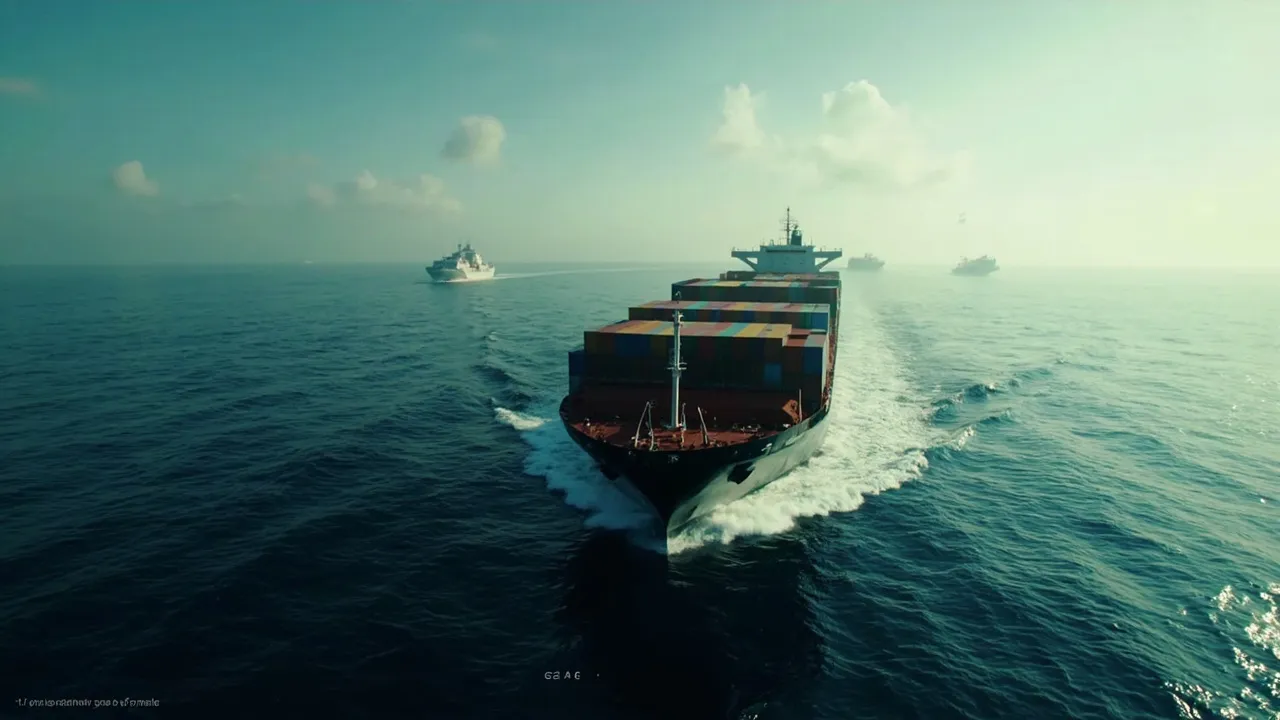
When a vessel is attacked, the cargo team cannot wait for a final loss declaration before deciding what to do. The first report may say only that a ship was struck, diverted, or on fire. Yet customers need updated delivery promises, insurers need timely notice, and planners must decide whether to reserve replacement stock.
That is now a practical problem in the Strait of Hormuz. FreightWaves reports that at least 10 vessels were attacked in or near the chokepoint since Sunday. The 2,824-TEU, Singapore-flagged GFS Pride caught fire and sank off Oman with containers aboard after being hit by an unknown projectile. All 21 crew members were evacuated safely. A second Singapore-flagged container ship, GFS Giselle, sustained hull damage but reached safe anchorage under its own power, with all 22 crew safe.
These two outcomes show why “vessel incident” is not a useful shipment status. One event can become delay, deviation, physical damage, abandonment, salvage, general average, or total loss. Shippers and forwarders need a cargo casualty decision tree that assigns actions before the facts are complete.
Open One Incident Record, Then Branch by Cargo Outcome
Create a single incident record as soon as a credible carrier, authority, or security report identifies the vessel. Link every affected booking, bill of lading, container, purchase order, SKU, consignee, and insurance policy. Preserve the original report, source, timestamp, vessel IMO number, voyage, last known position, and carrier reference.
Then classify each shipment into one of six working branches:
- Delay: The cargo remains aboard, but the voyage or port call is paused.
- Deviation: The vessel or cargo is rerouted to a different port or service.
- Damage: There is evidence of fire, water, impact, contamination, or temperature excursion.
- Abandonment: Cargo cannot be recovered economically or safely, subject to insurer guidance.
- Salvage: A salvor takes action to save the vessel or cargo and may assert security rights.
- General average: The carrier declares a shared-loss process requiring cargo interests to provide guarantees or bonds before release.
These should remain provisional statuses until supported by documents. Do not turn an early media report into a cargo-loss conclusion. The same vessel can have containers in several branches, and a shipment may move from delay to damage or general average as facts emerge.
Give Each Party an Evidence and Notification Job
The shipper should own the commercial file: purchase order, supplier invoice, packing list, product specification, replacement lead time, sales commitment, and proof of cargo value. It should also identify critical SKUs and the last date on which replacement production can protect the customer order.
The forwarder should own shipment linkage and operational chronology. That includes the booking, house and master bills, container number, routing, transshipment details, status messages, carrier correspondence, and all instructions exchanged with origin and destination agents.
The ocean carrier controls vessel and cargo notices, alternate routing, discharge arrangements, and release requirements. Capture each notice as received rather than summarizing it in email. If slots were purchased from another operator, record both the contractual carrier on the bill of lading and the vessel operator; insurance treatment may depend on that distinction.
The insurer or broker should confirm notice requirements, survey instructions, mitigation authority, deductibles, exclusions, and the documents needed for a claim. Notify early without asserting an unverified cause. FreightWaves notes that war insurance can be cancelled on short notice when cargo moves aboard a vessel not owned by the carrier named on the bill of lading, making vessel and policy data especially important.
The consignee should own destination readiness: whether it can accept a late, rerouted, wet, smoke-exposed, or partially delivered shipment; which inspections are required; and whether customs, permits, or warehouse capacity must be changed.
Treat General Average and Salvage as Release Workflows
General average is not the same as cargo damage. It is a maritime process through which parties contribute to extraordinary sacrifice or expense incurred for the common safety. Cargo may be physically intact but held until the required security is provided.
Build a release checklist now: insurer contact, average adjuster, general-average guarantee, cash bond if uninsured, commercial invoice, bill of lading, packing list, valuation, and signed undertaking. Record submission dates and deficiencies by container. A shared spreadsheet with no document-level status can leave good cargo stranded because one form is missing.
Salvage also requires its own branch. Preserve salvor notices, survey instructions, condition evidence, recovery location, custody transfers, and expenses. No team should dispose of, repair, or move recovered goods without checking insurer and surveyor requirements. Mitigation is necessary; destroying evidence is expensive.
Set Replacement Triggers Before Loss Is Confirmed
Waiting for certainty can be the costliest choice. Replacement production may require raw materials, factory capacity, export documents, and a new booking. Define triggers using customer impact rather than legal loss status.
For each affected SKU, calculate available inventory, unaffected inbound supply, daily demand, customer priority, replacement lead time, and the latest feasible ship date. Then establish staged actions:
- Reserve: Protect existing stock and provisional production capacity when a vessel incident is confirmed.
- Authorize: Release replacement production when projected inventory falls below the service threshold or recovery timing exceeds the decision deadline.
- Expedite: Use air or alternate gateways only when the avoided shortage cost exceeds the incremental freight and production cost.
- Cancel or reallocate: Reverse the replacement if original cargo is released in time, or redirect it to another market if duplication is unavoidable.
The wider traffic data supports acting early. FreightWaves cites Kpler counts of 131 Strait crossings in the week ended October 14, down from 176 the prior week—a decline of roughly 26%, though Kpler cautioned that attacks were not the only cause. It also reported 12.6 million barrels per day of crude moving through the strait on October 13, below roughly 15 million barrels per day at the end of September. Even cargo untouched by an attack can face congestion, deviation, and capacity effects.
Run the Decision Tree From a Shared Control Tower
Every branch should show current status, evidence confidence, next decision deadline, owner, financial exposure, customer impact, and required document. Alerts should fire when a carrier notice changes the branch, a notification deadline approaches, inventory crosses its trigger, or release security remains incomplete.
The objective is not to predict the final casualty finding. It is to make reversible, documented decisions while uncertainty is still high. A disciplined decision tree keeps operations, insurance, inventory, finance, and customer teams working from the same facts—and prevents “waiting for confirmation” from becoming the default response.
Need one place to connect vessel incidents, cargo evidence, insurance actions, inventory triggers, and customer commitments? Request a CXTMS demo to see how CXTMS can coordinate auditable exception workflows across your transportation network.