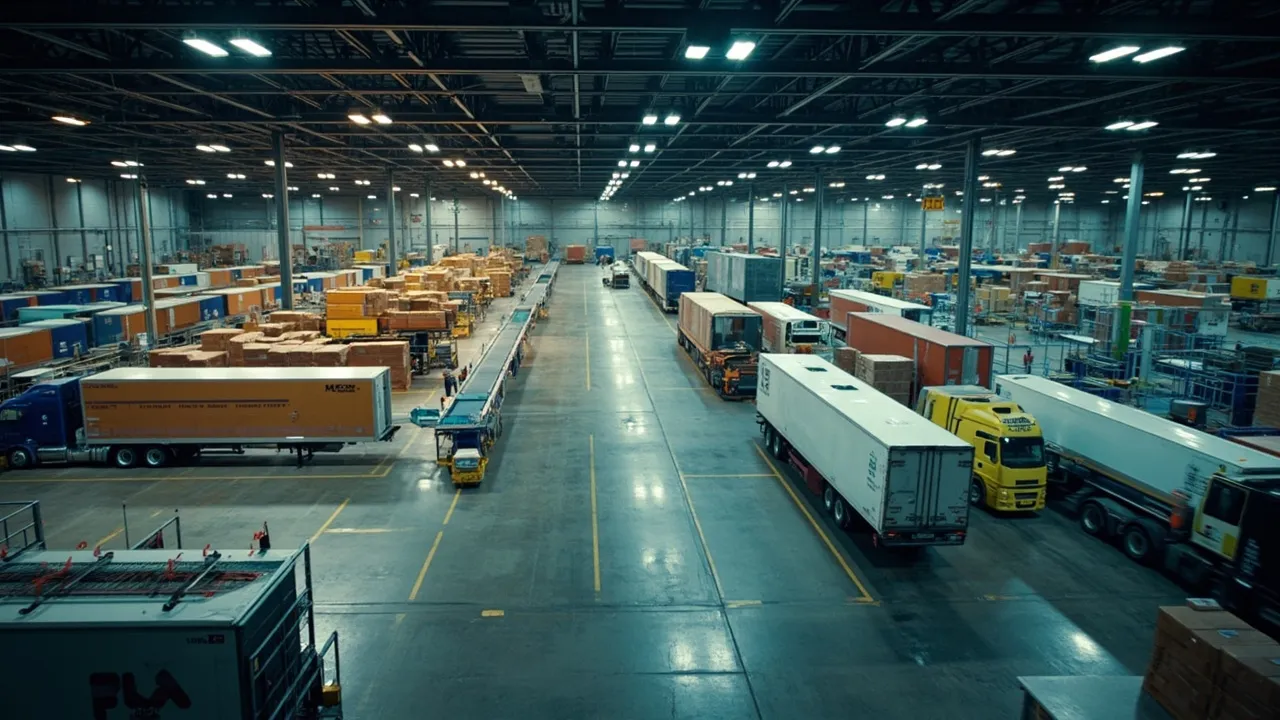
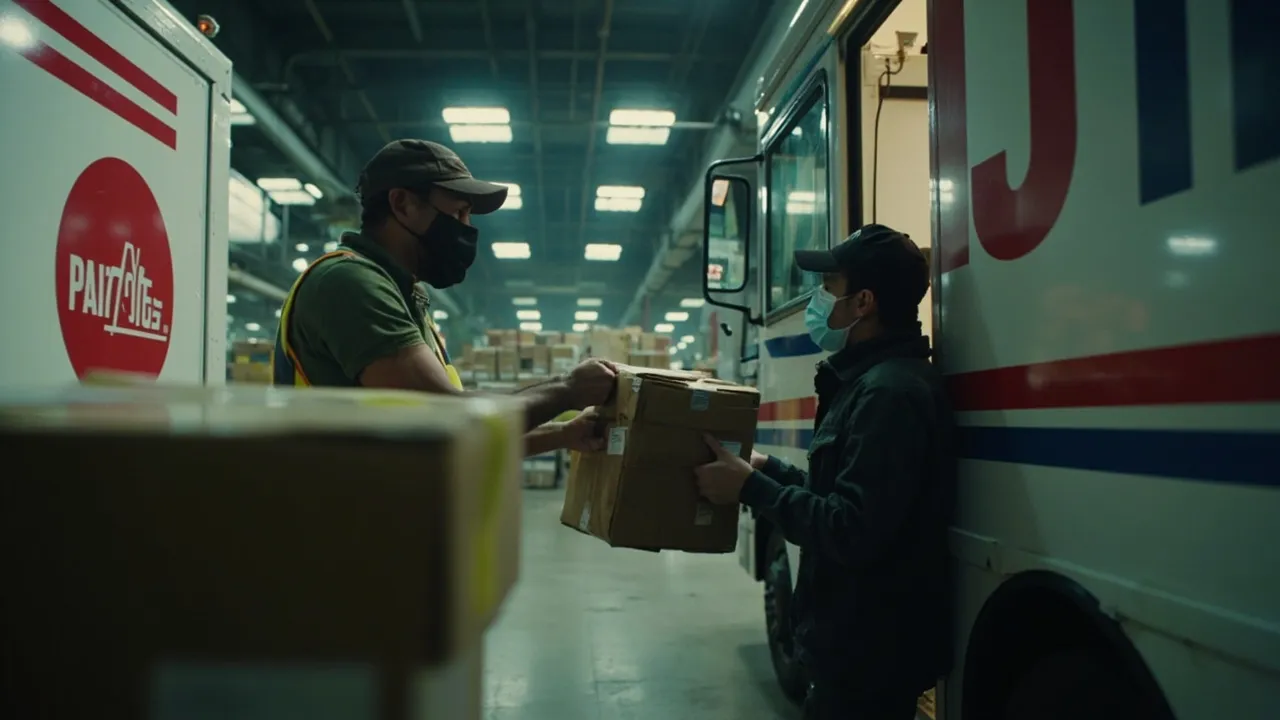
Home Depot’s Three-Hour Delivery Rollout Makes Bulky Last Mile a Precision Operation


A three-hour delivery promise sounds simple at checkout. In home improvement, it is anything but simple. The order may include a compact power tool, an eight-foot board, fragile tile, heavy bags of concrete, or several items that require different handling. The destination may be a residence with easy access or an active jobsite where a missed arrival stops a crew.
Home Depot has introduced express delivery nationwide for eligible orders to arrive in three hours or less, according to Supply Chain Dive. The move turns delivery speed into an inventory, vehicle, labor, and orchestration problem. Retailers cannot safely offer the same promise to every SKU, location, and time window. They must establish whether the entire order is truly executable before accepting it.
Home-improvement freight resists parcel logic
Parcel delivery is designed around standardized cartons, automated sorting, predictable handling, and high stop density. Home-improvement orders frequently violate those assumptions. A product can be available in a store yet unsuitable for a small vehicle. It can fit inside a van yet require two people to handle safely. A mixed order can include both crush-resistant hardware and damage-prone finished material.
The destination adds another layer. A contractor may need drywall before installers can start, a replacement fitting before plumbing can resume, or a tool before a crew can complete the day's work. A late order therefore carries more than a delivery inconvenience; it may cause paid labor to sit idle and push dependent tasks into another day.
The economics are unforgiving, too. Inbound Logistics reports that the last mile can represent more than half of total shipping expense and that a failed delivery can cost a retailer around $17. Bulky products amplify those costs through lower vehicle density, extra handling time, specialized equipment, and greater exposure to damage.
Eligibility must be calculated, not assumed
The correct moment to protect a three-hour commitment is before the customer pays. An order-management system and transportation management system should evaluate four connected rule sets.
Inventory rules. A store-level quantity is not enough. The system should confirm that inventory is available to promise, physically locatable, saleable, and accessible for rapid picking. It should reserve all lines atomically so one unavailable item does not emerge after the clock has started.
Vehicle rules. The order's total weight, cube, longest dimension, stackability, fragility, and securement needs must match an available vehicle. Lumber, appliances, paint, pavers, and small cartons cannot be treated as interchangeable units of capacity. Liftgate or open-bed requirements may narrow the eligible fleet further.
Labor rules. Picking and loading must fit inside the promise, not merely driving time. Heavy or awkward items may require a two-person team. The system should account for current store workload, staging space, equipment availability, and the time required to inspect materials for visible defects.
Delivery-window rules. Travel time should be based on live conditions and the actual service area. The plan must include realistic pick, stage, load, drive, unload, and proof-of-delivery durations. Gated properties, limited jobsite access, stairs, parking constraints, and customer availability can turn a short route into a failed commitment.
Only when all four checks pass should an express option appear. This is a crucial distinction: the promise is a capacity reservation, not a marketing label.
Network investment creates the foundation
The three-hour rollout builds on years of distribution work. In 2019, Home Depot announced a $1.2 billion supply chain investment to support nationwide same-day delivery; at that time, the retailer said it could reach 70% of the U.S. population with same-day service, as Supply Chain Dive later summarized. By 2021, the company described a goal of offering same- or next-day delivery to 90% of the U.S. population.
That progression matters. Faster service is rarely created by route optimization alone. It depends on positioning the right inventory near demand, maintaining multiple fulfillment paths, and connecting stores, distribution centers, delivery partners, and customers through consistent data.
For operators pursuing a similar model, the network should distinguish at least three flows: parcel-ready products that can move through dense courier routes; bulky goods needing appropriate vehicles and handling; and mixed orders whose combined requirements determine the service level. Splitting an order may preserve speed, but it can also confuse the customer and create multiple delivery fees, handoffs, and proofs of delivery. The decision must be explicit.
Exceptions need to arrive before the failure
A precision operation does not assume every plan will hold. It detects deviation early enough to protect the customer's job.
Useful exception triggers include:
- a picker cannot locate a reserved item;
- preparation time exceeds the planned threshold;
- the assigned vehicle lacks sufficient capacity or required equipment;
- a driver has not departed by the latest feasible time;
- traffic pushes the estimated arrival outside the promise;
- the customer does not confirm access instructions; or
- damage is discovered during picking, loading, or unloading.
Each alert should identify an owner and a recovery action. A missing item may be sourced from a nearby location. A capacity mismatch may require reassignment to a larger vehicle. A predicted late arrival should prompt a revised ETA and customer contact before a crew is left waiting. For a contractor, an accurate early warning can be more valuable than a silent promise that expires.
The proof-of-delivery record should close the loop with timestamps, customer confirmation, photos where appropriate, item counts, damage notes, and reason-coded exceptions. Those records reveal whether failures originate in inventory accuracy, store execution, carrier capacity, routing, or destination access.
Speed becomes a controlled operating decision
Three-hour delivery for home-improvement products is not simply same-day delivery with a shorter clock. It compresses every dependency and removes the buffer that hides weak inventory records, loose capacity planning, and delayed exception management.
The winning model will not promise express service everywhere indiscriminately. It will offer it precisely where inventory, equipment, labor, route capacity, and destination conditions support success—and learn from every exception where those assumptions proved wrong.
CXTMS connects shipment planning, vehicle requirements, real-time milestones, and exception workflows in one operational view. Request a CXTMS demo to see how disciplined transportation orchestration can support faster, more reliable last-mile delivery.