Holiday Inventory Is Already In: Reconcile Port Forecasts With Distribution-Center Receipts

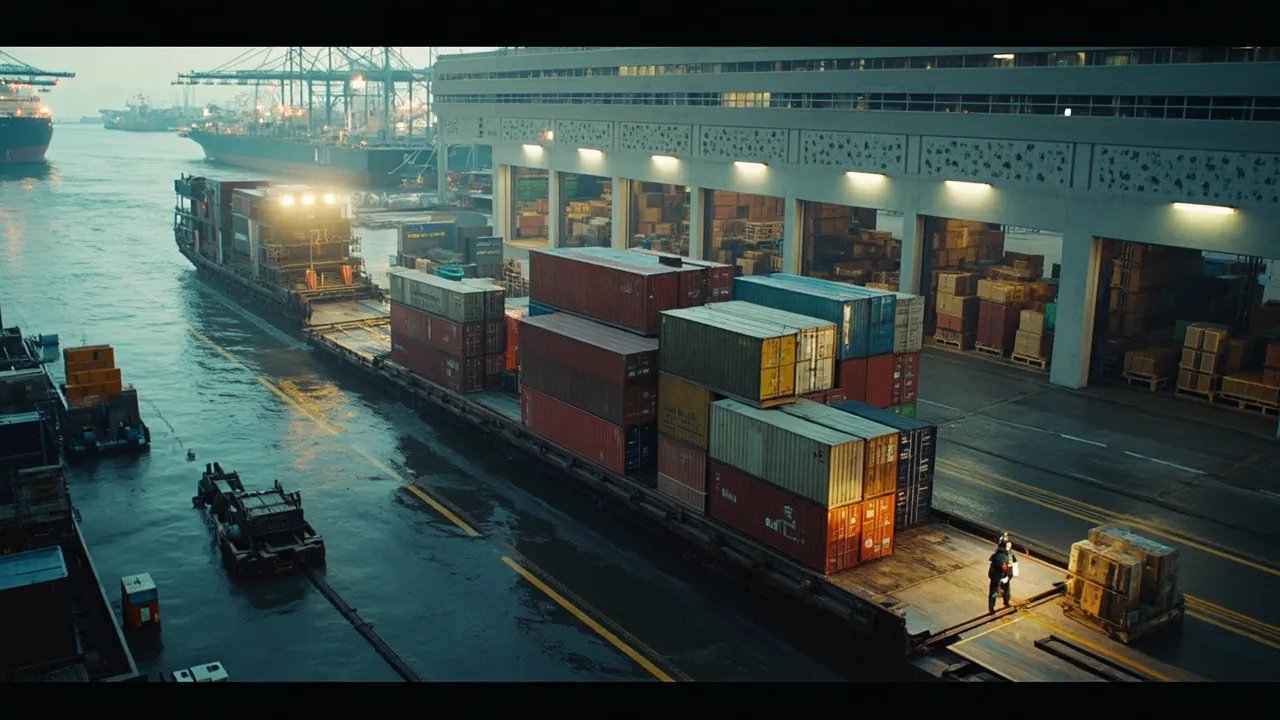
Retailers may have brought holiday merchandise into the country early, but an import forecast is not an available-to-promise balance. A container counted in projected port volume can still be on the water, awaiting customs release, sitting at a terminal, moving under drayage, queued at a distribution center, or waiting for putaway. Each gap can turn apparently healthy inventory into a customer-service failure.
The scale makes that distinction important. August imports at major U.S. ports are forecast at 2.22 million twenty-foot equivalent units, following a projected 2.21 million TEUs in July, according to Supply Chain Dive. Another Supply Chain Dive report says National Retail Federation data indicates imports have likely peaked as businesses built inventory ahead of new tariffs.
Demand has not disappeared. Logistics Management reported July retail sales of $763.6 billion, down 0.6% from June but up 5% year over year—the tenth consecutive month of annual gains. Retailers therefore need to know not only whether seasonal goods entered the import pipeline, but when those goods became usable stock.
Port throughput is a forecast, not a promise
A port-volume forecast is valuable for anticipating vessel activity, terminal pressure, chassis demand, and drayage capacity. It is an aggregate planning signal, however, not proof that a specific purchase order is ready for allocation.
Forecast TEUs can shift between months when sailings change. A discharged container may be counted in port activity even while its freight remains unavailable to the retailer. Customs exams, document holds, demurrage disputes, missed appointments, warehouse congestion, and receiving discrepancies all sit between discharge and a sellable inventory record.
That is why commercial teams should not translate “holiday inventory is already in” into blanket confidence. They should ask which units have cleared each custody and system milestone, how long exceptions have aged, and which customer or store commitments depend on them.
Reconcile five milestones for every inbound load
Build a reconciliation record that connects the purchase order, supplier shipment, ocean booking, container, customs entry, drayage move, warehouse appointment, receipt, and stock-keeping unit. At minimum, track five operational milestones:
- Vessel discharge: The container is physically off the vessel, with the terminal, location, discharge timestamp, and last-free-day available.
- Customs release: The entry and merchandise are released, or the record identifies the agency hold, exam type, missing document, and responsible party.
- Drayage completion: The container leaves the terminal and arrives at the correct facility, with gate-out, appointment, delivery, empty-return, and proof-of-delivery events linked.
- Distribution-center receipt: The facility confirms the quantities actually received against the advance shipping notice and purchase order, including damage, overage, shortage, and SKU mismatch.
- Putaway and availability: Inventory reaches a pickable location and the order-management system recognizes it as available to promise.
These are not interchangeable timestamps. A drayage delivery is not a receipt, and a receipt is not necessarily pickable inventory. The reconciliation should preserve both planned and actual times so the team can measure where dwell accumulates.
Measure the inventory conversion funnel
Port projections become more actionable when they sit above a unit-level conversion funnel. Start with forecast and booked import volume, then show how many containers or units are discharged, released, delivered, received, put away, and available.
For each stage, calculate the conversion percentage and median dwell time. Segment the view by port, terminal, customs broker, dray carrier, distribution center, supplier, merchandise category, and required-in-stock date. This reveals whether the risk is broad congestion or a concentrated execution problem.
For example, a retailer might show 95% of seasonal containers discharged but only 72% received and 61% available. That gap changes the response. Terminal dwell calls for drayage intervention; receiving backlog calls for labor and appointment changes; putaway delay calls for warehouse capacity or temporary flow-through rules.
Use units and purchase-order value alongside TEUs. Containers are useful for transport planning, but they do not express product priority. One delayed container of promotional merchandise may carry more sales risk than several containers of replenishment stock.
Age exceptions from the first missed milestone
Exceptions need clocks, owners, and escalation thresholds. Start aging an exception when a planned milestone is missed, not when somebody notices it in a weekly meeting.
Practical rules might include:
- customs release missing 24 hours after discharge
- pickup appointment absent within 12 hours of release
- terminal dwell approaching the last free day
- delivered container not received within one warehouse shift
- received inventory not put away within 12 hours
- quantity variance unresolved within 24 hours
- required-in-stock date threatened at any stage
Apply tighter thresholds to promotional, constrained, or high-margin SKUs. Every alert should name the affected purchase orders and products, estimated units and value, next deadline, accountable party, and recommended action. A generic “container delayed” message is too weak for prioritization.
Escalation also needs a commercial branch. If inventory will miss its required date, merchandising may reallocate supply, change a promotion, substitute an item, or adjust customer promises. Waiting until warehouse receipt removes many of those options.
Create one daily reconciliation rhythm
During the holiday build, review the funnel daily. Import operations should validate vessel and terminal events. Brokers should explain unreleased entries. Drayage teams should confirm appointments and free-time exposure. Distribution centers should report receiving and putaway capacity. Inventory planners should compare usable units with demand and allocation commitments.
Track a small set of shared measures: forecast-to-discharge variance, discharge-to-release time, terminal dwell, delivery-to-receipt time, receipt-to-availability time, and units at risk by required date. This creates a common operating picture without treating an aggregate port forecast as inventory truth.
Connect import milestones with CXTMS
CXTMS brings orders, containers, customs status, drayage moves, warehouse appointments, and shipment exceptions into one operational view. Teams can trace forecast inventory through receipt and putaway, prioritize aging exceptions, and protect customer promises with evidence. Request a CXTMS demo to turn early imports into reliable holiday availability.