Global, Domestic, or Hybrid Sourcing: Make the Network Decision With Landed-Risk Cost

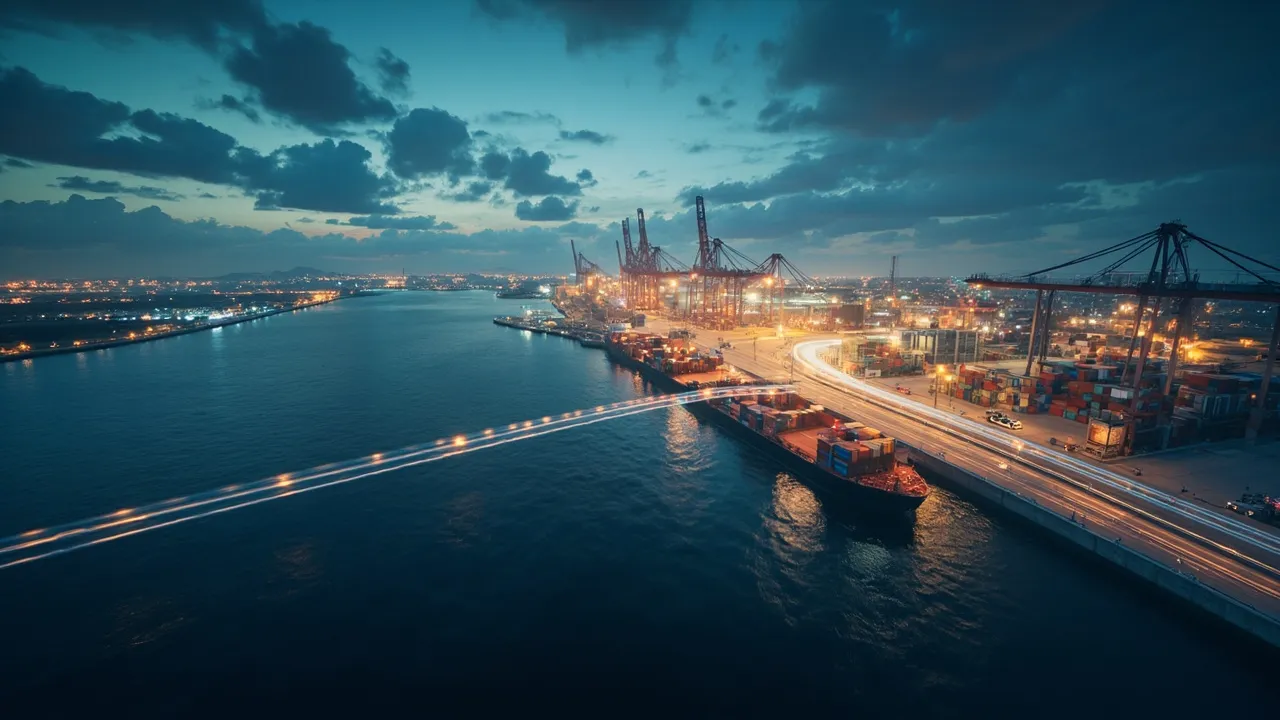
The lowest supplier quote is not necessarily the lowest-cost sourcing decision. A global supplier may offer an attractive unit price while adding ocean freight, duties, working capital, lead-time variability, and a longer recovery path when something goes wrong. A domestic supplier may reduce those exposures but charge more per unit. A hybrid model can balance the two, although it also introduces the cost of managing and qualifying multiple sources.
That is why sourcing teams need a landed-risk cost model: a common financial view that combines normal landed cost with the expected cost of uncertainty. The objective is not to declare global, domestic, or hybrid sourcing universally superior. It is to select the right model for each SKU, customer promise, and risk profile.
Move beyond unit price
Traditional landed cost normally includes the purchase price, international and domestic freight, insurance, duties, brokerage, and handling. Those inputs remain essential, but they do not capture the full operating impact of a sourcing decision.
Logistics Management notes that global sourcing still provides advantages in cost, scale, and supplier capabilities, while transportation disruption, inventory pressure, uncertainty, and changing customer expectations are forcing companies to look beyond unit cost. That tension is precisely what a landed-risk model should quantify.
For each sourcing lane, add six cost layers:
- Product cost: supplier price, tooling, minimum order quantities, and quality-related credits or losses.
- Logistics cost: linehaul, fuel and accessorial charges, insurance, port and terminal fees, drayage, and final delivery.
- Trade cost: duties, tariffs, brokerage, compliance labor, and exposure to changing classifications or trade policy.
- Inventory cost: cycle stock, safety stock, pipeline inventory, storage, obsolescence, and the cost of capital.
- Variability cost: premium freight, production rescheduling, stockout penalties, lost margin, and customer-service failures caused by lead-time variance.
- Recovery cost: alternate-source qualification, expedited tooling, emergency capacity, and the time required to restore supply after disruption.
The last two categories convert resilience from a vague preference into an economic input.
Compare three sourcing models honestly
Global sourcing can remain the correct choice for stable, high-volume products when suppliers have unique capabilities and demand is predictable. Its quoted price and scale advantages must be tested against long replenishment cycles, border exposure, larger order quantities, and greater pipeline inventory.
Domestic sourcing can work well for volatile demand, short product life cycles, highly customized products, or SKUs with severe stockout consequences. Shorter lead times can lower safety stock and accelerate engineering changes. The tradeoff may be higher unit costs, limited local capacity, or a supplier base that still depends on imported subcomponents.
Hybrid sourcing divides qualified volume between regions. A typical design might assign base demand to a cost-efficient global supplier and reserve a domestic or nearshore supplier for variable demand, strategic customers, or surge capacity. This costs more to establish, but it creates an option to shift volume without starting supplier discovery during a crisis.
The case for evaluating that option is strengthening. An Inbound Logistics survey summary reported that 87% of respondents planned nearshoring pilots in Mexico or Central America over the following two years, even though most networks were not yet fully prepared for regional fulfillment. The gap between intent and readiness is a warning: backup capacity has little value if it cannot be activated.
Put risk into the calculation
A practical annual landed-risk cost formula is:
Expected annual landed cost + expected disruption loss + transition and option cost
Expected disruption loss can be estimated by scenario. Multiply the probability of an event by its financial impact, then sum the scenarios. The model does not need false precision. It needs consistent assumptions that expose how the alternatives behave.
For example, test a tariff increase, a six-week port interruption, a supplier quality hold, a sudden 30% demand increase, and a loss of the primary supplier. Deloitte illustrates how quickly the economics can flip: in a hypothetical sourcing case, a 25% tariff erased offshore savings and made reshoring potentially cheaper.
Run each scenario with operational constraints, not just spreadsheet percentages. Can the alternate supplier accept the tooling? Is its approved capacity real? How long do validation, regulatory review, packaging changes, and transportation setup take? How much inventory is available during the transition? These answers determine the recovery curve and therefore the cost.
Define volume-shift thresholds before disruption
Scenario modeling becomes actionable when the company sets explicit thresholds for moving a SKU between sourcing models. Useful triggers include:
- Total landed cost exceeding the approved baseline by a defined percentage.
- Lead-time variability breaching the safety-stock design limit.
- A supplier, country, port, or transport mode exceeding the concentration ceiling.
- Projected inventory falling below demand during the alternate-source qualification window.
- Premium-freight or stockout costs surpassing the cost of maintaining secondary capacity.
Each threshold should identify an owner, required evidence, approval path, target allocation, and review date. A shift might move a SKU from 90/10 global-domestic allocation to 60/40 rather than triggering an all-or-nothing relocation. Graduated moves protect continuity while the team verifies cost, capacity, and quality.
Preserve the decision trail
Sourcing decisions often fail audit and post-event review because their assumptions are scattered across procurement files, transportation quotes, inventory models, and email. Record the full decision trail: source quotes, freight rates, duty assumptions, lead-time distributions, scenario probabilities, capacity commitments, qualification dates, and approval history.
A transportation management system contributes the execution evidence. Actual transit times, accessorial charges, tender acceptance, carrier performance, and exception data can replace stale planning assumptions. When those facts feed the next sourcing review, the landed-risk model becomes a living network-control process instead of an annual procurement exercise.
Global, domestic, and hybrid sourcing are not competing doctrines. They are portfolio choices. The best network assigns each SKU to the structure that delivers the required service at the lowest risk-adjusted cost—and changes that assignment when the evidence crosses a predefined threshold.
Ready to connect transportation performance with smarter sourcing and network decisions? Request a CXTMS demo to see how centralized freight data can support landed-cost analysis, scenario planning, and execution.