FedEx Authenticated Delivery: Put QR Proof Into the High-Value Shipment Record

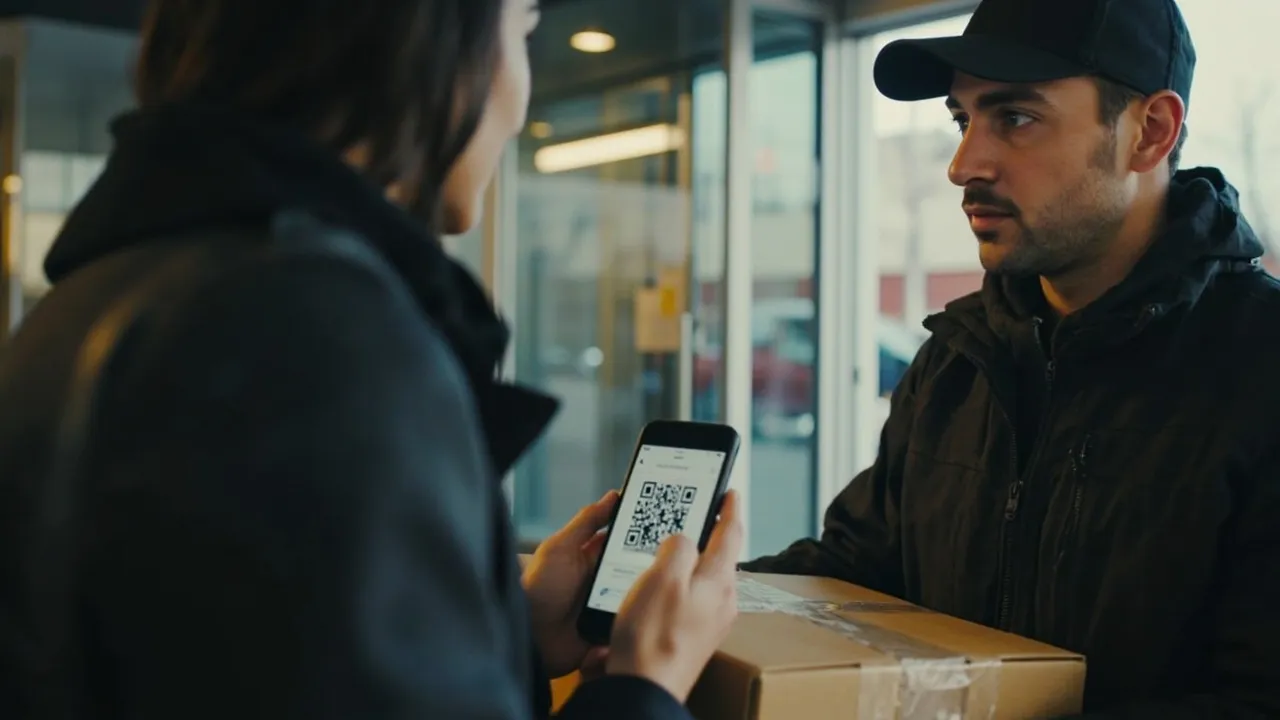
A signature says somebody signed. A delivery photo says a parcel reached a location. Neither control necessarily proves that the person taking custody was authorized to receive a high-value shipment.
That gap is what FedEx Authenticated Delivery is designed to address. The carrier's new service uses QR-code authentication so eligible packages in the United States and Canada are released only to an authorized recipient, according to SupplyChainBrain. For shippers, the important change is not the QR code itself. It is the opportunity to make authorization part of the digital shipment record rather than treating proof of delivery as a final image or name.
The distinction matters because parcel theft is a material operating cost. Supply Chain Dive reported that one industry estimate put U.S. package theft at no fewer than 58 million parcels worth $12 billion in a year; another estimated more than 120 million stolen parcels worth $16 billion in 2023. Those estimates differ substantially, but both show why a stronger custody event can be worth paying for on selected shipments.
Authentication is a custody event, not just another POD image
Conventional proof-of-delivery methods answer different questions. A signature records an acknowledgment, but the name may be illegible, incomplete, or unverified. A photograph establishes where the driver left the parcel, but a doorstep is not a person. A QR-authenticated handoff can establish that the recipient presented a valid authorization credential before release.
That does not make signatures and photos obsolete. It gives a transportation management system a more precise event to store alongside them. The shipment timeline should distinguish “arrived at delivery location,” “authentication presented,” “authentication accepted,” and “custody transferred.” Collapsing those events into a generic delivered status throws away the evidence that makes the premium service useful.
For every authenticated handoff, the shipment record should capture:
- Shipment and package identifiers, including the carrier tracking number
- Authentication outcome, without retaining the QR credential itself
- Scan timestamp and delivery-location reference
- Authorized-recipient category, such as named recipient or approved delegate
- Custody-transfer timestamp and carrier event code
- Exception reason when authentication fails or is unavailable
- Driver disposition, including reattempt, hold, return, or approved alternate action
This structure lets operations teams reconstruct what happened without collecting unnecessary personal data.
Apply premium authentication with a risk rule
Requiring QR authentication for every parcel would create cost and friction where a standard handoff is sufficient. The better approach is a shipment-level rule based on four factors: value, theft exposure, product sensitivity, and customer promise.
Value is the clearest trigger, but invoice value alone is incomplete. A specialized replacement part may have modest purchase cost and enormous downtime impact. Theft exposure should reflect destination history, building type, unattended-delivery likelihood, and prior claims. Product sensitivity covers regulated, confidential, age-restricted, serialized, or temperature-sensitive items. Customer promise includes contractual delivery controls, VIP service, and explicit authorized-recipient requirements.
A practical policy can assign points to each category and require authentication above a threshold. For example, a high-value laptop going to an address with repeated claims would qualify automatically. Low-value office supplies delivered to a staffed receiving dock probably would not. A medical device with a required chain of custody could qualify even when theft risk is low.
The rule should also define exclusions. If the intended delivery site cannot support recipient-side QR presentation, routing the parcel into an authentication workflow may merely cause a preventable failed attempt. Validate contact details and recipient readiness before tender, then communicate what the recipient must have available.
Design exceptions before the driver reaches the door
Stronger controls produce stronger evidence only when failure paths are explicit. The TMS should not translate every unsuccessful authentication into “customer unavailable.” It should preserve the carrier's granular reason: no recipient present, invalid or expired authorization, device or network problem, address mismatch, recipient refusal, or carrier scan failure.
Each reason needs an owner and next action. Customer service may contact the recipient when no authorized person is present. Security or fraud teams may review repeated invalid attempts. Transportation operations may arrange a staffed pickup location when the site cannot support the digital workflow. The carrier-management team should monitor technical failures separately from recipient-caused failures.
Useful performance measures include authentication success on the first attempt, reattempt rate, exception rate by reason, claims per 1,000 authenticated deliveries, dispute resolution time, and cost per prevented claim. Compare those results with a matched group of similar shipments using standard proof of delivery. Otherwise, higher-risk freight may make the premium service appear worse simply because it was assigned the hardest deliveries.
Resolve disputes without building a privacy liability
When a customer disputes a handoff, the case file should bring together the order, package, carrier events, authorization result, time, generalized location, custody transfer, and subsequent claim actions. Access should be role-based, with retention tied to claim windows and contractual requirements.
Avoid storing a screenshot of the recipient's QR code, a reusable token, or more identity information than the audit requires. The durable record normally needs to show that the carrier validated an authorization at a particular time—not preserve the credential that enabled it. Tokenized references and carrier response codes are safer than raw authentication artifacts.
Audit logs should also show who viewed or changed dispute records. If an exception is manually overridden, record the reason, approving role, and timestamp. That turns the delivery record into defensible operational evidence while keeping personal-data exposure proportionate.
Make authenticated delivery measurable in CXTMS
QR authentication is most valuable when it feeds shipment planning, customer communication, exception workflows, and claims—not when it remains trapped on a carrier tracking page. CXTMS can connect service-selection rules with parcel value and risk, normalize carrier authentication events, route failed handoffs to the right team, and retain a consistent chain-of-custody record.
The result is a targeted control: stronger than a signature for the shipments that warrant it, without adding premium handling to every box.
Request a CXTMS demo to see how high-value parcel rules, delivery exceptions, and proof-of-custody events can live in one transportation workflow.