When Route Plans Meet Reality: Capture Driver Overrides as Logistics Data

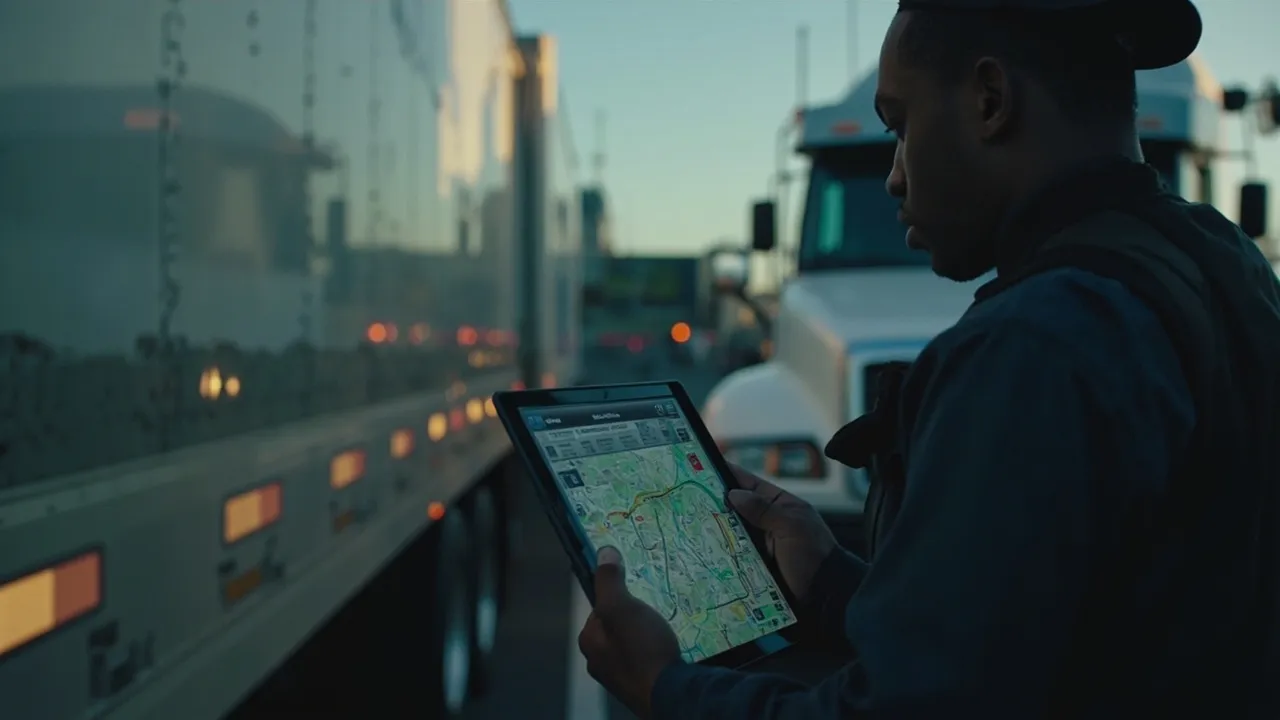
A route plan is a forecast. The driver encounters the actual loading dock, road closure, security gate, customer request, and parking constraint. When the two disagree, treating every driver override as noncompliance wastes one of a fleet's best sources of operational intelligence.
The better approach is to capture each meaningful override as structured evidence. That does not mean giving every deviation a free pass. It means separating useful field judgment from avoidable behavior, then feeding what drivers learn back into the next plan.
The Route Is Only as Good as Its Assumptions
SupplyChainBrain describes a familiar execution gap: traffic, delays, and last-minute changes push drivers away from the plan, producing missed windows and recurring disruptions. Those disruptions repeat when the operation records only that a route varied, not why.
A planned arrival combines several assumptions: departure readiness, road speed, turn restrictions, vehicle access, parking availability, check-in time, unloading duration, and customer availability. One bad assumption can shift every subsequent stop. A planner may see twelve late deliveries; the driver may see one warehouse that held the vehicle for 42 minutes.
That distinction matters because reliability is the product customers notice. Gartner reports that 85% of respondents rank reliability among their three most important last-mile factors, and 48% rank it first. Improving reliability therefore requires more than calculating a theoretically shorter route. It requires learning which assumptions survive real execution.
Make Every Override a Small Data Record
An override should be captured with minimal driver effort. Do not ask for a paragraph at the curb. Present a short, context-aware list of reason codes and let the telematics record fill in the rest.
Useful reason-code groups include:
- Road condition: closure, collision, congestion, construction, unsafe turn, or weather;
- Site access: wrong entrance, vehicle restriction, gate queue, no legal parking, or security delay;
- Customer condition: requested sequence change, unavailable receiver, revised window, or added order;
- Vehicle and load: fuel or charge requirement, mechanical concern, load-access problem, or temperature-control issue;
- Plan defect: incorrect pin, impossible time window, missing service time, prohibited road, or sequencing conflict;
- Driver discretion: break, personal stop, familiar shortcut, or preference without an operating constraint.
The system should attach route ID, vehicle, driver, timestamp, coordinates, planned leg, actual path, added distance, added minutes, affected stops, and dispatcher approval. A driver should select the reason at a safe moment, while dispatch can add detail later.
This turns a vague red line on a map into usable evidence: “Gate 3 rejects vehicles over 26 feet between 3 p.m. and 5 p.m.; use Gate 5 and add 11 minutes.” That fact can improve every future route to the site.
Close Three Planning Feedback Loops
First, update travel-time assumptions. Compare planned and actual drive time by road segment, weekday, and time band. Exclude time spent stopped at customers so congestion is not confused with service delay. Promote a recurring driver detour into the network model only after several observations or independent confirmation; a single event may be temporary.
Second, update stop-duration assumptions. Measure arrival, geofence entry, check-in, service start, service completion, and departure separately. A 35-minute stop might contain five minutes of unloading and 30 minutes waiting for a dock. Those causes require different responses. Planners can change the service standard, while account teams address chronic customer detention.
Third, update delivery-window assumptions. Record whether the published window is genuinely enforced, whether early arrivals are accepted, and whether appointment changes arrive after dispatch. If a customer routinely requests a later sequence, incorporate the practical window rather than forcing drivers to recreate the same workaround daily.
Inbound Logistics recommends linking routing software with live vehicle tracking to compare planned and actual routes and identify detours or regular customer-site delays. The comparison becomes far more valuable when reason codes explain the variance.
Govern Overrides Without Punishing Good Judgment
Create three review categories. Validated exceptions are safety, access, customer, or disruption decisions supported by evidence. Model corrections reveal a bad map, duration, restriction, or window and require master-data changes. Avoidable noncompliance includes unsupported preferences, unauthorized stops, or repeated rejection of a feasible route.
Set thresholds before escalating. Review an override when it adds material miles or minutes, jeopardizes a committed window, violates a restriction, or occurs repeatedly. Do not make raw route adherence the primary driver score. Otherwise drivers will follow a bad plan to protect the metric—or stop reporting legitimate problems.
Dispatchers should be able to approve urgent changes during execution. A weekly operations review can then examine high-impact events and recurring codes. Assign every confirmed planning defect an owner and due date. Without that final step, reason codes become a better archive of the same old problems.
Measure Whether the Loop Is Learning
Track override frequency per 100 stops, added miles and minutes, approval rate, repeat exceptions by location, corrected master-data records, and on-time performance after correction. Also compare planned-versus-actual travel time and service time separately.
A falling override rate is useful only if service remains strong. The better signal is fewer repeated exceptions alongside better on-time delivery, lower excess mileage, and more accurate route-duration forecasts. Segment results by reason, customer, planner, route type, and driver tenure so one difficult territory does not distort the entire fleet.
Start with a two-week pilot across a small group of routes. Agree on ten to fifteen reason codes, review them with drivers, and remove codes that overlap. Correct the five most repeated planning defects, then measure the following two weeks. The aim is not a perfect taxonomy. It is a visible cycle from field observation to planning improvement.
Turn Field Experience Into a Fleet Asset
Drivers already adapt routes. The operational choice is whether those decisions disappear at the end of the shift or become data that improves tomorrow's plan. Structured overrides preserve local judgment, strengthen governance, and help route optimization learn from the conditions it was meant to manage.
CXTMS connects shipment execution, route events, exceptions, and performance analysis in one operating view. Request a CXTMS demo to see how your team can turn plan-versus-actual delivery data into more reliable routes.