DOT’s High-Frequency Freight Data Deal Changes the Standard for Transportation Market Intelligence

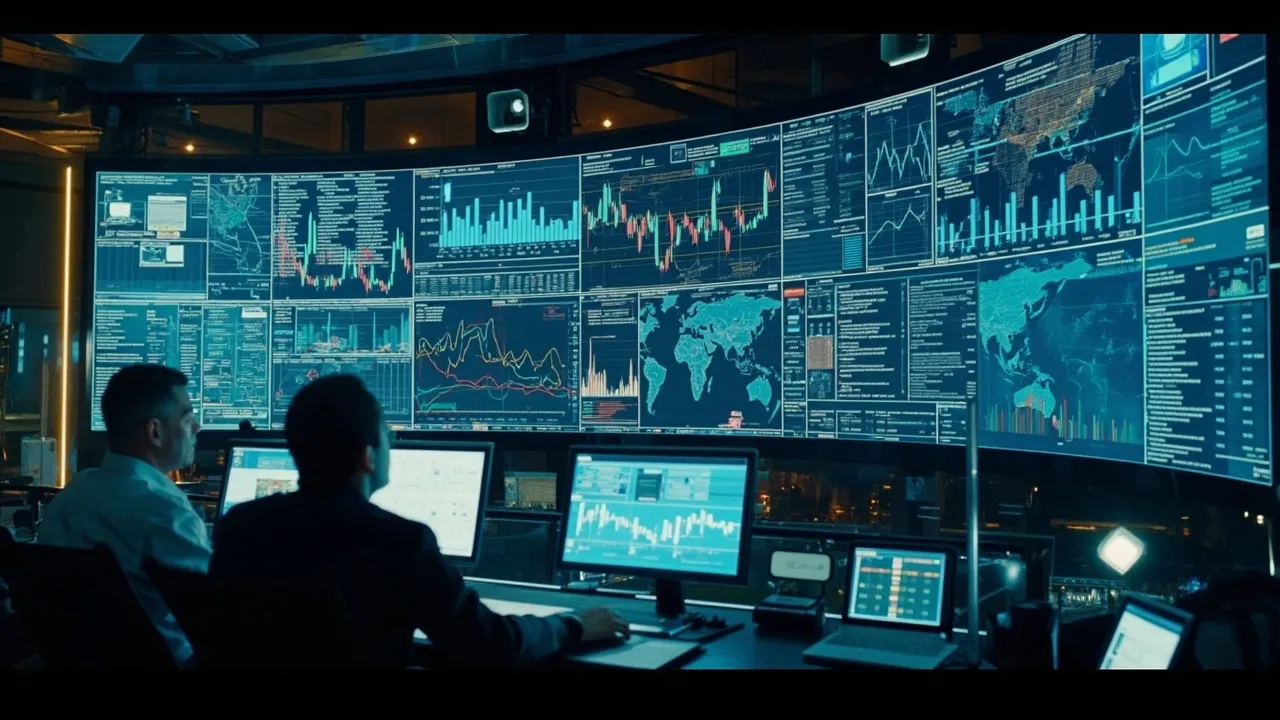
Monthly freight indicators still matter, but they no longer move at the speed of transportation operations. A routing guide can weaken in days. A regional capacity pocket can tighten between bid cycles. Spot rates can turn before a monthly report confirms that the market has changed.
That gap is why the U.S. Department of Transportation's decision to purchase high-frequency freight market data is more than a government technology story. It signals a new standard for transportation intelligence: market oversight increasingly requires current operational signals alongside traditional economic statistics.
According to FreightWaves' report on the contract, USDOT will receive aggregated and anonymized indicators covering truckload, intermodal, ocean, and air cargo. The data is intended to support transportation analysis, economic research, regulatory enforcement, and network-resilience work. It captures activity at booking and procurement, giving analysts earlier visibility into demand, capacity, and utilization.
For shippers, the message is straightforward: if high-frequency freight data is useful enough to inform national transportation analysis, it should also improve the daily decisions inside a transportation management system. But faster data is only valuable when it is governed well.
From a dashboard signal to an auditable decision
A market index should never become an unexplained instruction to a transportation team. Shippers need a governance layer that connects every external signal to a specific business decision.
Start by recording five elements for each dataset: its owner, definition, geographic and modal scope, update frequency, and revision policy. Then preserve the value and timestamp that supported each action. If a procurement manager launches a mini-bid, changes a routing guide, or raises a disruption alert, the organization should be able to reconstruct which market reading crossed which threshold.
That lineage matters because high-frequency data often changes faster than contracts, operating policies, or financial controls. A TMS should not silently overwrite yesterday's benchmark with today's value. It should retain a time-stamped snapshot, the rule evaluated, the person or workflow that approved the change, and the shipments or lanes affected.
This turns market intelligence into an auditable decision record instead of a collection of interesting charts.
Use thresholds that resist daily noise
The latest freight readings illustrate both the value and the danger of reacting quickly. FreightWaves reported that the July Logistics Managers' Index registered 68.9, down from 71.7 in June but still above its all-time average of 61.7. Transportation capacity fell from 30.8 to 28.4, while transportation utilization dropped 9.7 points to 65.0. Contract truckload rates were also 18% higher year over year.
Those figures tell a nuanced story: the overall logistics market remained expansionary even as capacity contracted and some short-term pricing measures eased. A single daily movement would not capture that context.
Procurement teams should therefore use confirmation rules rather than one-day triggers. A practical structure could include:
- A mini-bid when a lane-level benchmark moves beyond a defined percentage for five consecutive business days and the shipper's own tender rejection rate also deteriorates.
- A routing-guide review when primary-carrier acceptance falls below its service target across a minimum shipment count, not after one rejected load.
- A disruption alert when two independent signals—such as capacity and spot pricing—move outside their normal range in the same region.
- An executive escalation only when the expected cost or service exposure exceeds a defined financial threshold.
The exact numbers should reflect each network's volume and risk tolerance. The principle is universal: combine persistence, corroboration, and materiality before changing an operating plan.
Define different clocks for different decisions
Not every transportation decision needs real-time data. Matching the refresh rate to the decision prevents both delay and overreaction.
Dispatch and recovery teams may need intraday tender, weather, closure, and capacity signals. Lane managers may review daily market movements. Procurement leaders can evaluate weekly trends for mini-bids and routing-guide adjustments. Finance and executive teams may still prefer monthly summaries that reconcile operating changes with budgets.
The TMS should translate these clocks into roles and workflows. An intraday alert might suggest an alternate carrier without changing a contracted routing guide. A sustained weekly threshold could open a controlled procurement event. A monthly review could approve a broader network-policy change. Fast observations do not have to produce equally fast commitments.
Earlier 2026 data shows why this separation helps. In February, the overall LMI reached 61.5, while transportation capacity fell six points to 41 and transportation prices rose 5.2 points to 76.7. The same report noted that managers expected transportation prices to reach an expansion reading of 80.3 over the following 12 months. A shipper could use the immediate capacity signal tactically while treating the longer-range expectation as a planning scenario rather than a guaranteed forecast.
What to demand from a market-intelligence provider
Before connecting an external benchmark to TMS workflows, shippers should ask four hard questions.
First, what rights accompany the data? The contract should specify whether values may be stored, combined with internal shipment data, used in automated decisions, and retained for audits.
Second, how quickly is the data published, and how often is it revised? “Real time” is not a sufficient service definition. Buyers need measurable latency, availability, and correction commitments.
Third, what is the benchmark's lineage? Providers should explain source coverage, anonymization, sampling, geography, mode, calculation method, and known biases without exposing contributors.
Fourth, how will definitions change? A renamed market, revised lane hierarchy, or altered methodology can break comparisons and automated rules. Versioned definitions and advance change notices are essential.
High-frequency freight data will not eliminate uncertainty. It can, however, shorten the distance between a market change and a disciplined response. USDOT's investment makes the direction clear: timely transportation intelligence is becoming core infrastructure. Shippers that pair it with explicit thresholds, benchmark lineage, and auditable TMS workflows will respond earlier without surrendering control to the noise.
Ready to turn external market signals into governed transportation decisions? Request a CXTMS demo to see how centralized workflows, carrier performance data, and exception management can support a more responsive freight operation.