Digital Provenance Is the Missing Control in AI-Assisted Logistics Decisions

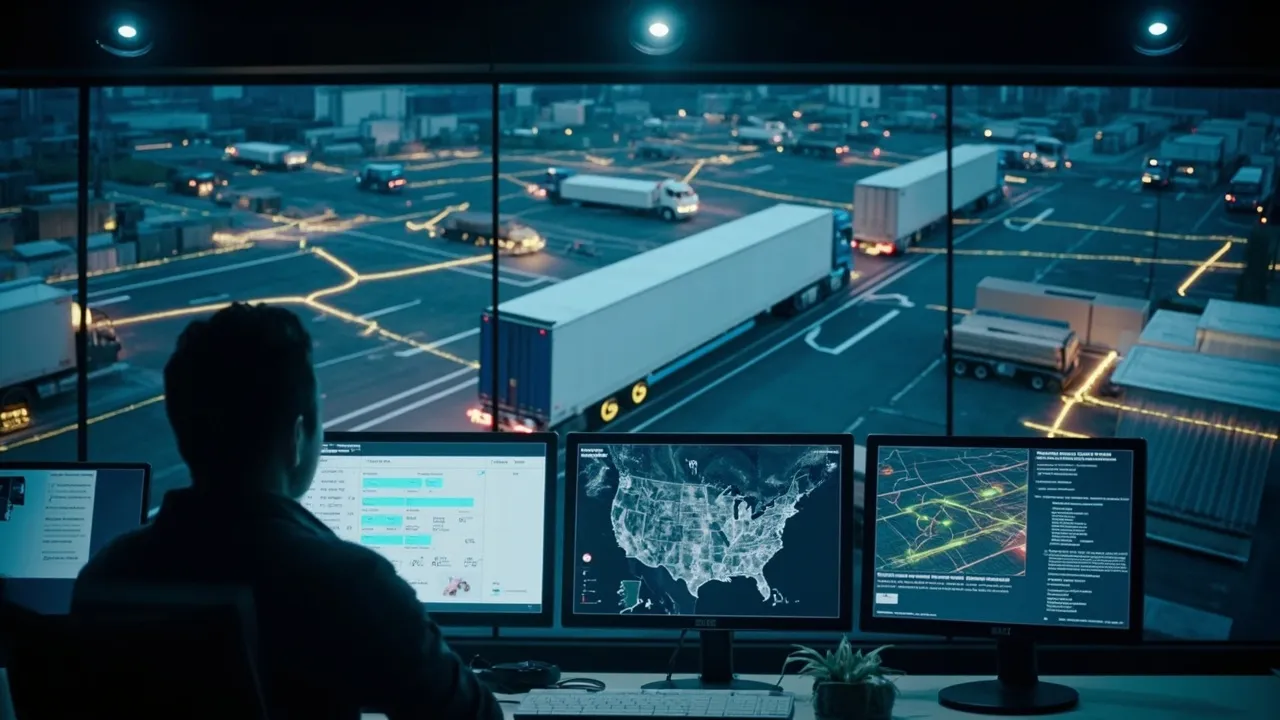
An AI recommendation can look precise while hiding a weak chain of evidence. A transportation planner sees “switch carriers,” “accept the new ETA,” or “expedite this load,” but may not see which rates, events, permissions, and model version produced the answer.
That gap matters because logistics decisions create real commitments. A carrier award changes cost and service risk. An ETA update can trigger labor, inventory, and customer promises. An exception decision may waive a charge or reroute regulated freight. When the outcome is challenged, “the AI suggested it” is not an operational defense.
Digital provenance supplies the missing control. Gartner describes it as the ability to verify the origin, ownership, and integrity of software, data, media, and processes. Gartner predicts that by 2029, organizations that fail to invest adequately in provenance capabilities could face sanction risks reaching billions of dollars. For freight operations, the immediate lesson is simpler: every consequential recommendation needs a traceable lineage.
An Audit Log Is Not Decision Lineage
Most transportation systems already record logins, field changes, and timestamps. Those logs answer questions such as who edited the delivery date or when a tender status changed. They rarely explain why an AI system recommended the change.
Decision lineage joins the operational event to its evidence. If a model recommends Carrier B over Carrier A, the record should identify the eligible carrier set, contract rates, accessorial assumptions, service history, capacity signals, constraint rules, model version, and approving user. If the recommendation changes after a new tracking ping, both the earlier and later evidence sets should remain reproducible.
The distinction is crucial:
- A dashboard history shows what users saw.
- An audit log shows what fields changed.
- Provenance shows where the inputs came from, how they were transformed, what logic produced the recommendation, and who authorized action.
That richer record makes an AI-assisted decision explainable without pretending that every model is perfectly interpretable. Operations may not need a mathematical explanation of every internal weight. They do need enough evidence to reconstruct the business choice.
Start With Four High-Impact Freight Decisions
Provenance controls should begin where recommendations can alter money, service, or compliance.
Rate recommendations. Capture the tariff, contract, spot quote, currency, fuel table, accessorial rules, and validity window. The system should identify whether the recommendation used historical invoices, current contracted terms, or an estimated market rate. Otherwise, an attractive price can survive on screen after its quote expires.
ETA changes. Preserve the carrier event, GPS observation, terminal status, weather or congestion input, time zone, and prediction version. A planner should be able to distinguish a carrier-supplied milestone from a model-derived estimate and see when the underlying data was last refreshed.
Carrier selection. Record the candidate pool and every exclusion. Insurance status, authority, equipment, lane history, customer routing rules, emissions requirements, and capacity responses all belong in the evidence package. This prevents a recommendation from appearing unbiased when a permissions error silently excluded a qualified carrier.
Exception handling. Keep the shipment state, threshold breached, playbook version, proposed action, projected cost, and approval. A detention waiver, service upgrade, or customs escalation should have a durable reason—not merely a chat transcript.
The need is growing quickly. Gartner reported that 67% of supply chain digital investment is allocated to AI, while 55% of chief supply chain officers remain unclear about the return on those investments. Provenance helps connect spending to decisions and decisions to measurable outcomes.
The Minimum Provenance Record
A practical TMS does not need to archive every transient calculation forever. It should retain a compact record for any recommendation that reaches an operator or triggers an automated action.
At minimum, store:
- Decision identity: shipment, order, load, lane, recommendation type, and timestamp.
- Source identity: system, table or feed, record identifiers, observation times, and source owner.
- Evidence snapshot: the material values used, their units, freshness, and a hash or immutable reference to the input set.
- Transformation history: normalization, joins, calculated fields, exclusions, and business-rule versions.
- Model identity: provider, model name, deployed version, prompt or workflow version, confidence where meaningful, and execution time.
- Permission context: the service and user roles allowed to retrieve the inputs and initiate the action.
- Recommendation: proposed action, ranked alternatives, expected cost or service effect, and cited constraints.
- Human disposition: accepted, modified, rejected, or escalated; approver; reason code; and free-text note when required.
- Outcome: actual cost, service result, exception resolution, and any later reversal.
This schema should sit beside the shipment record, not in an isolated AI observability tool. Operations, procurement, finance, customer service, and compliance all need to reach the same evidence from the transaction they are investigating.
Make Permissions Part of the Evidence
An answer is not trustworthy merely because its source data is accurate. The model and user must also have been entitled to use that data for that purpose. Customer-specific rates, personal driver information, customs documents, and commercially sensitive carrier terms require access boundaries.
Record the permission context at decision time. If a later policy change removes access, the historical record should show that the original use was authorized without exposing restricted content to a new viewer. Use references, hashes, and role-aware retrieval rather than copying every sensitive field into a universal log.
This is especially important as integration becomes the bottleneck. In another Gartner survey, 56% of CSCOs called integration with legacy systems and processes a major AI challenge, while 50% cited limited internal expertise. A provenance layer makes those integrations testable: teams can see which source fed a decision, where a transformation occurred, and which owner must correct it.
Measure Decisions, Not Model Activity
AI governance often stops at uptime, token volume, response latency, or generic accuracy scores. Those measures say little about freight performance. Link each recommendation to its disposition and outcome instead.
Track acceptance rate by use case, override reasons, savings realized versus forecast, ETA error, tender acceptance, service failures, and exception cycle time. Segment results by model version and data source. If a new ETA model improves average accuracy but creates more severe misses on temperature-controlled loads, provenance makes that pattern visible. If planners routinely reject a carrier recommendation because a local dock restriction is missing, the lineage points to a data defect rather than “user resistance.”
This is how provenance becomes an operating control instead of a compliance archive. It supports model review, supplier disputes, customer explanations, and continuous improvement from the same record.
Build Trust One Recommendation at a Time
Logistics teams do not need to wait for an enterprise-wide provenance program. Pick one consequential workflow, define its minimum evidence, retain model and rule versions, require reason-coded approval, and measure the result. Expand only after the record can reproduce why the recommendation was made.
CXTMS unifies shipment events, rates, carrier activity, exceptions, and approvals so AI-assisted decisions can remain connected to the operational evidence behind them. Request a CXTMS demo to see how a transportation record can support explainable, governed automation.