Delivery Route Optimization Software: Test Promise Accuracy Before Miles Saved

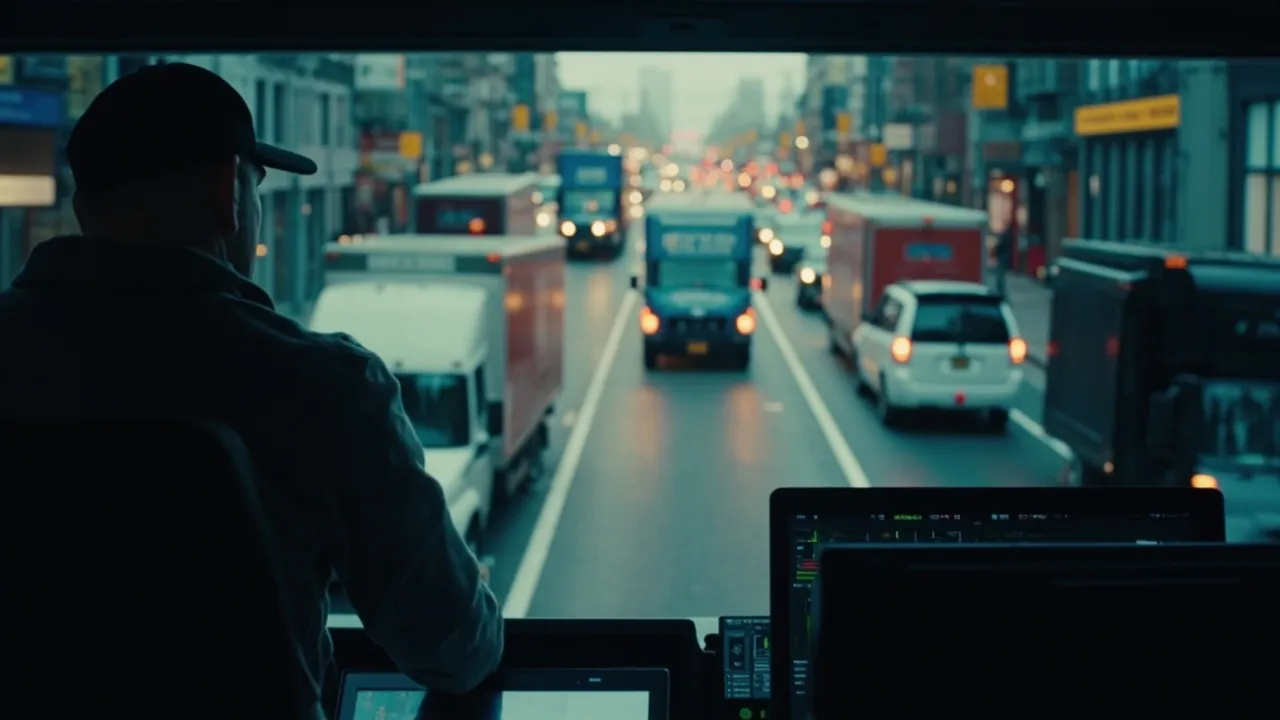
Delivery route optimization software can produce an impressive demo: fewer miles, tighter routes, and more stops per vehicle. But a mathematically efficient plan is not necessarily an executable one. If it ignores receiving hours, realistic service time, vehicle restrictions, driver breaks, or orders added after dispatch, the savings disappear into late arrivals and manual replanning.
The better buying question is not “How many miles can the solver remove?” It is “How often can this system produce a route that drivers can execute while keeping the promise made to each customer?”
That distinction has financial weight. McKinsey reports that 10% of last-mile packages require redelivery globally, with the figure reaching approximately 15% in the United States. A route that looks cheap before dispatch can become expensive when a missed window creates another stop, another customer contact, and another day of vehicle capacity.
Build the Scorecard Around the Customer Promise
Planned miles remain useful, but they should sit inside a balanced scorecard. Evaluate each candidate on at least five outcomes:
- Promise accuracy: the percentage of stops completed within the original customer-facing date or time window.
- Route stability: how much the stop sequence and driver assignment change between initial planning and release.
- Driver feasibility: whether planned travel, service, break, loading, and return times match what drivers can actually perform.
- Exception recovery: the time and cost required to replan after a cancellation, failed attempt, breakdown, or urgent order.
- Fully loaded cost: miles, labor, tolls, overtime, failed deliveries, support contacts, and redelivery expense per completed stop.
This prevents a common selection error: awarding the project to the lowest simulated mileage even though the route depends on impossible assumptions. It also connects routing to service. Inbound Logistics recommends tracking first-attempt delivery rate, cost per delivery, and on-time percentage when evaluating modern route optimization—not just distance.
Adoption is already broad enough that “uses optimization” is not a differentiator. A Supply Chain Dive report found that 76% of surveyed shippers used route and load optimization in sustainability efforts. The same report noted the operational tension: fixed delivery days and time windows can restrict a carrier's freedom to optimize. Real constraints are therefore not inconvenient details; they define the problem the software must solve.
Run the Pilot With Messy Production Data
A fair pilot should use several weeks of actual orders, not a curated sample of evenly distributed stops. Include dense and sparse territories, apartment buildings, rural addresses, appointment deliveries, long service times, seasonal peaks, and days when demand exceeded normal capacity.
Feed every candidate the same constraint set:
- Customer time windows and promised dates.
- Stop-specific service times based on history, not a universal average.
- Vehicle capacity, equipment, access, and product compatibility.
- Driver qualifications, shift limits, breaks, start locations, and end locations.
- Depot loading times, pickup cutoffs, restricted roads, toll preferences, and parking realities.
- Order dependencies, including pickup-before-delivery and multi-piece shipments.
Then replay disruptions. Add an urgent order after routes are built. Cancel a stop. Delay a vehicle departure. Mark a delivery attempt unsuccessful. Close a road or make a driver unavailable. The test should record how quickly the software generates a feasible response, how many other promises it disturbs, and whether dispatchers can understand why it made the change.
Do not let the vendor grade its own output. Dispatchers and experienced drivers should review routes before execution, while actual telematics and proof-of-delivery data should determine the result afterward. Compare planned and actual arrival, service, drive, and completion times at the stop level.
Measure Route Stability, Not Just Reoptimization Speed
Fast reoptimization sounds attractive, but constant change can damage execution. A solver may improve its objective by moving ten stops among three drivers whenever one order changes. The new plan can be mathematically superior while creating confusion at loading, invalidating printed paperwork, and forcing customers to absorb new arrival windows.
Set explicit stability rules. Protect routes after loading begins. Penalize driver reassignment and major sequence changes. Require approval before a committed window moves. Show dispatchers what changed, why it changed, and which alternative was rejected.
The system should distinguish between changes that improve the network and changes that merely make the model look better. Useful measures include stops reassigned after release, promises changed after customer notification, minutes of dispatcher intervention per exception, and the difference between planned and actual sequence.
Require Four Operational Integrations
Optimization cannot remain a standalone planning screen. Its recommendations depend on current facts and must flow into execution.
Order integration supplies addresses, quantities, promised windows, service requirements, and order changes. The interface needs event timestamps and version control so the planner does not optimize a stale order.
Dispatch and driver integration sends the approved route, captures acceptance, and returns location and status events. Drivers need navigation notes, access instructions, contact rules, and a controlled way to report exceptions.
Proof-of-delivery integration records arrival, completion, signature, image, quantity variance, refusal, and failed-attempt reason. These events establish whether the promise was met and improve future service-time assumptions.
Customer-notification integration publishes an appropriate window and updates it only under defined rules. A system should not send customers every internal recalculation. It should communicate a stable, supportable promise and preserve the original commitment for performance reporting.
For every interface, identify the system of record, update frequency, failure behavior, and reconciliation process. If an API is unavailable, dispatch needs a visible queue and a safe retry path—not silent data loss.
Choose the Software That Learns From Execution
The final comparison should use out-of-sample days the vendor has not tuned against. Rank candidates by promise accuracy and completed-delivery cost, then apply guardrails for mileage, overtime, route stability, and dispatcher effort. Review results by territory, driver, stop type, and demand level so a strong average cannot hide a weak operating segment.
The best delivery route optimization software is not the product that draws the shortest lines on a map. It is the one that turns real constraints into reliable routes, preserves customer commitments during disruption, and learns from actual execution.
Connect Planning and Execution With CXTMS
CXTMS connects orders, dispatch decisions, milestones, proof of delivery, customer visibility, and transportation cost in one operational workflow. Teams can measure route plans against actual performance and manage exceptions without losing the original delivery promise.
Request a CXTMS demo to evaluate routing outcomes from order release through completed delivery.