Coos Bay’s $205M Rail Upgrade Needs a Gateway Qualification Scorecard

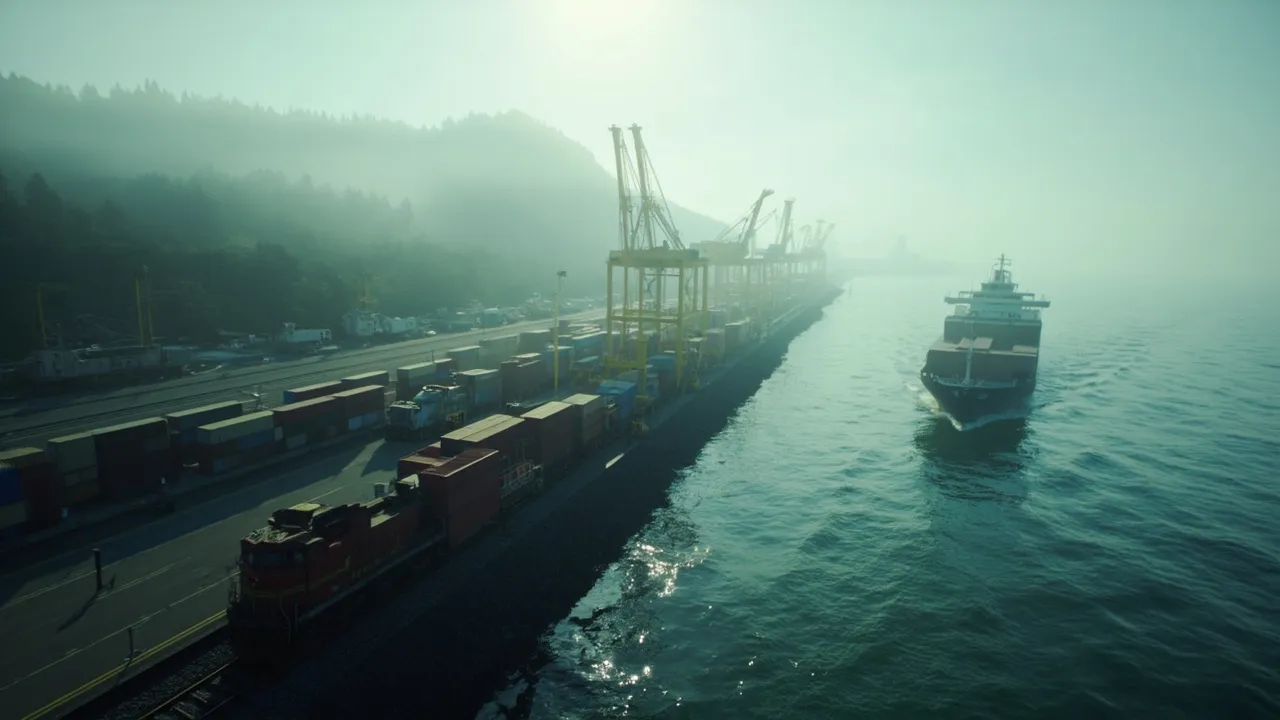
Nearly $205 million in federal rail funding moves the proposed Pacific Coast Intermodal Port at Coos Bay materially closer to construction. It does not yet make Coos Bay a proven container gateway.
That distinction matters for shippers. Public investment can remove a physical constraint, but a routing guide needs evidence that the entire chain—from vessel arrival through terminal handling, rail departure, inland interchange, and empty-equipment return—works at an acceptable cost and service level. A new gateway should earn volume through a qualification scorecard, not receive it because the headline investment is large.
What the $205 million actually advances
FreightWaves reports that the $204.8 million Consolidated Rail Infrastructure and Safety Improvements award will fund final design and construction on the Coos Bay Rail Line. Planned work includes track, tie, bridge, and tunnel repairs and replacements intended to improve capacity and reliability.
That is consequential infrastructure. The 111-mile railroad connects Coos Bay with the Eugene area and, from there, Union Pacific and the national network. Reliable rail is central to a terminal designed around direct ship-to-rail transfers rather than a large local consumer market.
The award is also only one layer of a much larger development. FreightWaves puts the proposed terminal's cost above $2 billion and says opening remains years away, subject to additional funding, permitting, and environmental review. Before this award, the broader effort had received approximately $70 million across four federal programs, $160 million from Oregon, and $25 million from prospective private operator NorthPoint Development.
The correct conclusion is therefore narrow: a critical rail workstream is funded more credibly. The grant does not prove carrier calls, terminal productivity, inland schedules, commercial rates, or shipment recovery.
Score six links in the gateway chain
A shipper qualification process should score Coos Bay across six connected operating dimensions.
1. Vessel access. Document permitted channel depth, tidal or draft restrictions, berth dimensions, turning requirements, pilotage, tug availability, and weather closures. Then compare those limits with the actual vessels and services proposed—not a generic “deepwater” label. The score should include the probability and cost of diversion when a call cannot proceed.
2. Terminal throughput. The project has a stated capacity of 2 million TEUs, according to FreightWaves' coverage of its $25 million INFRA agreement. Capacity is not the same as demonstrated productivity. Require evidence for berth moves per hour, crane availability, train assembly time, container dwell, gate hours, chassis supply, reefer plugs, inspection capacity, and surge staffing. Score both normal operations and a peak-week scenario.
3. Rail path. A 111-mile short-line connection introduces multiple handoffs before freight reaches a national inland network. Test usable train length, axle-load limits, tunnel and bridge clearances, siding capacity, dispatch priority, locomotive and crew plans, Eugene interchange windows, and onward schedules. The $204.8 million award improves this category, but shippers should qualify the completed service rather than count construction dollars as performance.
4. Inland reach. Model door-to-door transit and variability for each destination market. A Midwest connection may look attractive on a map yet lose its advantage through interchange dwell or limited frequency. Compare scheduled and 90th-percentile transit, number of handoffs, free time, demurrage exposure, and last-mile dray availability with incumbent routings through Seattle-Tacoma, Vancouver, Prince Rupert, Portland, or California gateways.
5. Drayage and equipment balance. A rail-first facility still needs local tractors, chassis, maintenance, customs support, and recovery drayage. Import volume must also produce an equipment flow useful to exporters. Earlier FreightWaves reporting noted the project is intended to improve empty-container access for agricultural exporters. Validate that promise by equipment type, steamship line, release timing, and season—not in aggregate.
6. Recovery options. Every gateway fails occasionally. Score the playbook for vessel bunching, rail outage, tunnel restriction, labor shortage, wildfire, landslide, weather event, customs hold, and inland service failure. Identify who can authorize a diversion, where boxes can be grounded, how alternate dray is procured, and which incumbent port can accept rerouted freight.
Compare total landed cost, not a port rate
The commercial comparison should begin at origin booking and end at the consignee. Include ocean freight, port and documentation charges, rail linehaul, fuel, drayage, chassis, storage, demurrage, customs exams, cargo insurance, inventory carrying cost, and the expected cost of delay.
Run the model by lane and commodity. A direct rail option may be compelling for predictable inland flows but less suitable for urgent cargo, local distribution, oversized freight, or shipments that depend on frequent vessel choices. Avoid blending all cargo into one average that conceals where the gateway wins and loses.
Use at least three cases: planned service, peak congestion, and disrupted rail. Compare each with an incumbent gateway using the same assumptions. The decision metric should combine landed cost with transit variability and recoverability; the cheapest base rate is not the cheapest network when one missed interchange forces days of inventory exposure.
Set evidence gates before awarding volume
Place Coos Bay in a “candidate” tier until objective gates are passed. Those gates should include completed environmental approvals, committed ocean service, published terminal tariffs, executed rail operating agreements, validated train paths, equipment and labor plans, customs readiness, and a tested disruption procedure.
Next, run controlled pilot volume. Measure vessel-to-train dwell, rail departure reliability, interchange dwell, end-to-end transit, exceptions, invoice accuracy, cargo condition, and empty return. Only expand volume after performance holds across multiple calls and a realistic demand peak.
CXTMS can make that qualification auditable. Store each gateway's cost assumptions, schedules, service constraints, approval status, and effective dates alongside routing rules. Shipment milestones then show whether planned dwell and transit match reality. When an evidence gate expires or performance breaches a threshold, planners can reduce allocation or trigger an approved alternative without rebuilding the decision from email and spreadsheets.
Coos Bay's rail award is a serious step toward another Pacific Northwest routing option. For shippers, the smart response is neither dismissal nor premature commitment. Define the proof required, test the complete operating chain, and let measured execution earn a place in the routing guide.
Ready to compare gateways with shipment-level cost and service evidence? Request a CXTMS demo and build routing decisions that remain defensible when conditions change.