China Restarts Fuel Exports After Golden Week: Sequence Tanker Nominations, Not Just Volumes

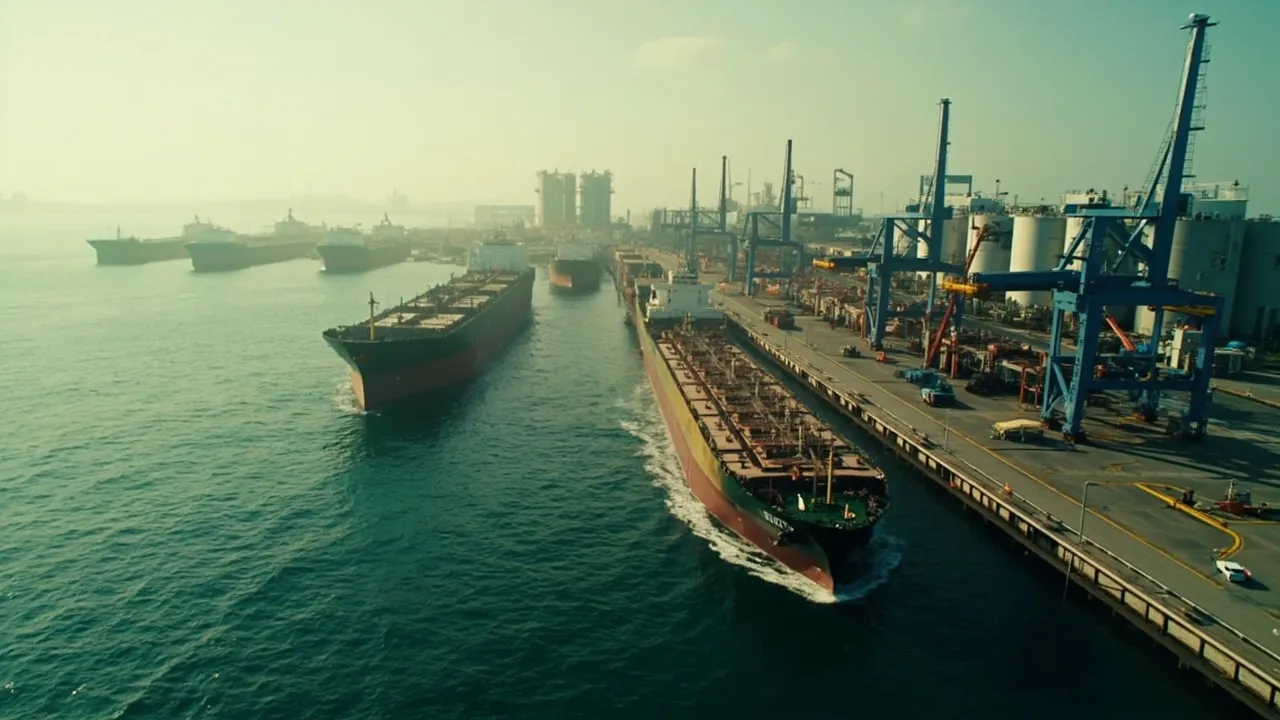
China's October restart of refined-fuel exports is a useful reminder that approved volume is not the same as executable volume. When several exporters return after the same holiday pause, the operational question is not simply how many tons can move. It is which parcel should move first, through which terminal, into which vessel, with which documents—and what happens when one element slips.
Reuters reported that China was set to resume exports after a brief Golden Week halt, with about 3.7 million metric tons of gasoline, diesel, and jet fuel approved for October. That is below the slightly more than 4 million tons refiners had been expected to export in September. The restart may modestly ease tight international product markets, but it also compresses activity into fewer available October days.
For refinery planners, traders, terminal operators, and tanker schedulers, this is a sequencing problem.
A restart creates a wave, not a smooth flow
China began the week-long National Day holiday on October 1 without approval for most October fuel exports outside Hong Kong and Macau. Once approvals return, delayed plans do not automatically spread themselves evenly across the remaining calendar. Commercial teams want to recover sales, refineries need tank space, terminals face shared berth constraints, and shipowners must decide whether to wait or redeploy vessels.
The scale matters. Reuters reported that China exported 4.6 million tons of the three fuels in August, including 648,000 barrels per day of jet fuel, 320,000 bpd of diesel, and 191,000 bpd of gasoline. Yet combined exports from January through August were 19 million tons, down 21% year over year. Those swings make historical monthly averages a poor guide for daily terminal execution.
A refinery can have quota, product, and a buyer while still missing its sailing. One late quality certificate or one occupied berth can push a nominated vessel behind several other parcels. The downstream effect may include anchorage waiting, demurrage, rescheduled blending, inventory congestion, or a destination stockout.
Convert the run plan into shipment-ready parcels
The refinery run plan is the starting point, not the loading schedule. Each export parcel needs a shipment-ready record that connects four operational layers:
- Product readiness: grade, quantity, tank assignment, blending completion, quality test, and earliest release time.
- Trade and regulatory readiness: export approval, contract terms, customs filing, certificate status, and destination requirements.
- Terminal readiness: pipeline or transfer window, compatible berth, loading rate, draft restrictions, and planned maintenance.
- Vessel readiness: nominated tanker, parcel capacity, ETA range, vetting status, prior-cargo compatibility, and laycan.
If these details remain in separate spreadsheets and email threads, the schedule can look feasible even when its dependencies conflict. A 40,000-ton diesel parcel, for example, should not hold the prime berth window merely because its commercial nomination arrived first if laboratory release is still uncertain and a fully cleared jet-fuel parcel is ready to load.
Score nominations by executability
A practical nomination queue should rank parcels using more than promised departure date. Teams can assign each shipment an executability score based on confirmed product availability, document completeness, berth fit, vessel ETA confidence, and destination urgency.
The scoring rules should be visible. A parcel with all documents complete and a vessel arriving inside a reliable six-hour window could receive priority over a larger parcel whose product will not finish blending until late in the berth slot. Likewise, destination inventory risk may justify protecting a jet-fuel shipment even when another cargo has a slightly earlier commercial date.
This is not about replacing operator judgment with an opaque algorithm. It is about showing why one nomination is ahead of another and preserving the evidence behind every change.
Protect the berth from avoidable waiting
When several exporters restart together, the berth becomes the scarce shared resource. Build a rolling 72-hour view with firm, provisional, and at-risk windows. A firm window should require completed documents, confirmed product, an accepted vessel, and an ETA within tolerance. Provisional windows can reserve capacity but must carry a release deadline. At-risk windows should trigger a candidate swap before the berth sits idle.
The operating team also needs explicit thresholds. Examples include:
- Escalate when vessel ETA moves beyond the berth tolerance.
- Release a slot when quality clearance is not received by the agreed cutoff.
- Re-sequence when tank inventory approaches its safe operating limit.
- Alert commercial teams when a swap may breach laycan or change demurrage exposure.
- Notify the destination planner when revised arrival threatens minimum inventory.
These controls matter because China's role is meaningful even when its headline volume is smaller than that of some other Asian refiners. Reuters described the country as a key swing supplier for regional markets. In a tight diesel, gasoline, and jet-fuel environment, a modest delay can therefore propagate beyond one terminal.
Manage exceptions as one connected timeline
Every nomination should have a common timeline: planned product-ready time, actual quality release, document completion, vessel ETA updates, berth start, loading completion, customs clearance, and sailing. The system should compare actual milestones with the latest approved plan and assign an owner to each exception.
That shared timeline prevents a common failure: optimizing one function while transferring cost to another. A refinery may protect tank capacity by advancing a cargo, but incur vessel waiting. A trader may protect a contractual date, but disrupt a terminal sequence. A terminal may maximize berth utilization, but send product toward a destination that already has adequate stock while a higher-risk market waits.
The right objective is total-flow performance. Track berth utilization, hours of vessel waiting, demurrage exposure, nomination changes, document holds, tank constraints, and destination inventory risk together. After the restart wave passes, those records also reveal which assumptions were dependable enough to use in the next disruption.
Make the next restart easier
October's 3.7-million-ton approval is a planning signal, not a loading plan. Execution improves when each ton is attached to a shipment-ready parcel and every parcel is placed in a transparent, continuously updated sequence.
CXTMS connects shipment milestones, documents, vessel schedules, exceptions, and accountable owners in one operational view. Request a CXTMS demo to see how your team can turn export approvals into executable tanker plans without losing control of berths, inventory, or customer commitments.