Canada’s Supply Chain Workforce Alliance: Convert Labor Gaps Into Lane-Level Risk

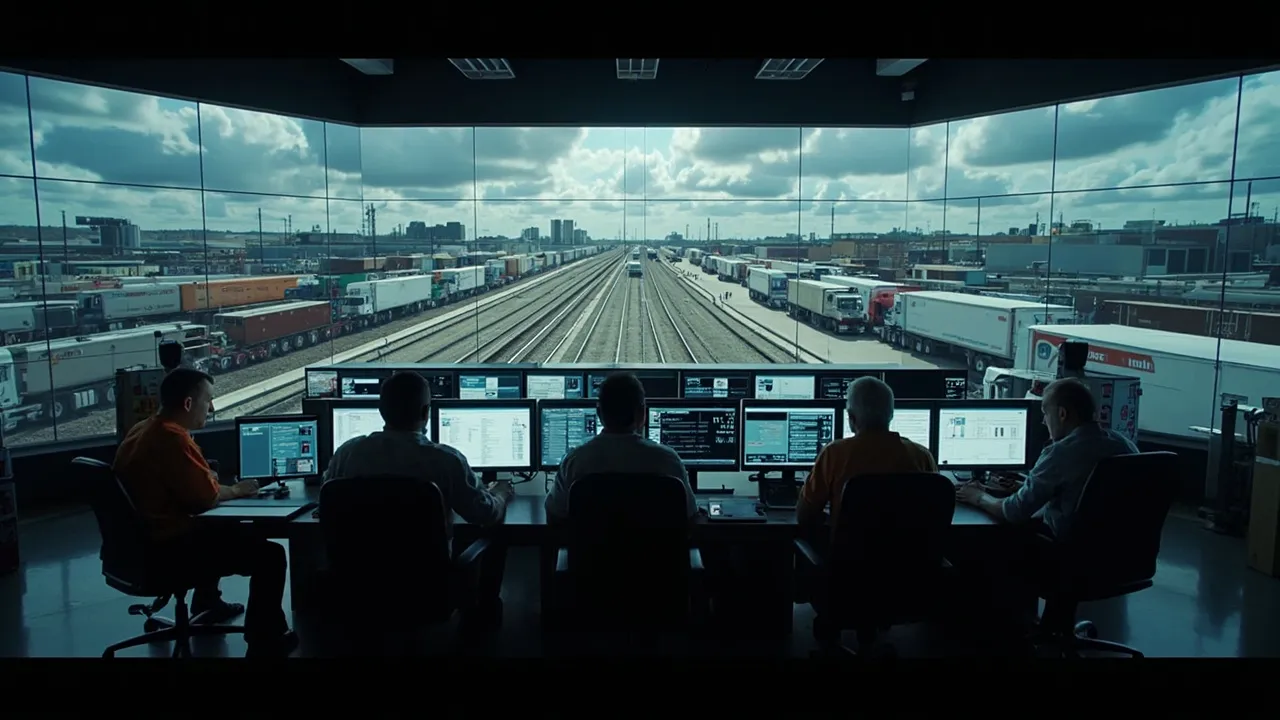
Canada has launched a transportation and supply chain workforce coalition focused on identifying labor shortages and developing training programs for critical roles. The SupplyChainBrain report on the new alliance is important for shippers, but its operational value will depend on whether broad workforce findings become specific signals for facilities and freight lanes.
A national shortage does not delay a shipment. A missing customs specialist on the evening shift, insufficient forklift certification at a cross-dock, or a thin pool of qualified drivers serving a remote terminal does. Transportation leaders should therefore treat workforce intelligence as a network-risk input rather than another annual human-resources statistic.
The need is wider than frontline headcount. A 2024 industry survey cited by SupplyChainBrain found that 55% of organizations considered planner and analyst roles hard to extremely hard to fill, while 54% said the same of management positions. A separate 2026 workforce survey reported that 14% of organizations still had no dedicated training budget. Those figures show why labor exposure can affect planning quality, exception response, compliance, and recovery—not just loading speed.
Translate occupation gaps into operating exposure
The first step is to map every critical occupation to the work it enables. A generic category such as “warehouse labor” is too broad. Operations teams need to distinguish receivers, order selectors, forklift operators, dangerous-goods handlers, maintenance technicians, supervisors, and inventory-control specialists. In transportation, the map should separate drivers by equipment and endorsement, dispatchers by region, customs staff by commodity expertise, and planners by mode.
Then connect those roles to five operational dimensions:
- Facility: Which terminal, warehouse, port, or customer site depends on the skill?
- Shift: Is qualified coverage available overnight and on weekends, or only during the day?
- Mode: Does the constraint affect truckload, LTL, rail, ocean, air, or intermodal moves?
- Border: Which crossings and customs processes require scarce knowledge or credentials?
- Lane: Which origin-destination pairs lack alternative workers, carriers, or facilities?
This mapping turns a workforce shortage into a usable risk register. A shipper may discover that national driver availability is adequate while reefer-certified coverage on one northern lane is fragile. Another may have sufficient warehouse headcount overall but only one dangerous-goods specialist on a high-volume night shift.
Put workforce indicators beside freight KPIs
Traditional transportation dashboards emphasize tender acceptance, on-time pickup, transit time, and cost per shipment. Those measures show performance after capacity has been committed. Workforce indicators can reveal deterioration before service fails.
Vacancy duration should be measured by role, site, and shift. A specialized opening unfilled for 90 days is more meaningful than an aggregate vacancy count that blends critical and noncritical jobs. Track time-to-fill trends and flag roles whose vacancy age exceeds the local norm.
Overtime concentration is an early warning of hidden dependency. Total overtime may look manageable while a small certified team works repeated extra shifts. Measure overtime hours per qualified employee and consecutive weeks above threshold. Persistent concentration indicates that the operation has capacity today but little resilience.
Certification coverage should compare demand with the number of currently qualified workers. Include expiration dates and shift availability. A facility with six licensed operators is not protected if four certifications expire before peak season or all six are assigned to the same shift.
Recovery depth measures how many people can cover a role after an absence or surge. Count trained backups and estimate how quickly they can be deployed. One primary employee and one backup may satisfy a roster, but it does not provide meaningful recovery capacity during vacations, weather events, or network disruption.
These indicators belong in the same operating review as carrier performance. Workforce and freight data viewed separately encourage late diagnosis.
Diagnose the real capacity constraint
When a lane deteriorates, procurement teams often label the problem “carrier capacity” and seek more trucks. That response can add cost without addressing the bottleneck.
Use event-level timestamps to locate where time is being lost. If tenders are accepted but pickups miss their appointments, examine driver dispatch and equipment positioning. If trucks arrive on time but dwell increases, inspect dock staffing, yard coverage, and certified equipment operators. If freight clears the terminal but pauses at the border, review customs documentation and brokerage coverage. If orders are released late, the constraint may sit with planners, inventory control, or customer approval.
The distinction matters during modal disruption. Reuters reported during Canada’s 2024 rail labor dispute that trucking providers faced additional demand they could not fully meet. That episode illustrated how pressure in one mode can spill rapidly into another. A lane-risk model should therefore record substitution capacity and the labor required to activate it, not merely the theoretical availability of trucks or railcars.
Build a lane-level workforce risk score
A practical score does not need to be complicated. For each important lane, combine four inputs: role criticality, current coverage, replacement lead time, and consequence of failure. Weight the result by shipment volume, customer priority, regulatory sensitivity, and availability of alternate facilities or modes.
Classify lanes into watch, constrained, and critical tiers. A watch lane might have rising overtime but adequate backup coverage. A constrained lane could depend on one shift with expiring certifications. A critical lane combines weak coverage with high customer impact and no realistic substitute.
Every tier needs a defined response. Watch lanes trigger weekly review and recruiting checks. Constrained lanes require cross-training, schedule changes, or prequalified alternate providers. Critical lanes need executive ownership, customer communication rules, and a tested contingency plan. The score should change as vacancies close, training completes, demand shifts, or alternate capacity becomes available.
Turn training into measurable resilience
The alliance’s training work will matter most when employers connect programs to network exposure. Prioritize skills that remove single points of failure, expand shift coverage, or unlock alternate modes. Record course completion, certification, supervised practice, and independent deployment as separate milestones; attendance alone does not create operating capacity.
CXTMS helps logistics teams connect shipment execution, carrier performance, facilities, and lane-level exceptions in one operating view. When workforce signals are added to that picture, teams can identify the actual constraint earlier and direct contingency capacity where it protects service most.
Request a CXTMS demo to see how lane-level visibility can support more resilient transportation planning and execution.