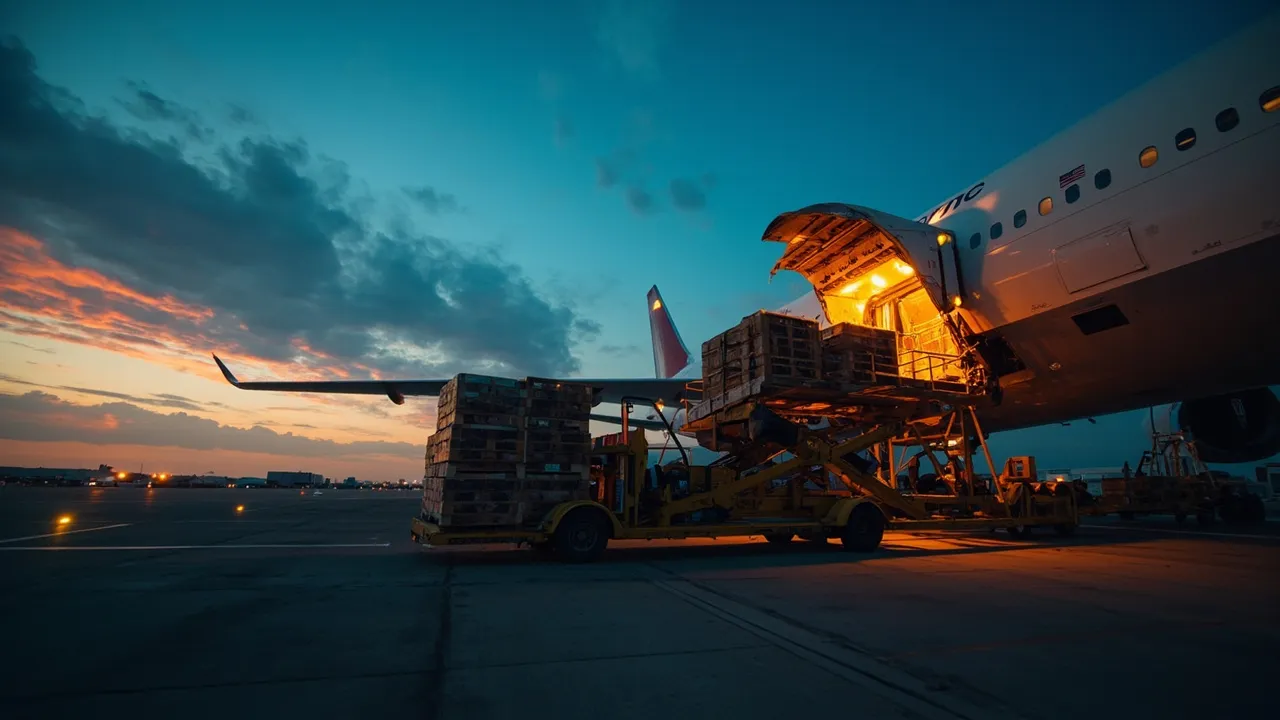
FAA Clears 35 More Boeing 777 Freighters: Recalculate the Air-Cargo Capacity Bridge


The FAA's decision to permit 35 additional Boeing 777 freighters gives the air-cargo market a badly needed bridge to the next generation of widebody aircraft. It does not, however, put 35 aircraft on the ramp today. Shippers, forwarders, and airlines should translate the waiver into delivery dates, usable payload, network assignments, and retirement decisions before changing their capacity assumptions.
Reuters reports that the FAA waived emissions requirements so Boeing can sell 35 more 777F aircraft. Boeing had sought the relief amid strong customer demand and delays affecting certification of the successor 777-8F. The decision extends the commercial runway of a proven freighter at a moment when replacement timing has become uncertain.
That is meaningful relief. But the operative word is bridge.
What 35 Aircraft Mean in Payload Terms
The current 777F is a highly capable long-haul freighter. FreightWaves puts its maximum payload at 112.5 tons and range at 4,970 nautical miles. At the theoretical maximum, 35 aircraft therefore represent about 3,938 metric tons of payload per flight cycle.
That number is useful for scale, not for budgeting. Actual payload depends on route length, fuel requirements, weather, airport restrictions, cargo density, loading configuration, and schedule resilience. Nor will every approved aircraft fly every day. Heavy maintenance, operational spares, crew availability, and irregular operations all reduce deployable capacity.
A more defensible model starts at aircraft level:
- expected delivery month and entry-into-service lag;
- assigned lane and payload limit for that stage length;
- planned weekly rotations and realistic completion factor;
- maintenance reserve and spare-aircraft policy;
- displaced, retained, or retired aircraft elsewhere in the fleet.
Only then should planners convert a new aircraft into annual available tonnage.
Approval Is Not Delivery
The waiver removes a regulatory constraint on sales and production. It does not eliminate the manufacturing queue, engine and component supply constraints, customer financing, cabin and cargo-system completion, acceptance testing, crew training, or route approvals.
This distinction matters most around peak season. A carrier may announce an order well before the aircraft becomes operational, while a forwarder may mistakenly treat the headline fleet count as bookable lift. Capacity procurement should instead use three dates: contractual delivery, expected acceptance, and conservative commercial service. The gap between them belongs in the risk register.
Build the bridge quarterly, not as a single 35-aircraft increment. Assign each tail a confidence-weighted delivery window. For example, capacity expected within six months might receive a higher planning probability than aircraft deep in the production sequence. Keep uncontracted waiver slots outside the base case entirely.
Map the Capacity to Lanes
The 777F's combination of payload and range makes it especially valuable on high-volume intercontinental routes, but fleet growth does not spread evenly across the global network. Airlines will place aircraft where utilization, yields, airport access, and customer commitments produce the best economics.
For a shipper, the important questions are therefore specific: Will an aircraft operate on the origin-destination pair that matters? Will it add a frequency, replace another freighter, or release a smaller aircraft to a secondary lane? Does the schedule align with production cutoffs and delivery promises? An extra rotation on a major Asia–North America gateway can improve the wider network, yet still provide little relief for cargo moving through a constrained spoke.
Model direct and second-order effects separately. Direct capacity is a new or larger flight on the target lane. Second-order capacity appears when the 777F releases another aircraft for a different route. Both can help, but the second is less certain and should carry a lower confidence factor.
Do Not Double-Count Deferred Retirements
New production can replace aging aircraft rather than create net growth. FreightWaves reported that FedEx ordered eight additional 777 freighters while delaying MD-11 retirements in response to international freight demand. That illustrates the two levers carriers can pull: introduce efficient twin-engine capacity and keep older lift flying longer.
Capacity plans must state which lever each forecast assumes. If an incoming 777F enables an MD-11 or 747 retirement, its gross payload is not a net market addition. If the older aircraft remains through the peak, the market temporarily gains both—but also carries higher fuel, maintenance, and reliability exposure.
Use four fleet buckets: firm new deliveries, probable deliveries, life-extended aircraft, and scheduled retirements. Calculate gross additions and net available lift independently. This prevents a retirement deferral from appearing once as retained capacity and again as growth attributed to the replacement aircraft.
Price the Operational and Environmental Tradeoff
The waiver preserves access to a proven platform while the next-generation freighter is delayed. That reduces near-term capacity risk, standardizes operations for existing 777 users, and can avoid dependence on older four-engine or tri-engine aircraft. It also prolongs production of a design that does not meet the newer emissions standard.
According to FreightWaves' coverage of the decision, the FAA characterized the incremental fuel burn from the 35 aircraft as a fraction of a percent of the commercial fleet total. Even so, airlines and cargo buyers should track fuel intensity and emissions by lane, because customer reporting obligations, sustainable aviation fuel premiums, and future carbon costs are commercial variables—not merely regulatory ones.
Residual value deserves equal attention. A mature, widely operated freighter can benefit from known maintenance practices and a strong support network. But a delayed successor does not disappear. Once newer aircraft enter service, fuel economics and environmental requirements may affect lease rates, resale values, and deployment choices for the last-built 777Fs.
Build a Capacity Bridge That Can Be Audited
The strongest planning model has a tail-by-tail delivery schedule, lane-by-lane deployment assumptions, and explicit retirement offsets. Run at least three scenarios: on-time deliveries with stable demand, delayed deliveries during a peak, and on-time deliveries accompanied by accelerated retirement of older aircraft.
For each scenario, measure weekly payload, frequencies, effective utilization, purchased allotments, spot exposure, fuel sensitivity, and recovery options after a cancellation. Flag every assumption by source and update it when an order, delivery, retirement, or certification milestone changes.
The FAA's 35-aircraft decision improves the range of possible outcomes. It does not guarantee capacity on a particular lane or date. The companies that benefit most will be those that connect fleet announcements to shipment-level demand early—and refuse to confuse authorized aircraft with available lift.
CXTMS connects air-freight bookings, schedules, capacity commitments, shipment milestones, and exceptions in one operating view. Request a CXTMS demo to build an auditable air-cargo capacity bridge and adjust procurement before a projected gap becomes an expedited shipment.