The 300,000-Metric-Ton Beef Tariff Quota Is a Cold-Chain Allocation Problem

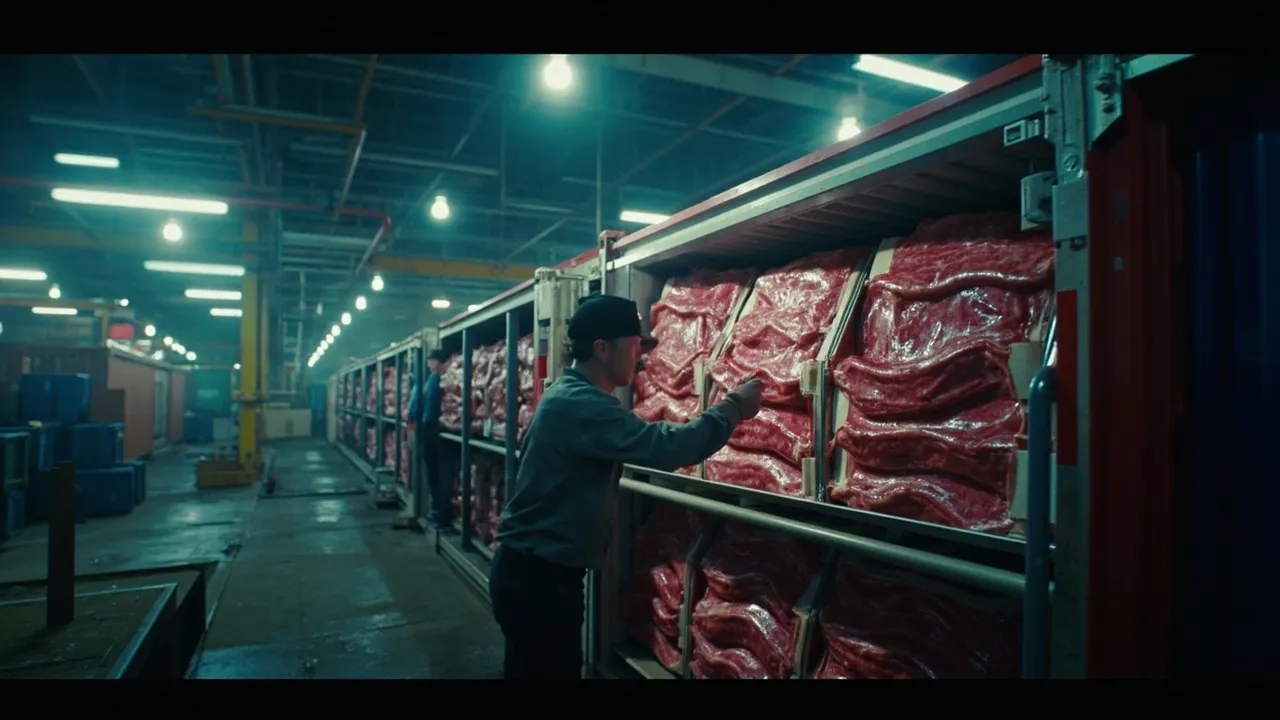
The United States' temporary tariff relief for ground beef looks like a trade-policy event. For importers, forwarders, cold-storage operators, and food distributors, it is something more immediate: a compressed allocation problem across quota, time, temperature, and capacity.
Supply Chain Dive reports that the United States will allow as much as 300,000 metric tons of ground beef to enter without the out-of-quota tariff for 90 days. Reuters likewise reported the temporary easing on August 21. The commercial opportunity is substantial, but it expires quickly and does not remove the physical constraints between an overseas supplier and a domestic customer.
A large quota inside a small window
Three hundred thousand metric tons over 90 days averages roughly 3,333 metric tons per day, or 23,333 metric tons per week. If a planning team uses a simplified payload assumption of 25 metric tons per refrigerated container, the full quota is equivalent to about 12,000 reefer loads. That is an illustration rather than a forecast: actual payloads, packaging, product mix, equipment limits, and regulatory requirements vary.
The calculation still reveals the operational scale. Importers cannot treat the quota as a spreadsheet entitlement and assume transportation will follow. Supplier production slots, vessel departures, reefer plugs, port appointments, inspection availability, drayage, and cold-storage doors must align within the same short period.
The policy also arrives against a constrained supply backdrop. Reuters linked the move to high beef prices and a domestic cattle herd that cannot be rebuilt quickly. That means import relief may create intense near-term competition for eligible product rather than a smooth, evenly distributed flow.
Build the plan backward from admissibility
A purchase order placed during the relief period is not necessarily a shipment that qualifies. Teams need a documented interpretation of the controlling date and evidence requirements—entry, arrival, withdrawal, or another customs milestone—confirmed with their customs counsel or broker.
Then they should plan backward from that milestone. Each shipment record should connect:
- quota eligibility and remaining allocation;
- origin, supplier, plant, product, and tariff classification;
- production-ready date and booking confirmation;
- vessel departure, estimated arrival, and inspection appointment;
- reefer set point and temperature-monitoring requirements;
- cold-storage reservation and final customer commitment;
- baseline duty, relieved duty, and fallback landed cost.
This structure prevents procurement, customs, transportation, and warehouse teams from maintaining four incompatible versions of the same load. It also makes the constraint visible early. A shipment may have quota allocation but no confirmed reefer slot, or confirmed transport but an arrival too close to the end of the relief period.
Reserve the cold chain, not just the product
Refrigerated freight cannot be improvised after the purchase contract is signed. A surge of imports concentrates demand at ports, inspection facilities, dray carriers, and warehouses already serving other food categories.
The safest approach is to reserve capacity in layers. Secure primary and backup sailings, confirm port reefer-plug availability, pre-book inspection and cold-storage windows where possible, and qualify more than one temperature-controlled dray provider. Allocation rules should favor shipments with end-to-end confirmation rather than those with only the lowest supplier price.
Temperature evidence matters throughout the move. Food Logistics describes how continuous data streams can track reefer-unit health and support maintenance. Importers should capture set point, supply-air and return-air readings, door events, alarm history, and custody changes in the shipment file. An excursion alert needs an owner, response deadline, and disposition process—not merely a dot on a map.
Inspection delays deserve special treatment. A container that sits longer than planned consumes plug capacity, raises demurrage exposure, and compresses remaining shelf life. Milestone alerts should identify missing documents before arrival and escalate containers approaching free-time, temperature, or quota deadlines.
Allocate scarce capacity with a score
When requested volume exceeds executable capacity, first-come, first-served is a weak rule. Importers can score proposed loads across four dimensions:
- Eligibility confidence: Is origin, product classification, supplier approval, and quota evidence complete?
- Execution confidence: Are production, booking, inspection, drayage, and cold storage confirmed?
- Margin resilience: Does the load remain profitable if duty relief is unavailable or costs rise?
- Service priority: Which customer commitment, inventory gap, or production schedule does the load protect?
A high-margin order with uncertain admissibility may rank below a slightly lower-margin load with confirmed capacity and a clear customer need. The score should be recalculated when sailing dates change, quota consumption accelerates, or inspection risk increases.
This is also where a transportation management system becomes the operating layer. A TMS can connect booking milestones, documents, temperatures, appointments, and costs to the same shipment instead of forcing teams to reconcile email threads during a 90-day rush.
Prepare for the quota to fill
The relief is temporary, and no importer should price every shipment as if duty-free treatment is guaranteed. Landed-cost models need at least three scenarios: relief secured, out-of-quota duty applied, and arrival after the relief window. Each scenario should include ocean or cross-border transport, fuel, drayage, inspections, storage, demurrage risk, insurance, and financing time.
Set automated triggers for quota-utilization thresholds and date risk. At 50%, 75%, and 90% utilization, for example, procurement can tighten approval rules, require stronger capacity confirmation, or stop committing relief-dependent prices. As the end date approaches, teams can compare rerouting, accelerating, holding, or canceling a shipment without losing the assumptions behind the decision.
Customer contracts also need clarity. Pricing should specify how duty changes are handled, when surcharges apply, and which party bears costs created by government holds or late documents. Finance should preserve the rate, duty, and exchange-rate assumptions used when each order was approved.
Turn a policy window into controlled execution
The 300,000-metric-ton quota may ease import costs, but it does not create refrigerated equipment, port labor, inspection time, or warehouse space. Those constraints determine how much of the opportunity an importer can actually use.
The winning plan is shipment-level: qualify the product, reserve the cold chain, prioritize executable loads, monitor every milestone, and retain a fallback landed cost. That converts a volatile policy announcement into controlled decisions before the 90-day clock runs out.
Want one view of quota-sensitive shipments, reefer milestones, documents, and landed costs? Contact CXTMS to see how your team can manage time-critical cold-chain execution.