A Submarine Plant at a Baltimore Multimodal Hub: Design the Project-Cargo Handoff Plan

A factory inside a port-centered logistics hub can shorten distance without simplifying execution. When inbound steel, machinery, and fabricated assemblies move among vessels, railcars, heavy-haul trailers, storage pads, and production bays, every transfer creates a new permit, equipment, security, and custody dependency.
That is the operating challenge behind Anduril Industries' planned submarine-component facility at Tradepoint Atlantic in Baltimore. The project offers a useful blueprint for any manufacturer building at a multimodal industrial site: design the handoff plan before freight begins moving.
Scale turns each handoff into a production decision
FreightWaves reports that Anduril plans to invest $3.7 billion in a 2 million-square-foot plant, with initial operations expected in 2030. The facility is projected to create 3,100 permanent jobs and eventually produce components ranging from torpedo tubes to submarine bows and sterns.
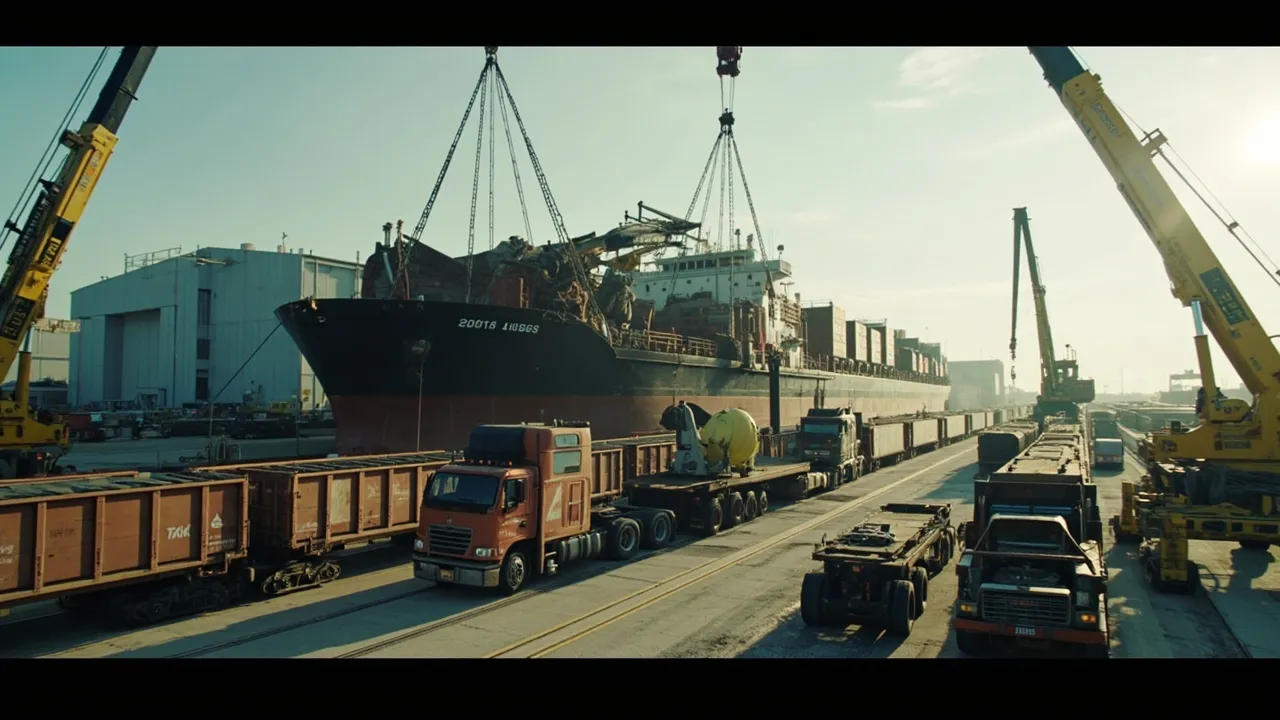
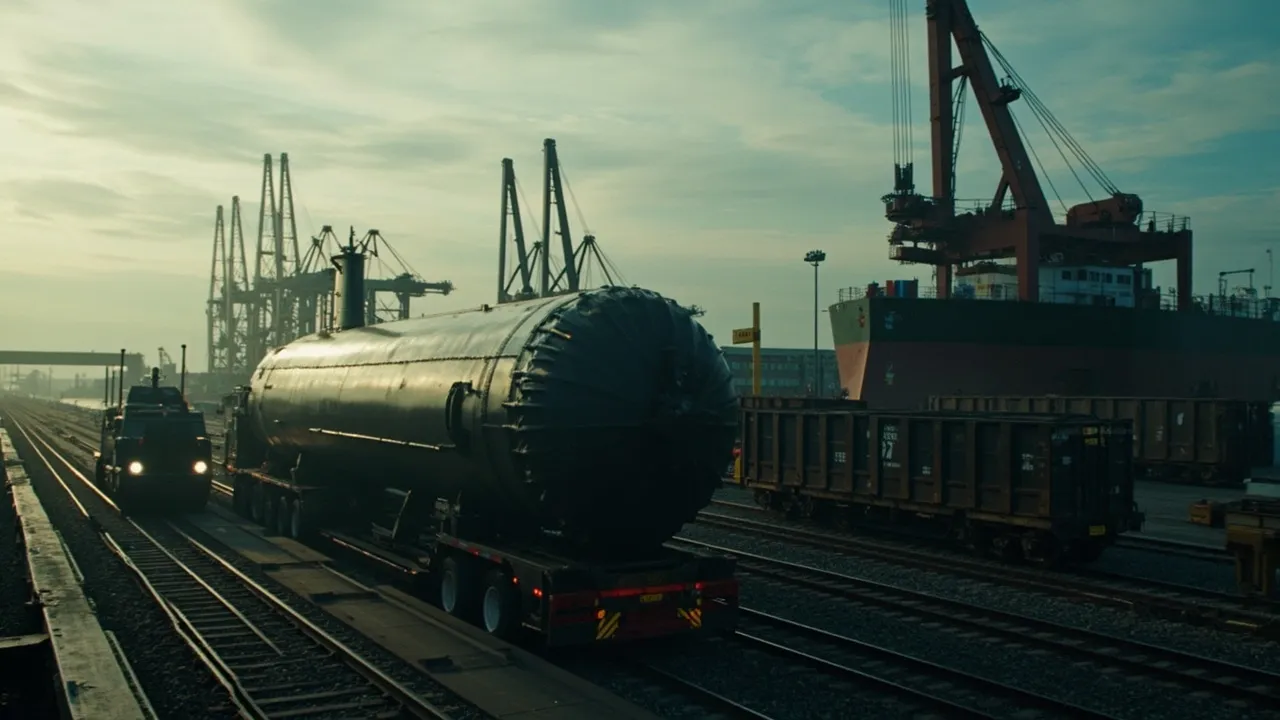
The location is a 3,300-acre industrial complex with a deepwater terminal, a private railroad, highway access, commodity storage, and connections to CSX and Norfolk Southern. Those options are valuable, but they also multiply interfaces. A component arriving by vessel may need a crane discharge, secured laydown slot, specialized trailer, escort window, factory appointment, and final indoor lift. A missed approval at any one point can strand expensive equipment while a production sequence waits.
Rail deserves a deliberate role in that design. Logistics Management found that U.S. rail carloads rose 1.5% in 2025 to 11,508,767, the largest annual gain since 2001. Through May 2026, carloads were up another 3.4% year over year, while intermodal volume reached 5,820,002 units, up 1.8%. Growing network demand makes early capacity, clearance, and interchange planning more important—not less.
Build a control sheet for every movement
The project-cargo plan should start with a movement-level control sheet. It must describe the cargo's dimensions, weight, center of gravity, lifting points, sensitivity, declared value, security classification, required orientation, and allowable dwell. Attach drawings, inspection requirements, packing instructions, and approved handling methods to the same record.
Then map the physical route from origin to the exact production bay. A generic destination such as “Sparrows Point” is not enough. Confirm berth and crane capability, rail clearances, bridge and pavement limits, turning radii, gate dimensions, overhead obstructions, staging capacity, indoor access, and the final set position. Survey the route again when construction changes the site.
For each segment, name the responsible party and its readiness evidence:
- Marine terminal: berth window, crane plan, rigging certification, stevedore roster, discharge tally, secure laydown position, and weather limits.
- Rail: suitable car type, loading diagram, dimensional clearance, switching plan, interchange acceptance, securement inspection, and estimated placement time.
- Road: oversize or overweight permits, approved route, travel-hour restrictions, bridge review, escorts, utility coordination, police support where required, and contingency parking.
- Factory: gate appointment, receiving crew, lifting equipment, floor loading, installation sequence, quality inspection, and production release authority.
No leg should be released merely because the previous carrier is ready. Release should depend on the receiving node confirming that its permits, people, space, equipment, and security controls are ready too.
Treat custody as a controlled event
High-value defense components require more than a signed delivery receipt. Every transfer should capture who released the load, who accepted it, when and where the transfer occurred, seal or asset identifiers, condition evidence, and unresolved exceptions. Photographs should follow a defined checklist rather than depend on an operator's judgment.
Security controls should travel with the shipment record. These may include vetted personnel, restricted routing, geofenced stops, communication intervals, escort identity, seal checks, and rules governing photography or shipment data. Access should be role-based: a carrier needs handling instructions, but not every commercial or technical detail about the component.
The custody event should also transfer operational responsibility. If damage, a seal discrepancy, or missing documentation is found, the receiving party records it before acceptance. The shipment remains on hold until the designated quality or security owner decides whether it can proceed.
Use milestones that protect the production sequence
Project freight cannot be managed by “in transit” and “delivered.” Build milestones backward from the required-at-bay time: design release, cargo-ready confirmation, permit submission, permit approval, equipment positioning, origin pickup, terminal arrival, discharge, rail placement or road departure, site gate-in, quality acceptance, and production release.
Give each milestone a planned time, latest safe time, evidence requirement, owner, and escalation path. The latest safe time matters most. It converts a delay into an actionable production risk before the final appointment is missed.
Exception rules should reflect consequence. For example, escalate if a road permit is not approved 72 hours before pickup, specialized equipment is not confirmed 48 hours before use, a vessel's arrival moves outside the crane window, or custody evidence is incomplete at transfer. A constrained component tied to the next production operation should trigger a higher response tier than replenishable material for buffer stock.
Recovery playbooks should be preapproved. Identify alternate staging areas, backup cranes and heavy-haul providers, secondary gates, revised shift plans, and the authority to resequence production. That preparation prevents teams from improvising commercial, safety, and security decisions under deadline pressure.
Maintain one operational record in CXTMS
A multimodal handoff plan breaks down when the vessel agent, railroad, heavy-haul carrier, escort provider, terminal, and factory each keep a different version of the truth. Email chains can communicate, but they do not reliably preserve milestone ownership, approvals, or custody evidence.
CXTMS can maintain one shipment record across modes and providers. Teams can attach permits and route surveys, assign appointments and milestones, record equipment and escort confirmations, capture custody events, and alert owners when the latest safe time is threatened. Operations sees the physical move, production sees material availability, and compliance sees the evidence behind every release.
Baltimore's new plant will be notable for its scale, but the operating principle applies to every project-cargo program: proximity among port, rail, road, and factory creates opportunity only when the handoffs are engineered as carefully as the component itself.
Request a CXTMS demo to see how multimodal project freight, milestone exceptions, and custody records can be managed in one operational workflow.