Arizona Reopens to Mexican Cattle: A Border-Corridor Restart Checklist

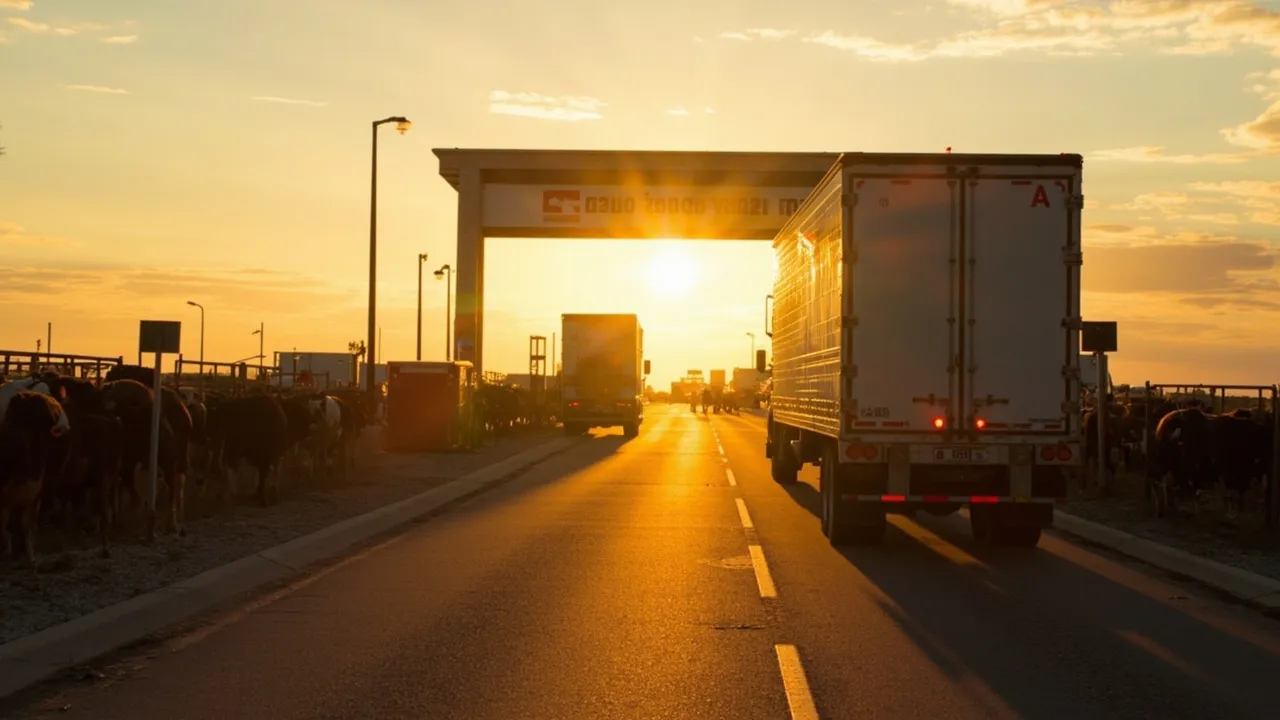
The reopening of the cattle crossing between Sonora, Mexico, and Douglas, Arizona, restores an important livestock corridor—but it does not mean operations can simply resume where they stopped. After more than a year of restrictions linked to New World screwworm, importers, carriers, inspectors, feedlots, and downstream processors need to rebuild the lane as a controlled operational restart.
SupplyChainBrain reports that the United States halted Mexican livestock imports in May 2025 after screwworm was reported in 30 of Mexico's 32 states. As of August 22, 2026, Mexico had 1,969 active reported cases—less than half the level at the outbreak's peak a year earlier. The USDA considers Sonora and Chihuahua lower risk because of their distance from the heaviest concentration of cases and their established inspection programs.
Those conditions justify a phased reopening, not a return to unconstrained volume. The USDA has said the timeline can change with regional disease conditions, and a rise in cases could pause crossings again. Every load therefore needs to be planned with both physical capacity and regulatory reversibility in mind.
Why the Douglas Restart Matters
The corridor reconnects Mexican cattle supply with U.S. feeding and processing networks at a time of tight domestic availability. SupplyChainBrain noted that average U.S. prices for uncooked beef rose 10% year over year in July while the national cattle herd remained near historic lows. Reopened imports will not immediately reverse retail prices, but they can restore optionality for buyers and help normalize established flows.
The operational challenge is pent-up demand. Ranchers and buyers may want to move delayed cattle quickly, yet inspection pens, veterinarians, approved trailers, drivers, receiving feedlots, and animal-handling crews are finite resources. Releasing too many loads into the corridor at once can create long dwell times, missed welfare limits, document errors, and congestion that undermines the reopening itself.
1. Revalidate Every Compliance Record
Do not assume documents prepared before the closure remain usable. Each shipment should be checked against current USDA import rules and Mexican export requirements before dispatch. The load record should include the health certificate, animal identification, origin premises, inspection status, consignee, carrier approval, trailer details, and appointment confirmation.
Document validation needs a clear cutoff. A load that lacks an accepted certificate or contains an identification mismatch should never enter the border queue in the hope that paperwork can be fixed there. The transportation workflow should block tender release until required fields and attachments are present, then preserve the exact version reviewed.
Importers also need an escalation path for regulatory changes. Because the reopening is conditional, operating instructions may change faster than annual carrier contracts or static routing guides. Assign an owner to monitor official updates, convert them into shipment rules, and communicate changes to brokers, ranches, and carriers.
2. Reconfirm Inspection Slots and Pen Capacity
A truck appointment is only one part of the capacity equation. Planners must align arrival windows with veterinary staffing, unloading and inspection pens, cleaning resources, reloading positions, and the receiving schedule on the U.S. side.
Create an hourly capacity plan for the crossing rather than relying on daily totals. It should reserve recovery time for late arrivals, secondary inspections, rejected animals, and trailer sanitation. Appointment spacing should reflect realistic handling time, not only driving time from origin.
Track queue length and dwell by stage: arrival, document review, unloading, veterinary inspection, reload, release, and U.S. departure. That distinction shows whether a delay comes from clustered trucks, incomplete paperwork, inspection capacity, or the downstream handoff. If dwell approaches a welfare or operating threshold, dispatchers should hold later loads at origin rather than add more animals to the queue.
3. Requalify Carriers for Livestock Conditions
Approved-carrier lists should be refreshed before tenders resume. Verify livestock-handling experience, insurance, driver credentials, trailer condition, ventilation, flooring, partitions, cleaning records, and emergency contacts. Confirm that drivers understand the current crossing process and can produce the required records without relying on informal instructions.
Animal welfare must remain part of transportation planning. Route duration, temperature, stocking density, water and rest requirements, and contingency locations should be checked for every movement. A border delay can turn an otherwise compliant trip into a welfare exception, so the plan needs decision points for holding, rerouting, unloading, or requesting veterinary support.
4. Meter Pent-Up Loads Through the Network
Restart volume in deliberate waves. Begin with known shippers, qualified carriers, complete records, and confirmed feedlot capacity. Review each wave before releasing the next. Useful measures include acceptance rate, document defects, inspection duration, animal exceptions, trailer turn time, and on-time receiving.
Downstream capacity matters as much as the crossing. Feedlots need available pens, crews, feed, water, and receiving windows. Processors and cold-chain partners may also face changing inbound patterns as regional cattle flows normalize. A border slot should not be confirmed unless the destination can accept the animals within the planned window.
5. Preserve One Chain-of-Custody Record
Livestock movements produce data across ranches, carriers, brokers, veterinarians, border facilities, and receivers. Treating each document as a separate file makes it difficult to reconstruct what happened during an exception.
CXTMS can connect the animal or lot identifier, trailer, carrier, certificates, appointments, inspection results, timestamps, and custody handoffs to one shipment record. Alerts can flag missing documents, expired approvals, late arrivals, excessive dwell, or a destination-capacity change before the load becomes stranded.
That record also supports a rapid response if conditions tighten again. Planners can identify cattle in transit, loads awaiting inspection, exposed lanes, and affected customers without assembling spreadsheets from multiple parties.
Restart the Corridor With Control
Douglas is reopening because disease risk has improved, but the corridor remains conditional and capacity-constrained. The sound approach is to revalidate compliance, meter appointments, qualify carriers, protect animal welfare, confirm downstream capacity, and capture every handoff in a single auditable workflow.
CXTMS helps cross-border logistics teams coordinate documentation, appointments, carriers, milestones, and exceptions from origin through final receipt. Request a CXTMS demo to see how a controlled transportation workflow can support complex corridor restarts.