Arctic Maritime Pact: Build a Route-Readiness Gate Before Asia–Europe Shipping Moves North

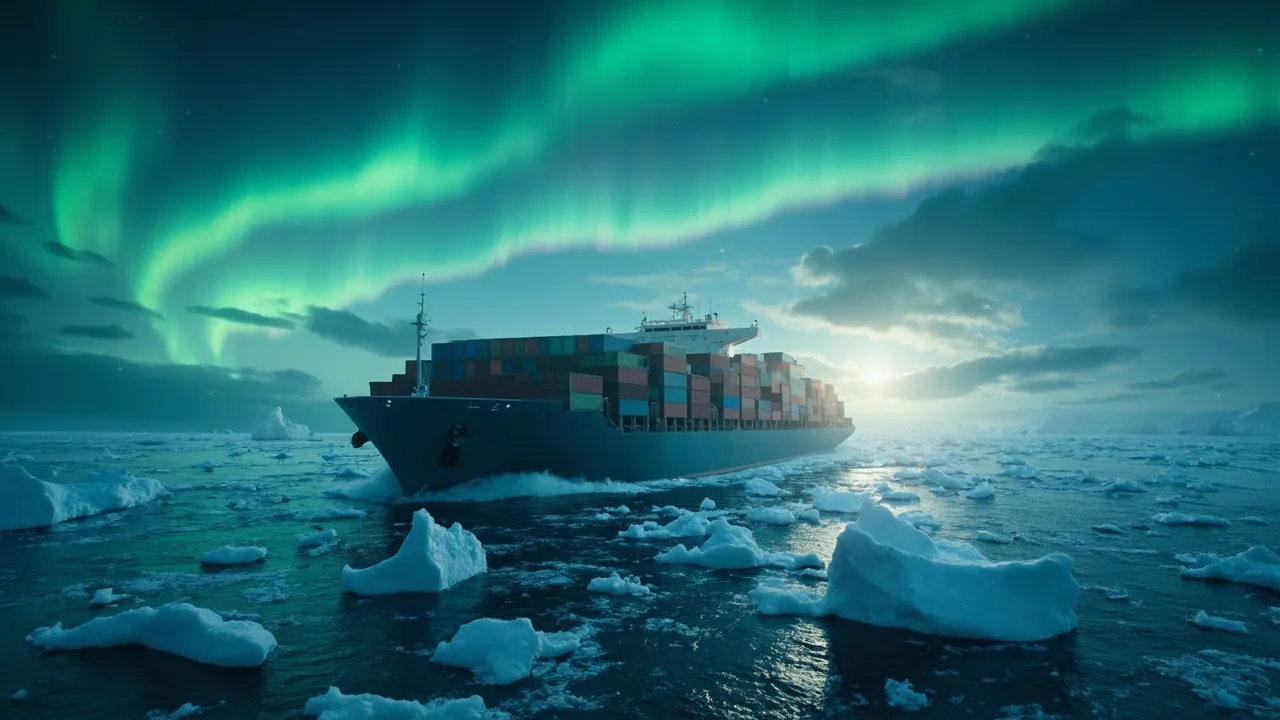
The proposed U.S.–Japan–South Korea Arctic maritime pact is the political signal that northern routing has entered mainstream planning conversations. It is not, on its own, an operating instruction. Asia–Europe shippers should treat the memorandum as the trigger to build a route-readiness gate that filters which cargoes, vessel classes, and seasonal windows are actually safe, insurable, and recoverable — and which are still scenarios, not executable options.
What the Trilateral Memorandum Actually Covers
SupplyChainBrain reports that the three foreign ministers are expected to sign a memorandum on the sidelines of the UN General Assembly in New York toward the end of September. The text reportedly establishes a trilateral partnership centered on shipping routes, energy resources, and economic security, and could include consulting on expanded Arctic oil and gas production alongside the sharing of maritime icebreaker technology. The maritime cooperation draws on Japan's icebreaker experience around the Antarctic research vessel Shirase, while the energy side targets tighter coordination with the Arctic Council.
That is a meaningful diplomatic signal, especially given that China launched the first regular Arctic cargo service in August, and South Korea completed the country's first commercial container voyage to Europe through the Northern Sea Route (NSR) only days later. SupplyChainBrain documents that the PanStar Arco departed Busan New Port on August 22, loaded 837 TEUs of car parts, chemicals, and roughly 100 empty containers, and is expected to complete the round-trip to Felixstowe, Rotterdam, and Gdańsk in 40 to 45 days.
A memorandum is not, however, a port state agreement. It does not change Russian permitting requirements, icebreaker escorts, ice-class vessel availability, rescue coverage, insurance conditions, or emissions compliance. Those remain the operational gate.
The Distance Story Is Real, but Already Counted
The commercial appeal of the NSR is well documented. Industry analysis places the Shanghai-to-northwestern-Europe voyage through the NSR at roughly 12,800 km versus 21,000 km via Suez, a distance reduction of about 39% and a transit-time saving of 10 to 15 days depending on origin and destination. For bulk and tanker operators the savings can be material — Reuters has reported that an Arctic Europe-Asia voyage can save at least 10 days versus Suez and roughly $200,000 in fuel, wages, provisions, and canal tolls per voyage.
That distance advantage is already reflected in commercial decisions by Chinese, Korean, and Russian operators. Rosatom has stated that the 2026 NSR program provides for a regular weekly service through the navigation season, with permits already issued for seven Chinese vessels. The trend line is clear; the question for non-aligned operators is whether their own fleet, cargo, insurance, and customer commitments can pass the same readiness bar.
What the Route-Readiness Gate Must Verify
A useful gate is evidence-based, owner-assigned, and rerunnable. Each cargo offered against an Arctic routing option should clear the following checks before the booking is released.
1. Cargo and Vessel Suitability
Capture the commodity profile, packaging, temperature requirements, hazardous classification, and on-carriage constraints. Pair that against vessel ice class, Polar Code certification, age, structural reinforcement, and propulsion redundancy. An Arctic route is not an alternative to a service contract; it is a different vessel-cargo fit that requires its own approval row. Flag any cargo whose damage profile worsens with prolonged cold, ice load, or limited recovery options.
2. Weather, Ice, and Seasonal Window
Document the specific sailing window, ice forecast provider, icebreaker dependency, and the conditions that require reduced speed or diversion. Summer Arctic sea-ice extent has fallen by roughly a third since 1979, which is precisely what has widened the commercial window — and precisely why planners should not extrapolate a successful August transit into a year-round assumption. The gate must record what happens if the window closes mid-voyage.
3. Regulatory and Permitting Position
All vessels transiting the NSR — regardless of flag — must obtain a permit from the Northern Sea Route Administration before entering the route. Capture the permit reference, sailing window, escort requirements, and any conditions on hull, machinery, communications, or crew training. Add the carrier's interpretation of sanctions exposure, since the route borders Russian Arctic waters and Russia retains effective operational control over the corridor. Treat any ambiguity in this row as a hold, not a booking.
4. Insurance, Liability, and Cost Stack
Insurers price Arctic risk explicitly. Coface's published cost model applies a 40% surcharge to insurance premiums for Arctic voyages because of the added risks of ice, remoteness, and difficult operating conditions. Confirm hull, cargo, pollution, war-risk, and general-average coverage, and capture exclusions for ice damage, geographic limits, sanctions exposure, and deviation. Add icebreaker escort fees — which are non-negotiable for certain NSR segments — and any incremental port-handling or tug charges into the landed cost stack before approving a booking. A low headline ocean rate is meaningless if insurance, escort, and deviation exposure are not on the same page.
5. Emergency Response and Recovery
Search-and-rescue coverage, salvage tugs, repair infrastructure, and medical evacuation capacity along the NSR remain sparse compared with established trade lanes. Record the carrier's named coordination contacts, towing and salvage providers, designated safe ports, and the response time for each. The gate should also record substitute vessels, alternative discharge ports, and the carrier's contingency plan if the passage window closes or a sister vessel needs assistance.
6. Emissions, Environmental, and Sustainability Accounting
Shorter distance does not automatically mean lower emissions intensity. Black carbon from ships burning heavy fuel can settle on snow and ice and accelerate melt; spill response in ice-trapped waters is near-impossible. Capture vessel-specific fuel type, expected consumption, Polar Code compliance, and the methodology used to translate shorter distance into a sustainability claim. Sustainability teams should compare emissions per delivered TEU, including escort and probable deviation, not the brochure distance differential.
Keep Scenarios Separate From Executable Routes
The most common planning error is treating a successful pilot voyage, a memorandum, or a competitor's press release as confirmation that the route is operationally ready for a new cargo. The PanStar Arco's 40-to-45-day Busan–Felixstowe–Rotterdam–Gdańsk round trip is a useful data point; it is not a service-level guarantee for cargo that did not sail on that vessel.
Use a two-state record. Scenarios — including proposed service designs, unratified memoranda, single-voyage trials, and competitor announcements — are tracked as inputs to the readiness gate, not as approved routings. Executable routes are those that have cleared every gate row with named owners, dated evidence, and a defined diversion trigger.
When the memorandum is signed, when weekly NSR services expand, and when more vessel classes are permitted, the gate will keep moving toward executable. Until then, the right question is not whether the Arctic pact is significant — it is — but whether the next cargo tendered for the route can satisfy every safety, contingency, and evidence row above.
A memorandum changes the political weather around the route. It does not change the ice. CXTMS can connect route scenarios, gate evidence, vessel and cargo suitability checks, and diversion triggers in one auditable workflow. Request a CXTMS demo to see how readiness gating keeps Asia–Europe Arctic options disciplined until the operating case actually closes.