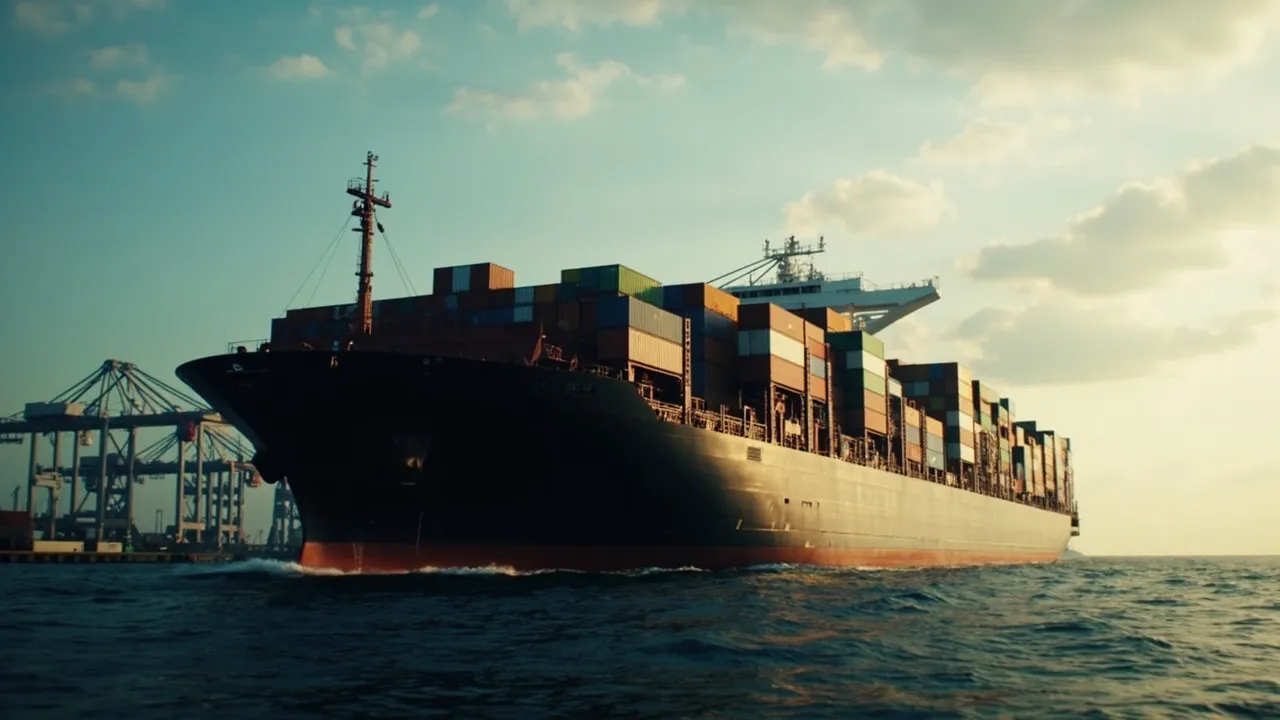
The First Regular Arctic Cargo Service Needs a Polar Route Risk Register

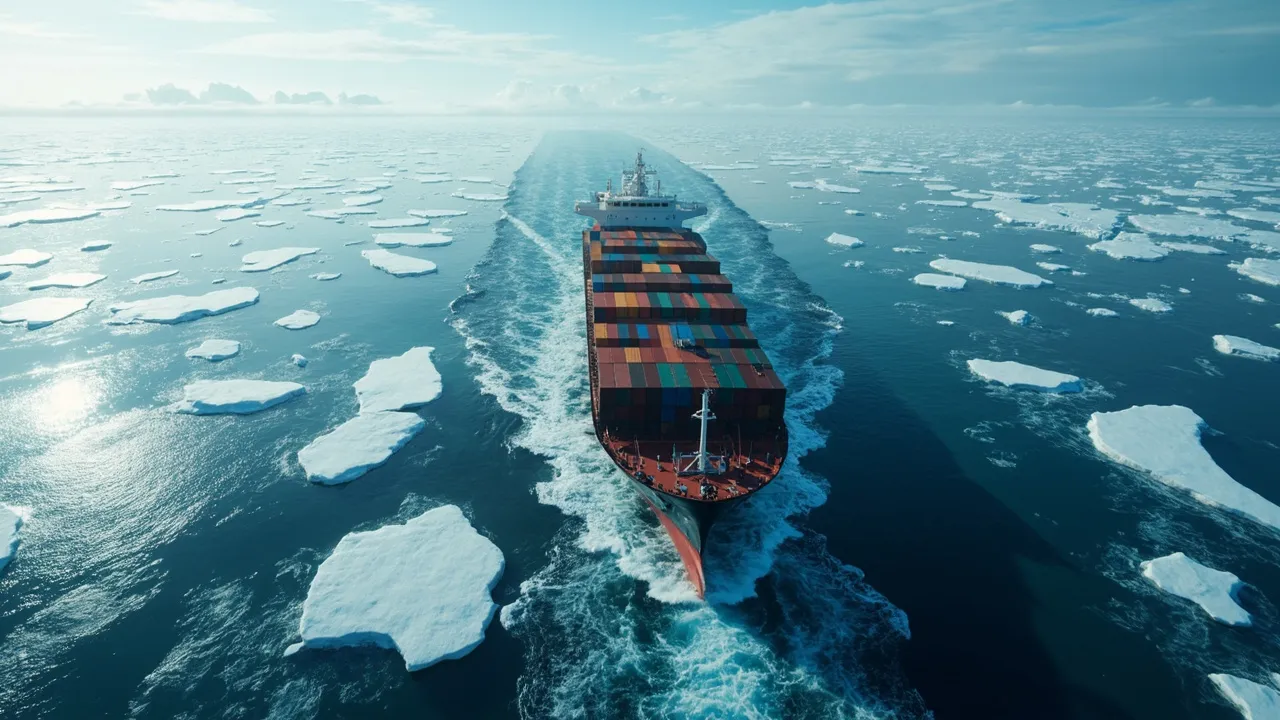
Sea Legend's planned regular China-Europe cargo service through the Arctic is more than a new sailing. It is a test of whether a route built around dramatic distance savings can deliver the consistency, insurability, and recovery options that commercial supply chains require.
SupplyChainBrain reports that the service is being presented as the world's first regular Arctic cargo connection to Europe. Its vessel, the Dubai Tower, can carry as many as 1,740 twenty-foot-equivalent units. That is meaningful capacity, but still a specialized product rather than a substitute for the deep networks, weekly frequencies, and recovery options available through established Asia-Europe services.
For shippers, the right question is therefore not simply, “How many days can we save?” It is, “Which cargo can tolerate this route's distinct failure modes, and what evidence will trigger a booking, hold, or diversion decision?”
The headline transit time is only the starting point
The Arctic's commercial appeal is easy to understand. FreightWaves has estimated that a Shanghai-to-northwestern Europe voyage through the Northern Sea Route is 27% shorter than the Suez route. Reuters has separately reported that an Arctic Europe-Asia journey can take roughly 30 days, at least 10 fewer than a Suez transit, potentially saving a bulk vessel $200,000 or more in fuel, wages, food, and tolls.
Those figures describe distance and favorable passage, not a service-level guarantee. A shorter voyage can still produce a less dependable order-to-delivery cycle if ice conditions alter speed, a storm closes a window, a vessel needs escort, or a missed European connection leaves containers waiting for onward capacity.
Procurement teams should compare route distributions, not brochure averages. For both the Arctic and Suez options, measure the median port-to-port transit, the 80th- and 95th-percentile outcome, departure frequency, transshipment exposure, and recovery time after disruption. The relevant advantage is the reduction in total lead-time variance after including origin cutoff, port dwell, customs, and final delivery—not the difference between two idealized sailing times.
Build the polar risk register before the rate sheet
An Arctic routing decision needs a dedicated risk register with named owners and measurable thresholds.
Ice and weather. Record the vessel's ice class, seasonal operating window, icebreaker dependency, forecast provider, and the conditions that require reduced speed or rerouting. “Arctic capable” is not a sufficiently precise booking attribute. The shipper needs to know which conditions the vessel can legally and operationally handle.
Emergency response. Search-and-rescue coverage and repair infrastructure are sparse relative to established trade lanes. Reuters documented patchy rescue capacity, limited commercial weather forecasting, and elevated insurance premiums along the Northern Sea Route. The age of that report does not make the control question obsolete: carriers should provide current rescue coordination, towing, salvage, medical evacuation, and safe-port plans for each voyage.
Insurance and liability. Confirm hull, cargo, pollution, war-risk, and general-average coverage before tendering freight. Capture exclusions for ice damage, geographic limits, sanctions exposure, and deviation. A low ocean rate is irrelevant if the cargo owner absorbs an uncovered loss or cannot document compliance with the policy's voyage conditions.
Environmental exposure. A shorter route can reduce sailing distance and fuel use, but black carbon, spill response, and emissions in a fragile polar environment complicate the sustainability claim. Ask the carrier for vessel-specific fuel, expected consumption, emissions methodology, and Polar Code compliance. Sustainability teams should compare emissions per delivered container, including escort or deviation, rather than treating shorter distance as automatic proof of a lower footprint.
Schedule and network recovery. Record sailing frequency, cutoff dates, buffer days, substitute vessels, alternative discharge ports, and the carrier's plan if the passage window closes. A regular service must be judged by what happens after a missed sailing. Limited frequency can turn one operational exception into weeks of inventory delay.
Geopolitical and regulatory risk. The route follows Russia's northern coast, creating sanctions, payment, port-call, and documentation questions that can change faster than an annual contract. Compliance approval must be shipment-specific and time-stamped, with screening repeated before loading and before entry into the route.
Define which shipments are eligible
Early bookings should be treated as controlled pilots. Good candidates combine high inventory-carrying cost with enough margin to absorb special handling and enough schedule flexibility to tolerate a diversion. Cargo should have stable demand, robust packaging, appropriate temperature tolerances, complete insurance approval, and no unresolved sanctions or dangerous-goods questions.
Avoid using the first sailings for irreplaceable production components, products with narrow launch windows, temperature-sensitive cargo lacking validated monitoring, or orders whose contracts impose severe late-delivery penalties. The fastest theoretical route is a poor choice when one exception can stop a factory or miss a retail season.
A pilot scorecard should include booked-versus-actual departure, port-to-port transit, temperature excursions, milestone completeness, customs dwell, delivered cost, emissions estimate, and days of inventory released. Compare each result with a matched Suez shipment rather than a generic market benchmark.
Put the decision logic in the TMS
The route record in a transportation management system should include ice class, polar certification, seasonal window, escort requirement, insurer approval reference, sanctions-screen timestamp, forecast source, rescue coordinator, alternate port, latest diversion point, cargo temperature range, customer consent, and exception owner.
Each field should drive workflow. An expired insurance approval should block tendering. A forecast outside the vessel's approved operating envelope should create a hold. A missed departure or route closure should launch a preassigned Suez, rail, or air contingency and notify affected customers with the same underlying event record.
That discipline turns an unusual route into a governed transportation option. Sea Legend's service may prove that regular Arctic container shipping can add valuable China-Europe capacity. But shippers will capture that value only when they manage the passage as a portfolio of measurable risks—not as a single impressive transit-time claim.
Ready to evaluate new routes with shipment-level controls? Request a CXTMS demo to build routing rules, approvals, milestones, and contingency workflows into one transportation platform.