The First Ammonia-Powered Dry-Bulk Trial Turns Alternative Fuel Into a Voyage Control

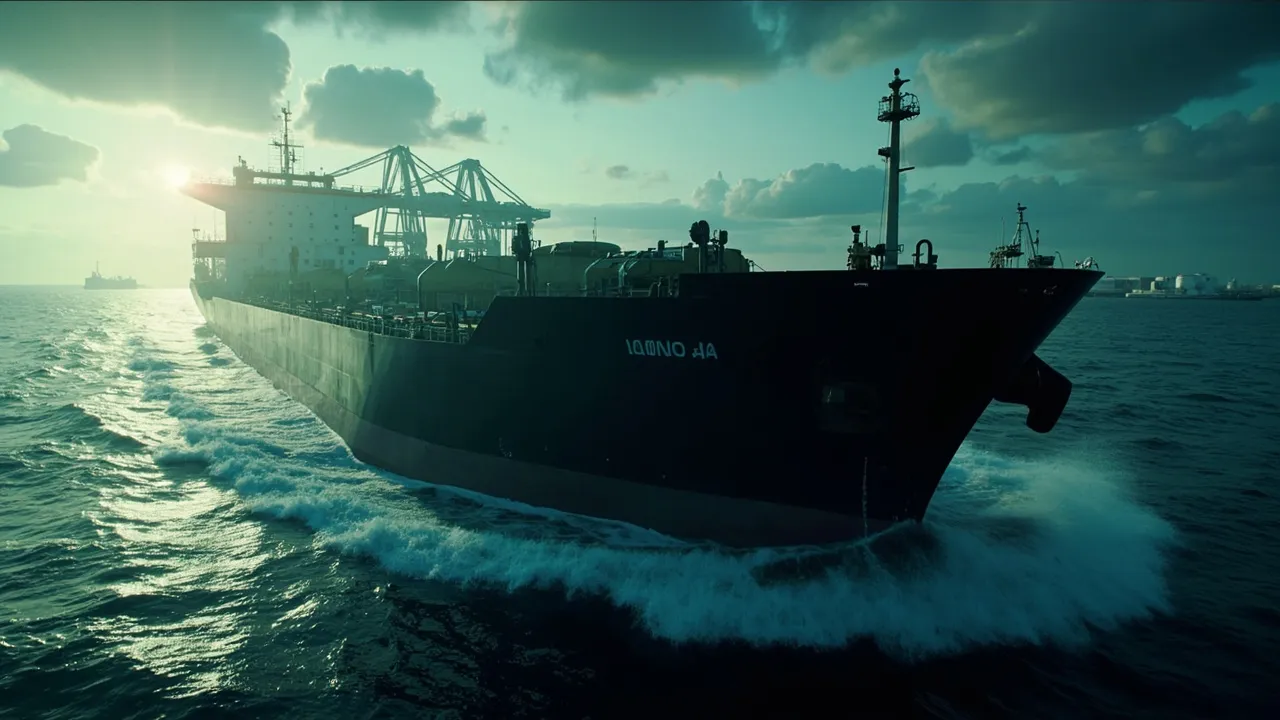
A successful sea trial proves that a vessel can perform under a test plan. It does not prove that every port, bunker supplier, crew, charter, and emergency responder can support the same fuel on a commercial voyage. For ammonia-powered dry bulk, that distinction is now an operational planning issue rather than a future engineering debate.
The Mineral Europa has moved the industry across an important threshold. The next step is not simply to label the vessel “green” and schedule it like a conventional bulker. Charterers, owners, cargo interests, and ports need a voyage control that verifies fuel availability, fuel provenance, safety readiness, range, payload effects, and fallback options before cargo is committed.
The trial validates a ship, not a network
FreightWaves reports that CMB.Tech's Mineral Europa, described by its owner as the world's first ammonia-powered dry-bulk carrier, completed sea trials and departed for Australia on October 14. The 210,000-deadweight-ton Newcastlemax was built at Qingdao Beihai Shipyard and operates under charter to Fortescue. Its dual-fuel engine can use ammonia or conventional marine fuel.
Those details matter. The sea trial demonstrates that the propulsion package, vessel systems, and trained trial team could operate together under defined conditions. Dual-fuel capability also provides resilience while the ammonia supply network matures. It does not establish that ammonia will be available at the required specification and quantity at every planned port, or that each terminal has approved procedures for handling it.
The vessel subsequently took on 1,000 metric tons of green ammonia in a ship-to-ship bunkering operation at Zhoushan. That is a consequential operating milestone, but one successful transfer should become evidence for a repeatable control—not a blanket assumption that future bunkering events carry the same readiness.
Put five gates ahead of cargo commitment
An ammonia voyage should not become firm until five gates are passed.
First, the fuel gate must confirm supplier, production pathway, quantity, specification, delivery window, barge or terminal capacity, sampling protocol, and contingency supply. A nomination alone is not enough. The plan needs evidence that compatible fuel will physically meet the vessel without compromising berth or cargo timing.
Second, the port gate must verify local approval, exclusion zones, simultaneous-operations rules, weather limits, transfer equipment, spill and vapor response, and availability of appropriately equipped emergency services. Restrictions may vary even between terminals in the same port.
Third, the people gate must cover role-specific training, protective equipment, drills, medical response, contractor qualification, and communications among ship, supplier, terminal, agent, and authorities. Ammonia's toxicity makes handoff quality a primary control.
Fourth, the vessel gate must confirm tank condition, detection and ventilation systems, transfer connections, engine readiness, maintenance status, and conventional-fuel fallback. Exceptions must be resolved before the schedule becomes commercially binding.
Fifth, the commercial gate must translate the technical plan into charter-party terms: permissible fuels, emissions accounting, additional port time, off-spec responsibility, deviation rights, fallback-fuel cost, and who bears lost cargo capacity.
Treat safety evidence as a schedule dependency
Ammonia is already transported globally as cargo, but using it routinely as marine fuel creates more frequent transfers and brings exposure controls into normal vessel operations. Reuters reported that a Singapore pilot study identified 400 risks associated with ammonia bunkering. The same report identified leakage during bunkering and from fuel tanks as central concerns.
That does not make ammonia unusable. It means a bunker slot cannot be treated as a standard fuel appointment. The voyage file should include an approved transfer plan, joint ship-supplier checklist, gas-detection checks, connection and disconnection sequence, exclusion-zone confirmation, stop-work authority, emergency contacts, and drill records. If one required approval expires or one responder is unavailable, the schedule should show the voyage as not ready.
Transportation systems can make that rule executable. A readiness dashboard should show each gate, document owner, evidence, expiry, and blocking exception. Alerts should arrive early enough to substitute a supplier, adjust cargo, add conventional fuel, or change the port call without improvising at the berth.
Measure emissions from production to wake
Ammonia releases no carbon dioxide when burned, but that fact alone is not a complete emissions claim. The production pathway determines much of the lifecycle result. Conventional ammonia made with fossil energy carries upstream emissions; green ammonia relies on renewable electricity. Combustion controls also matter because nitrogen oxides are pollutants and nitrous oxide is a powerful greenhouse gas.
For that reason, each fuel parcel should retain a certificate linking producer, facility, energy source, pathway, batch, quantity, carbon intensity, custody transfers, and any recognized sustainability certification. Voyage reporting should calculate well-to-wake emissions and preserve the assumptions used. Reuters notes that FuelEU Maritime began with a 2% lifecycle greenhouse-gas-intensity reduction target in 2025, rising progressively to 80% by 2050. Claims and compliance therefore depend on data beyond the ship's exhaust stack.
Price the range and payload penalty before chartering
The physical and economic penalties are large enough to alter the voyage plan. FreightWaves cites DNV estimates that ammonia-fueled newbuilds cost 15% to 20% more than conventional designs. European green ammonia at roughly $2,900 per metric ton of marine-gas-oil-equivalent energy was about five times the diesel-fuel cost in that comparison. Ammonia also requires nearly three times the fuel volume for equivalent energy.
More tank volume can mean less cargo space, shorter range, or more bunker calls. More calls can introduce port costs, delay exposure, and added safety-critical transfers. The charter calculation should therefore compare expected cargo intake, fuel volume, reserve policy, bunker-port deviation, weather allowance, conventional-fuel fallback, carbon cost, and contractual emissions value. A lower-carbon voyage can still be a poor commitment if its range assumptions force an unplanned stop or its tank requirement quietly erodes payload economics.
The Mineral Europa trial is credible progress because it converts ammonia propulsion from a design concept into operating evidence. Its real value will come from making that evidence repeatable. Every proposed voyage should pass the same documented gates before the booking is accepted, and every exception should remain visible from chartering through final emissions reporting.
Ready to connect alternative-fuel readiness, charter decisions, bunker milestones, and voyage exceptions in one workflow? Request a CXTMS demo and build fuel readiness into every shipment plan.