The American Supply Chain Sovereignty Initiative Turns Infrastructure Into a Sourcing Constraint

Supplier selection has traditionally centered on unit cost, quality, lead time, and financial stability. The U.S. Department of Transportation's American Supply Chain Sovereignty Initiative adds another test: can the transportation infrastructure supporting a supplier keep freight moving when the network is disrupted?
The initiative is intended to connect ports, ocean carriers, truckers, railroads, and major retailers through a common freight-visibility resource. SupplyChainBrain reports that DOT describes it as a resource participants can incorporate into existing platforms, rather than localized port software or a replacement operating system. That distinction matters. The policy direction favors shared signals that improve decisions across the network, while execution still belongs in each shipper's transportation workflow.
The scale explains the urgency. According to Logistics Management, the U.S. freight system moves more than 54 million tons of goods worth over $68 billion every day. At that volume, a weakness in port equipment, rail access, truck capacity, or data exchange is not merely a transportation problem. It can invalidate the assumptions behind a sourcing award.
Sovereignty is operational resilience, not a flag on a purchase order
The word “sovereignty” can invite a simplistic domestic-versus-foreign interpretation. Transportation teams need a more useful definition: control over the information, assets, capacity, and alternatives required to execute a shipment.
A domestic supplier can still depend on an imported component, a foreign-controlled ocean service, one port, a single rail ramp, or specialized equipment with no substitute. An overseas supplier may have multiple gateways, mature data feeds, reserved capacity, and a tested alternate route. Country of origin is important, but it does not describe the whole dependency chain.
Treat sovereignty as a measurable resilience attribute. For every critical material or finished good, identify where it is made, which transport nodes it requires, who controls the essential assets, how much usable capacity exists, and what alternative can be activated within the customer's tolerance window. That turns a policy theme into procurement evidence.
Infrastructure now belongs in the supplier scorecard
Begin with the physical path from origin to destination. Record the expected port or border crossing, terminal, dray carrier, rail ramp, highway corridor, transload point, distribution center, and specialized equipment. Then identify dependencies that have no practical substitute.
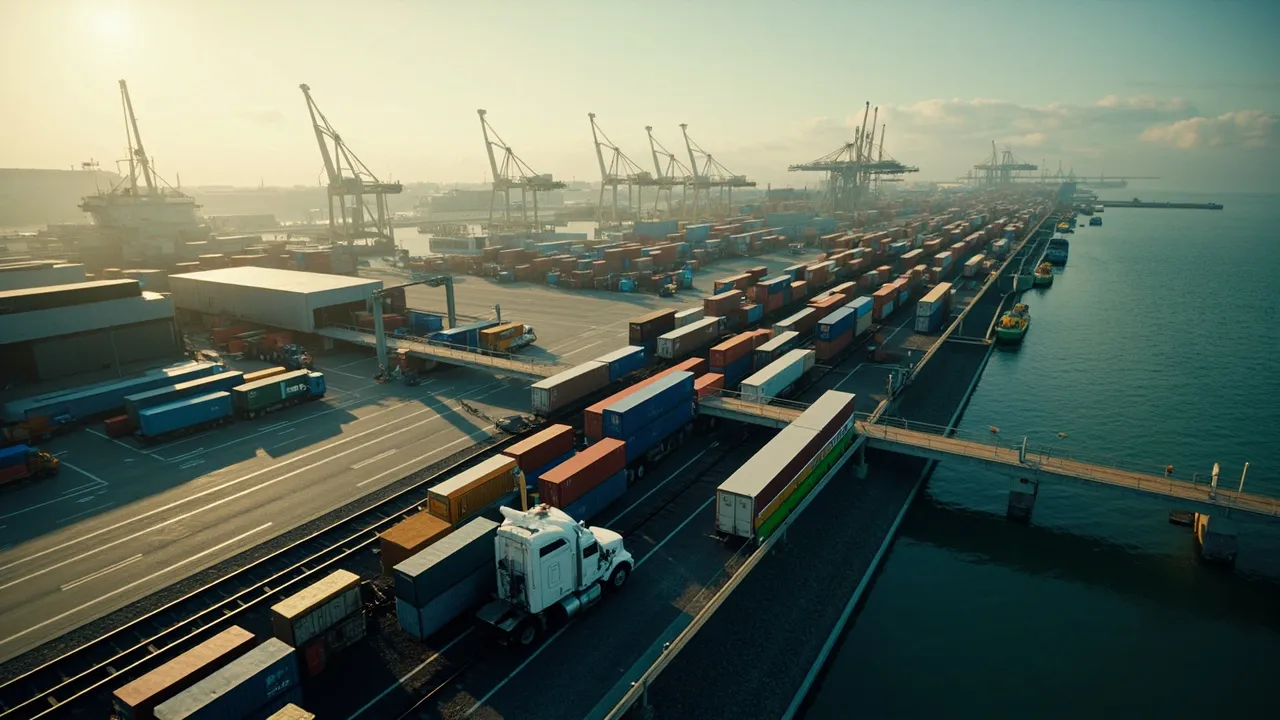
Port infrastructure deserves special scrutiny. A sourcing plan may rely on available berths but overlook crane origin, maintenance parts, chassis pools, gate systems, power supply, or inland connections. A terminal's advertised throughput is not the same as capacity available to a particular shipper during its peak week.
The same principle applies inland. A plant can be geographically close yet operationally remote if it depends on one bridge, congested urban drayage, limited rail departures, or a carrier market that cannot absorb a surge. Score each lane using booked capacity, tender acceptance, terminal dwell, missed connections, and recovery time—not distance alone.
Visibility is also infrastructure. DOT's model builds on the Freight Logistics Optimization Works program, which began with 18 participants, including carriers, retailers, terminals, and the ports of Los Angeles and Long Beach, according to Reuters. Shared information can expose an emerging bottleneck earlier, but only if a shipper can connect that signal to affected orders and launch a response.
Map exposure from supplier to shipment
A useful dependency map has four layers.
Origin. Capture country of manufacture, component origin, final assembly site, supplier location, and applicable trade program. Require suppliers to date-stamp the evidence and disclose material changes.
Ownership and control. Record the operator and beneficial owner of critical factories, terminals, equipment providers, carriers, and technology services where that information is relevant and available. Ownership does not automatically create risk; concentration without a workable alternative does.
Capacity. Store contracted volume, practical weekly throughput, peak constraints, equipment requirements, and time to add capacity. Separate nameplate capacity from proven capacity, and attach each figure to a source and review date.
Alternatives. Name the substitute supplier, gateway, carrier, mode, and route. Include the activation lead time, incremental landed cost, qualification status, and maximum duration the alternative can support. “Use another port” is not a contingency plan unless that port has carrier service, inland capacity, customs readiness, and a receiving path.
Once these fields are connected to purchase orders and shipments, teams can query exposure rather than assembling it during a crisis. A planner should be able to find every load dependent on one terminal, foreign-sourced crane component, rail ramp, or data provider—and see the approved fallback beside it.
Build a sovereignty-ready evidence model
Procurement, logistics, compliance, and finance should agree on a compact evidence standard before the next sourcing cycle. At minimum, require:
- supplier and component origin, with effective date;
- primary transport nodes and asset operators;
- contracted and demonstrated capacity by week;
- concentration percentage by supplier, gateway, carrier, and mode;
- alternate route and supplier qualification status;
- expected recovery time and incremental landed cost;
- source, owner, approval date, and next review date for every claim.
Convert that evidence into decision thresholds. A critical component might require two qualified origins, two gateways, or a documented recovery route capable of supporting 30 days of demand. A lane exceeding a concentration limit could require executive approval. A missing ownership or capacity record should be treated as unknown risk, not assumed resilience.
These controls should influence awards. Compare suppliers using total resilient landed cost: purchase price plus transport, inventory, compliance, disruption exposure, and the cost of maintaining alternatives. The cheapest quote can be expensive when its infrastructure dependencies force emergency airfreight or halt production.
Turn policy signals into transportation actions
The American Supply Chain Sovereignty Initiative will not choose suppliers or reroute freight for a shipper. Its practical value is earlier, broader network information. Transportation leaders must connect those signals to orders, lanes, contracts, and predefined actions.
In CXTMS, teams can maintain shipment-level origins and routes, monitor milestones, flag concentration and capacity exceptions, and preserve the approvals behind a diversion or supplier change. That creates an auditable bridge between federal freight signals and daily execution.
Ready to make infrastructure exposure visible before it becomes a sourcing failure? Request a CXTMS demo and build resilience rules directly into your transportation workflow.