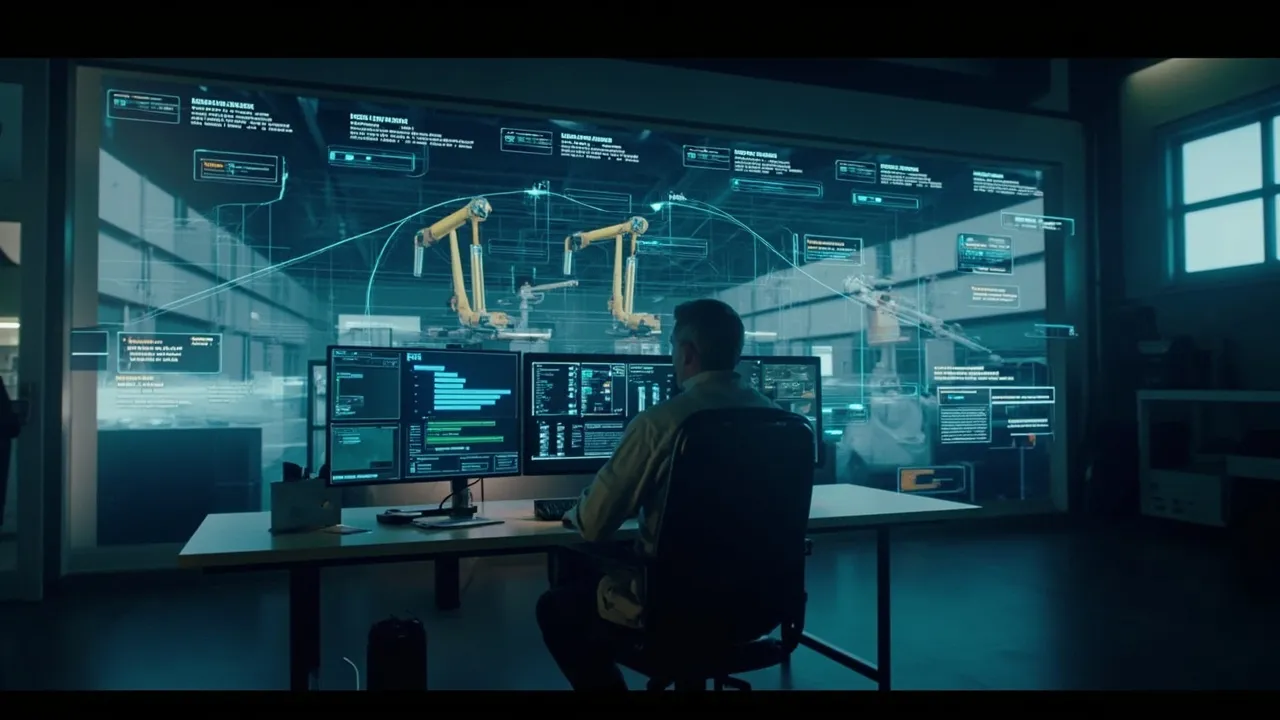
AI for Warehouse MRO: Connect Maintenance Predictions to Shipment Risk

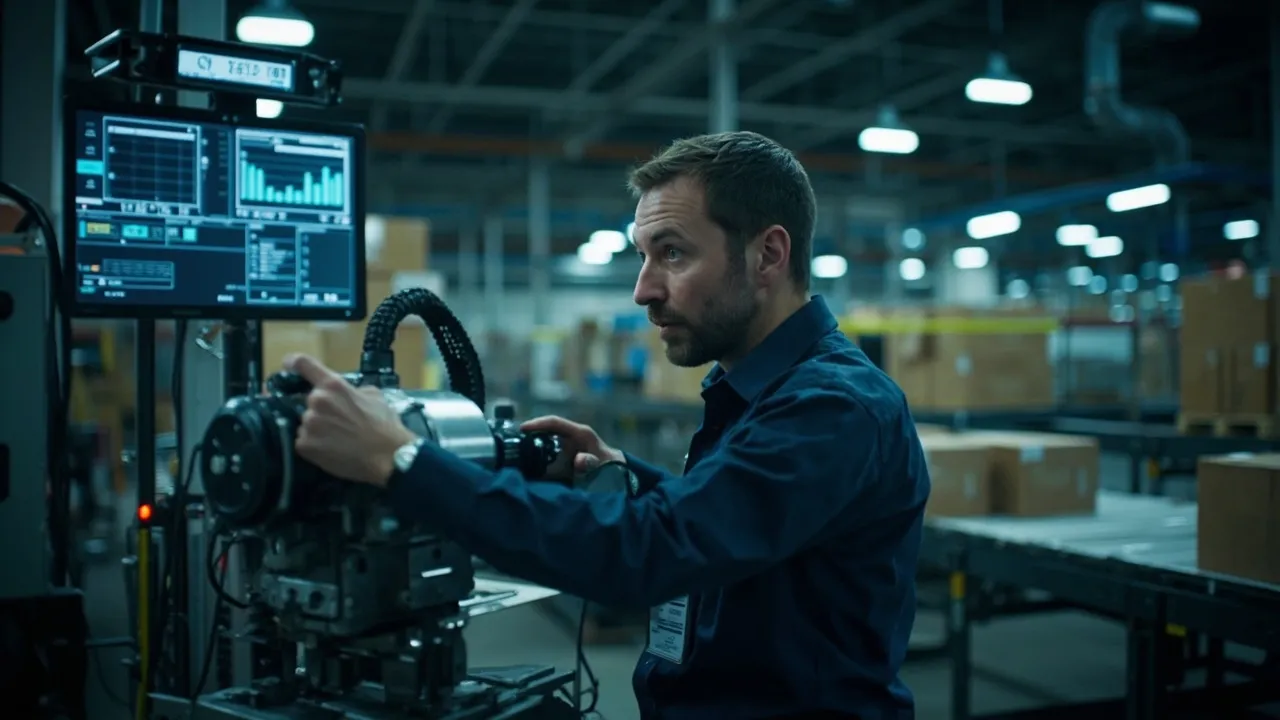
Artificial intelligence can warn that a conveyor roller, sorter motor, lift truck, or robotic cell is drifting toward failure. That warning is useful, but it is not yet an operational decision. Warehouse leaders need to know which customer orders depend on the asset, when those orders must reach the dock, and whether maintenance should intervene now or wait for a safer window.
That is the missing connection in many predictive-maintenance projects: equipment health is analyzed separately from shipment commitments. The better model links maintenance, repair, and operations (MRO) data to the warehouse execution plan and transportation schedule. It converts “bearing vibration is abnormal” into “if this zone stops after 2 p.m., 14 priority orders could miss tonight’s carrier cutoff.”
Modern Materials Handling reports that sophisticated warehouse operators have moved from treating 90% planned uptime as a strong target toward pursuing 100% uptime and zero unplanned downtime. Reaching that ambition requires more than accurate models. It requires decisions grounded in service risk.
Begin with useful equipment signals
AI can improve three linked MRO activities: inspection, parts forecasting, and work scheduling. Sensors and controls already capture signals such as vibration, temperature, electrical current, cycle count, fault codes, travel time, and battery behavior. Computer vision can supplement manual inspections by detecting belt wear, leaks, debris, or damaged components.
The goal is not to ingest every available data point. MHI warns that facilities can become “data rich” but “intelligence poor” when they collect equipment data without identifying which signals matter or applying analytics that guide maintenance. Start with assets whose failure has a clear operational consequence, then establish a reliable history of condition, intervention, and outcome.
Parts planning belongs in the same loop. A predicted failure is actionable only if the correct replacement, qualified technician, tools, and access window will be available. Models can combine component age, usage intensity, lead time, prior consumption, and failure probability to recommend spares. The inventory policy should distinguish critical, long-lead components from inexpensive items that can be replenished quickly.
Map assets to orders and outbound commitments
Warehouse teams should build an asset-to-flow map. It identifies which zones, SKUs, orders, waves, doors, and carrier departures rely on each conveyor segment, sorter, lift, automated storage aisle, or robotic workstation.
That map lets the operation calculate a shipment-risk score when an equipment-health signal changes. A simple version can consider:
- the probability of failure within the planning horizon;
- the number and priority of orders exposed;
- promised ship times and carrier cutoff proximity;
- available bypass routes or redundant capacity;
- expected repair duration and parts availability; and
- downstream effects on staging space and dock labor.
Two identical motor alerts can then produce different decisions. A motor serving a lightly loaded reserve lane may remain under observation. The same signal on the only sorter feeding an imminent parcel trailer may justify an immediate controlled stop, rerouting, and work order.
This connection should run both ways. MRO receives current operational priorities, while warehouse and transportation planners see degraded-capacity forecasts. Planners can release waves differently, divert volume to another line, change door assignments, or notify a carrier before a mechanical issue becomes a missed pickup.
Put confidence thresholds around automation
Predictive models will produce false positives and uncertain forecasts. Automatically opening urgent work orders for every anomaly will overwhelm technicians and teach operators to ignore the system.
Use tiered decision rules. A low-confidence anomaly can trigger closer monitoring or a technician inspection. A medium-confidence prediction with limited shipment exposure can create a proposed work order for the next planned window. A high-confidence prediction affecting time-critical orders can escalate to maintenance and operations leaders with recommended containment actions.
Human approval should remain mandatory for safety-critical equipment, shutdowns that materially reduce throughput, expensive component replacements, and decisions that alter carrier commitments. Record whether the recommendation was accepted, modified, or rejected—and what happened afterward. That feedback is essential for improving both model accuracy and operating rules.
Thresholds should also reflect failure consequence. A 60% failure probability may justify intervention on a single-point-of-failure sorter, while an 85% probability could be tolerable temporarily on equipment with full redundancy. Risk is probability multiplied by operational impact, not probability alone.
Schedule maintenance against the shipping clock
A good system recommends the least disruptive feasible intervention window. It compares remaining useful life with order waves, replenishment activity, labor coverage, dock appointments, and carrier cutoffs. It may recommend a 25-minute repair between waves, a component swap after the final dispatch, or a temporary volume cap until the weekend maintenance window.
This is where predictive maintenance can escape pilot status. Deloitte notes that collecting sensor data is insufficient without aggregation, analysis, and physical action. Its research describes a consumer packaged goods company that combined sensor and high-speed-camera data, found the cause of pressure buildups, and saved $5 million in annual maintenance costs. Another cited pilot on an asset class cut unplanned downtime by 80% and saved about $300,000 per asset. Those are manufacturing examples, not warehouse guarantees, but they show why closing the loop from signal to action matters.
Measure avoided shipment disruption
Alert volume is a poor success metric. So is model accuracy in isolation. The operating scorecard should track:
- unplanned downtime minutes weighted by affected throughput;
- orders and units exposed to degraded equipment;
- missed carrier cutoffs attributable to equipment;
- on-time shipment performance during maintenance events;
- work completed in planned rather than emergency windows;
- maintenance recommendations accepted and proven useful;
- spare-parts expedites and stockouts; and
- false alarms that consumed technician time.
Calculate avoided downtime conservatively. Require a documented failure mode, a credible expected impact, and evidence that the intervention changed the outcome. Then translate the benefit into orders protected, premium freight avoided, labor disruption prevented, and customer commitments met.
AI for warehouse MRO earns its place when maintenance predictions become better shipment decisions. CXTMS helps logistics teams connect warehouse exceptions with outbound plans, carrier schedules, and customer commitments. Request a CXTMS demo to see how operational risk can become visible before it turns into a missed shipment.