Home Depot’s Pro Network: Why Flatbed Delivery Needs a Jobsite-Ready Promise

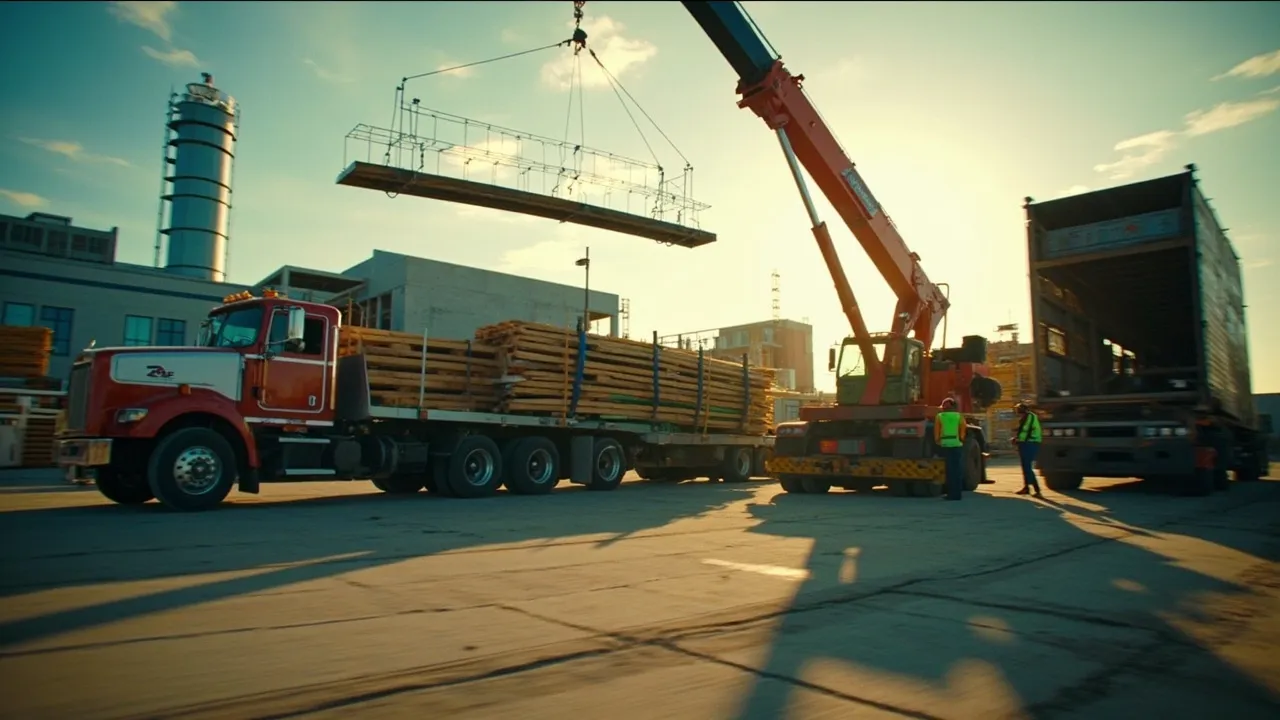
A flatbed can arrive on the promised date and still fail the customer. The gate may be locked, the crane may be unavailable, the framing crew may be working elsewhere, or pallets needed first may be buried beneath materials for a later phase. For professional contractors, delivery performance is not simply a timestamp. It is whether the shipment arrives in the right sequence, condition, and configuration for work to begin.
That distinction matters as Home Depot builds a broader ecosystem for professional customers. The retailer has connected flatbed distribution centers, specialty-distribution acquisitions, stores, digital ordering, and delivery capabilities around a demanding use case: moving bulky building products to active jobsites. The strategy creates a useful lesson for every distributor and carrier serving construction: the winning promise is not “delivered on time.” It is jobsite ready.
A Network Designed Around Bulky Freight
Home Depot’s investment reflects the scale of the opportunity and the difficulty of serving it. Supply Chain Dive reports that the company’s flatbed distribution centers formed part of a $1.2 billion infrastructure program involving 150 new delivery facilities, originally intended to put 90% of U.S. customers within reach of same-day or next-day delivery.
The retailer has since focused its enhanced Pro capabilities on its 40 largest markets. A separate Supply Chain Dive account said 17 top Pro markets were scheduled to have new fulfillment options, localized assortments, expanded sales coverage, and improved digital capabilities by the end of 2024.
The operating model separates flows that stores were never designed to handle efficiently. Flatbed facilities can consolidate lumber, roofing, drywall, and other oversized products; stores can support smaller items and urgent additions. Acquired specialty distributors add category expertise and delivery density. Technology must connect the pieces so one customer order does not become several uncoordinated arrivals.
This is more than faster fulfillment. Moving staged flatbed orders away from retail aisles reduces store congestion, while purpose-built facilities provide more room to load, secure, and sequence heavy products. The network becomes valuable when those physical advantages translate into reliable jobsite execution.
Turn the Delivery Date Into a Readiness Contract
A conventional delivery appointment answers two questions: where and when. A jobsite-ready appointment needs several more:
- Is the access road suitable for the vehicle’s length, weight, and turning radius?
- Who is authorized to accept the load, and how will the driver reach that person?
- Is a forklift, crane, or moffett required, and who supplies it?
- Which crew and construction phase need the material?
- Where can products be placed without blocking trades, traffic, or emergency access?
- What weather, permit, or site-hour restrictions could prevent unloading?
These details should be confirmed before dispatch, not discovered by the driver. A transportation management system can capture them as structured requirements tied to the order, stop, equipment type, and appointment. Automated reminders can ask the site contact to reconfirm access and unloading readiness 24 hours before arrival. If conditions change, the dispatcher can reschedule or resequence the route before a truck burns hours at the curb.
The appointment therefore becomes a two-sided commitment. The supplier commits inventory, capacity, and a time window. The contractor commits safe access, labor, and unloading resources. Both parties share the same current instructions.
Consolidation Must Preserve Construction Sequence
Order consolidation reduces delivery cost and jobsite traffic, but only if it respects how the work will be performed. Combining products solely by destination and date can create a physically complete yet operationally useless load.
Planners should group orders by project, building or floor, installation phase, and requested placement. The loading sequence should reverse the unloading sequence: material needed first should be accessible first. Labels and digital manifests should identify the project zone and work package, not merely an SKU and purchase order.
Damage prevention also has to reflect the product mix. Lumber needs banding and weather protection. Drywall requires edge protection and dry handling. Windows and doors need upright securement and careful placement. Roofing products may have weight-distribution and rooftop-delivery constraints. Photographs at loading, departure, arrival, and proof of placement provide a defensible chain of condition when claims arise.
A consolidated shipment should not be considered successful when every line leaves the distribution center. It is successful when every line arrives intact, can be identified quickly, and is placed where the next crew can use it.
Measure Jobsite-Ready OTIF
Traditional on-time, in-full performance remains useful, but construction delivery needs a stricter definition. A jobsite-ready OTIF score should require all of the following:
- Arrival within the confirmed appointment window.
- All promised quantities and products present.
- No delivery-preventing damage.
- Correct vehicle, handling equipment, and securement.
- Materials sequenced and placed according to the site plan.
- Digital proof of delivery, condition, and authorized receipt.
First-attempt delivery should be tracked alongside it. The numerator is stops completed without redelivery, rehandling, or a second appointment; the denominator is all attempted stops. Reason codes should distinguish supplier failures—missing inventory, wrong equipment, poor loading—from site failures such as inaccessible gates or absent unloading crews. That separation supports fair accountability and targeted improvement.
Other useful measures include appointment-confirmation rate, dwell time by jobsite, damage claims per 100 deliveries, lines shorted after dispatch, and percentage of loads following the requested unload sequence. Segmenting results by facility, carrier, product family, market, and site exposes recurring constraints that a network-wide average hides.
The Promise Is Productive Time
Home Depot’s Pro network illustrates the direction of construction distribution: connected inventory, specialized facilities, dense delivery capacity, and digital coordination. Yet infrastructure alone does not create contractor loyalty. The real product is productive time at the jobsite.
Distributors that can consistently arrive ready to unload—complete, undamaged, correctly sequenced, and synchronized with the crew—will outperform competitors that merely offer a narrow ETA. For professional customers, saving a crew from waiting or rehandling material is often worth more than shaving another hour from nominal transit time.
CXTMS helps logistics teams coordinate appointments, equipment requirements, shipment milestones, exceptions, and proof of delivery in one transportation workflow. Request a CXTMS demo to build a jobsite-ready delivery promise your customers can measure.