Mexico's Interoceanic Corridor: Qualify the Panama Alternative Shipment by Shipment

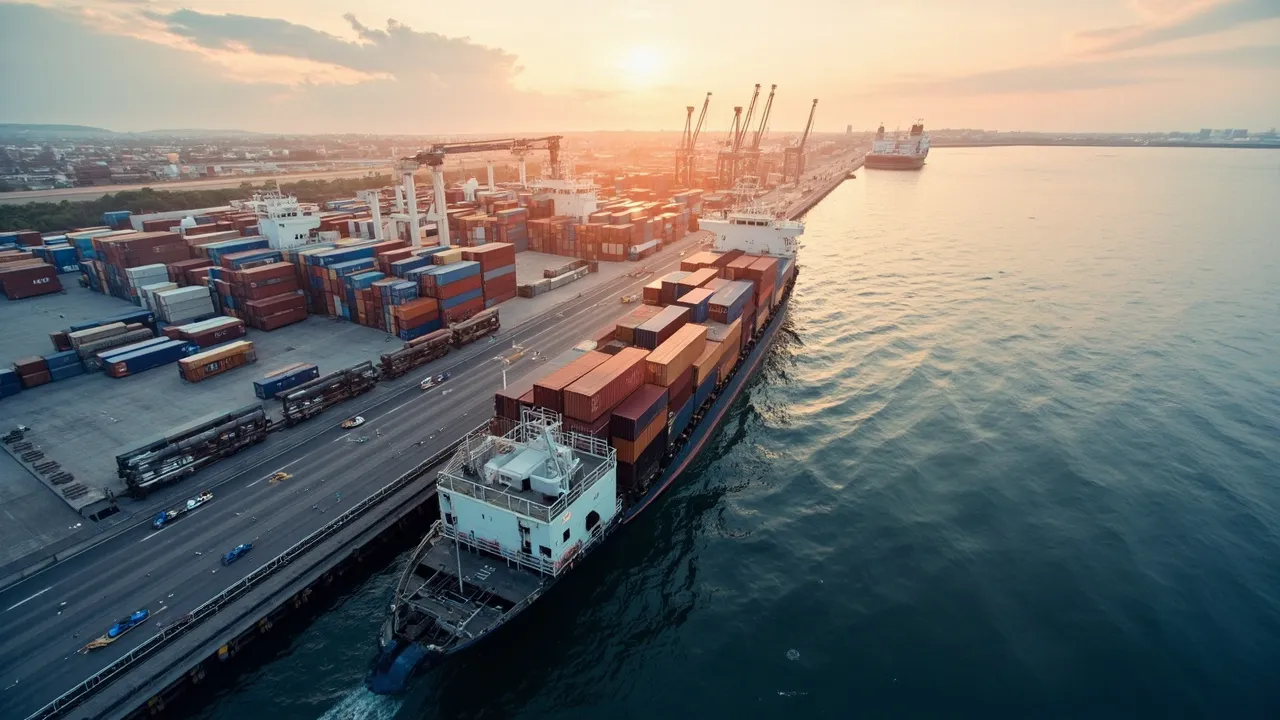
Mexico's Interoceanic Corridor of the Isthmus of Tehuantepec is easy to describe as a Panama Canal alternative. It is harder—and more useful—to evaluate it as an operating route. Cargo arriving at Salina Cruz on the Pacific must be discharged, transferred to rail, moved across southern Mexico, handled again at Coatzacoalcos on the Gulf, and loaded onto another vessel. Every handoff creates both an opportunity and a failure mode.
The route deserves attention. FreightWaves describes a 188-mile railway connecting Salina Cruz and Coatzacoalcos. The short land distance could help shippers diversify away from a single canal passage, particularly when drought, vessel queues, or capacity restrictions affect Panama. But the right question is not whether the corridor can replace Panama. It is whether it can deliver a specific shipment reliably enough to earn a place in a routing guide.
Map the route as a chain of service events
An all-water Panama move generally keeps the container aboard one vessel. The Mexican corridor substitutes a sequence of events: arrival and berth at the first port, discharge, terminal dwell, customs processing, rail loading, a cross-isthmus train movement, unloading, second-port dwell, export processing, and connection to an onward vessel. Depending on the service design, drayage or another terminal transfer may also be involved.
This distinction matters more than headline rail speed. A train can cross the isthmus quickly while a container still loses days waiting for a berth, a customs release, available rail equipment, or the next sailing. Shippers should therefore ask prospective providers for timestamped performance at each milestone—not just a promised port-to-port transit time.
The corridor also remains a developing network. SupplyChainBrain reported that final construction was expected to finish in the first half of 2026. Another SupplyChainBrain analysis cautioned that official operating information had been limited. That combination argues for measured pilots and evidence, not immediate network-wide commitments.
Compare elapsed time and variability
Planners should build two clocks for every candidate lane. The first is elapsed time from the origin-port cutoff through availability at the destination port. The second is variability around that time. A route advertised at five days but ranging from four to eleven may be less useful than a seven-day service that consistently arrives within a one-day window.
Measure at least these components:
- Vessel schedule reliability and anchorage time at both Mexican ports.
- Discharge-to-rail and rail-to-load dwell, including weekend effects.
- Customs release time and the percentage of containers selected for inspection.
- Train departure frequency, capacity rolled to later departures, and equipment availability.
- Missed onward sailings and the recovery interval until the next vessel.
Compare the resulting distribution with the Panama service actually used—not an ideal canal transit. During disruption, the Mexican option may win by avoiding a queue. During normal conditions, extra lifts and a vessel connection may outweigh the shorter land crossing. Seasonal evaluation is essential because canal conditions, port congestion, and ocean schedules all change.
Match cargo to the corridor
Not every container has the same tolerance for transfers. High-value or time-sensitive goods may benefit from diversification if security and connection controls are strong. Standard dry containers with adequate lead-time buffer are logical pilot candidates. Cargo already moving between markets served directly by the two endpoint ports may also fit well.
Refrigerated cargo requires a tougher test: plug availability, generator-set procedures, temperature telemetry, alarm ownership, and contingency power at both terminals and on the rail leg. Hazardous materials need confirmed acceptance across ports, rail, customs, and connecting carriers. Oversized cargo must be checked against crane, wagon, clearance, and securing limits. Theft-sensitive commodities need documented chain of custody and geofenced exception response.
The operating model should identify who owns the shipment at every interchange. If a container misses its connection, the shipper needs one party accountable for rebooking, storage, customs amendments, and customer communication. A cheap quote fragmented across several contracts can become expensive when something goes wrong.
Model total cost, not the rail quote
The cost comparison must include both predictable charges and disruption exposure. Start with ocean freight on both legs, terminal handling at two ports, rail, customs brokerage, inspections, documentation, security, drayage, and insurance. Then add likely exception costs: storage, demurrage, detention, reefer power, missed connections, rebooking, and inventory carrying cost.
Capacity claims also need context. FreightWaves reported that a related terminal concept could ultimately handle up to 1.4 million TEUs annually, but planned capacity is not the same as available slots on a shipper's required day. The useful capacity metric is confirmed weekly throughput by direction, equipment type, and connecting service. A corridor can be strategically important while remaining unsuitable for large contractual allocations.
Use a gated pilot before changing routing guides
A responsible qualification begins with a small, controlled volume—perhaps 20 to 50 dry containers across several departures—using freight that can tolerate recovery without jeopardizing customers. Establish thresholds before the first booking so enthusiasm does not redefine success afterward.
The scorecard should include end-to-end median transit, 90th-percentile transit, milestone completeness, customs dwell, missed connections, cargo damage, security incidents, invoice accuracy, and total landed logistics cost. Require enough departures to expose schedule and weekend variation. Run at least one exception drill covering a late train or missed vessel connection.
Promotion into a standard routing guide should require clear gates: for example, at least 90% arrival within the agreed window, no unexplained custody gaps, complete status messages for 98% of milestones, and total cost within the approved premium or savings range. Keep Panama and all-water services active during qualification so the pilot adds optionality rather than merely shifting concentration risk.
Mexico's corridor could become a valuable pressure-release valve and regional logistics platform. Its value, however, will be proven in container-level execution. Shippers that instrument each handoff, test representative cargo, and enforce objective service thresholds can add the route with confidence—without mistaking infrastructure ambition for mature operating performance.
Ready to compare corridor options with shipment-level cost and service data? Request a CXTMS demo to bring routing, milestones, exceptions, and performance scorecards into one transportation workflow.