AI in the Food Supply Chain: Approve Use Cases by Waste and Service ROI

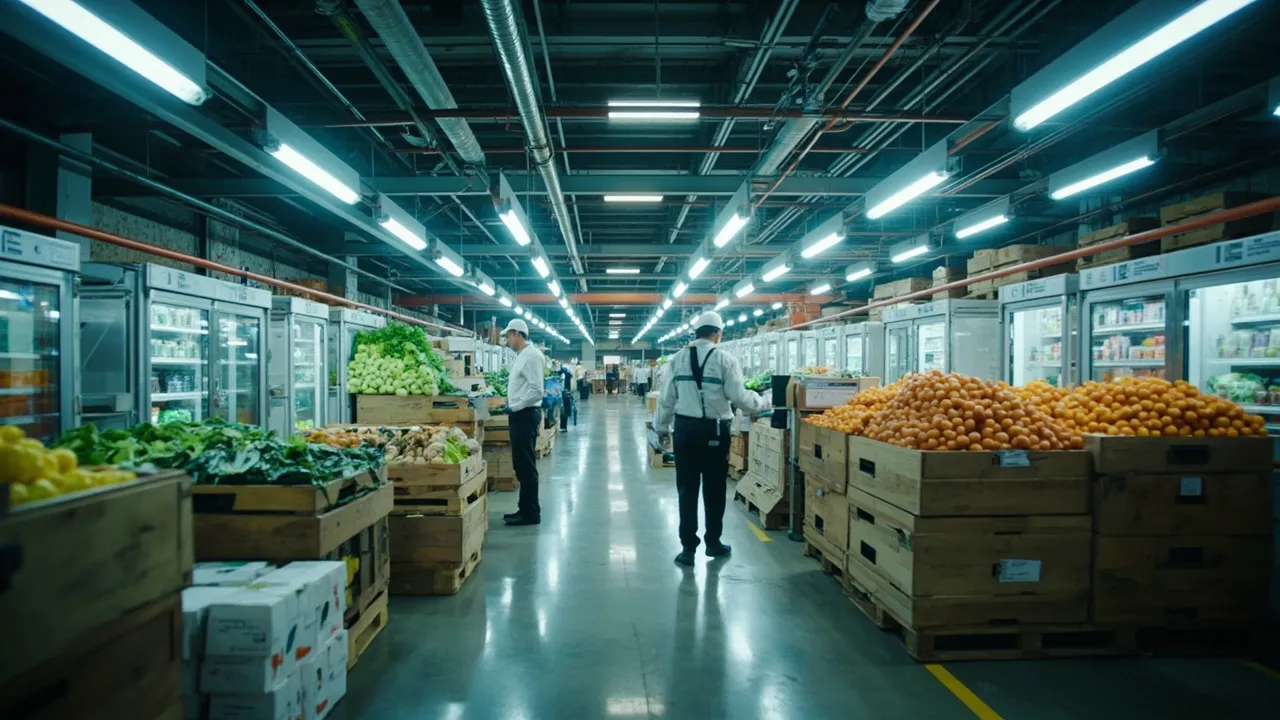
Food supply chain leaders do not need another list of possible artificial intelligence applications. They need a defensible way to decide which applications deserve funding. In a network where shelf life disappears by the hour, the best use case is not necessarily the most sophisticated model. It is the one that measurably prevents waste or protects service without creating unacceptable food-safety risk.
That standard matters because the upside can sound enormous. Food Logistics reports that AI could unlock $136 billion in value for grocery by 2030, including more than $67 billion from supply chain and logistics. Those figures describe potential, not a business case. An operator still has to prove where its own next dollar of value will come from.
The right portfolio starts with four practical domains—forecasting, quality, inventory, and transportation—and scores every proposal against operational outcomes.
Convert the AI pitch into an operating hypothesis
Every candidate should begin with a plain statement: If the model changes a specific decision, then a defined operating metric should improve by a measurable amount.
For demand forecasting, the decision might be the order quantity for short-life dairy at a store-distribution-center pair. For quality, it could be which lots receive inspection or expedited handling. Inventory applications may change allocation, rotation, markdown, or replenishment. Transportation models may choose routes, appointment times, consolidation plans, or temperature-risk interventions.
The hypothesis must name the decision owner and the action. A prediction without a workflow is analytics theater. “This load has elevated spoilage risk” creates no value unless dispatchers know whether to reroute it, prioritize its dock appointment, notify the receiver, or hold it for inspection.
Measure value in food-network terms
Generic productivity claims hide the economics that matter. Build the baseline from outcomes finance and operations can reconcile:
- Spoilage avoided: units or weight written off, multiplied by the relevant product cost, disposal cost, and recovery value.
- Shelf life preserved: remaining saleable days at receipt, measured by product and lane rather than averaged across the network.
- Service protected: fill rate, on-time-in-full performance, substitutions, rejected deliveries, and lost sales.
- Labor released: hours no longer spent reviewing forecasts, inspecting low-risk lots, expediting orders, or resolving exceptions.
- Freight avoided: premium transportation, redelivery, detention, temperature-claim, and emergency transfer costs.
Published examples provide useful ambition checks. SupplyChainBrain reported that one online fresh-food retailer reduced food waste and spoilage by 49% after introducing AI-driven forecasting, while a regional supermarket chain cut fresh-category spoilage by 20%. These are benchmarks, not promises. A sponsor should apply its own volume, margin, and adoption assumptions—and discount benefits until a controlled pilot confirms them.
Use contribution margin for service improvements and actual landed cost for waste. Do not count the same saved case twice as both reduced spoilage and increased sales. Include software, integration, data preparation, change management, monitoring, and human-review costs in the denominator.
Put data readiness ahead of model novelty
Food AI inherits every weakness in product, lot, location, and shipment data. Before approving a pilot, test whether the required inputs exist at the decision's real cadence and granularity.
A forecasting model may need SKU-location demand, promotion, weather, substitution, lead-time, and availability history. A shelf-life model may depend on harvest or production date, lot identity, temperature excursions, handling time, packaging, and inspection results. Transportation optimization requires credible transit times, appointment constraints, equipment capability, costs, and service commitments.
Missing observations are not always random. Sales can look weak because shelves were empty; temperature data may disappear on the carriers or lanes with the least mature controls. Treating those gaps as normal values can turn operational failure into misleading training data.
Set a readiness threshold before model development: required-field completeness, timestamp accuracy, lot traceability, sensor coverage, and sufficient history across promotions and seasons. If the threshold is not met, fund the data repair first.
Price false positives and false negatives
Accuracy alone cannot approve an AI use case. Teams must price each kind of error.
A false spoilage alert could trigger an unnecessary inspection, markdown, expedited shipment, or rejected load. A missed alert could produce a recall exposure, customer complaint, write-off, or service failure. In replenishment, overforecasting creates excess perishable stock; underforecasting creates an out-of-stock. The costs are asymmetric and change by product.
Build the evaluation around that asymmetry. Track cost-weighted error by shelf-life band, location, lane, and season. Establish confidence thresholds that determine when the system may recommend an action, when a human must review it, and when existing food-safety rules override the model entirely.
AI must never become an undocumented substitute for hazard controls, regulatory requirements, or release procedures. Preserve lot-level audit trails: input data, model version, recommendation, reviewer, final action, and outcome. That record supports both learning and accountability.
Use a stage-gate that survives a demand cycle
A disciplined approval process keeps an attractive demo from becoming a permanent cost:
- Baseline: measure at least one comparable operating period and document current decisions, costs, and failure rates.
- Offline test: replay historical decisions, including promotions, disruptions, and seasonal peaks, without affecting live product.
- Controlled pilot: compare treatment and control locations, lanes, or categories. Require trained users and record whether recommendations were followed.
- Full-cycle validation: run through a complete demand cycle long enough to encounter normal variability, not just a favorable few weeks.
- Scale decision: approve expansion only if realized benefits exceed total run cost, service does not deteriorate, and safety controls remain intact.
Define kill criteria before the pilot starts. Examples include higher write-offs, lower fill rate, excessive alert volume, unacceptable subgroup performance, or too much manual correction. Also define model-drift triggers and a rollback path.
Manage the portfolio, not isolated pilots
Rank proposals with a common scorecard: addressable waste or service loss, expected improvement, confidence in the evidence, time to value, data readiness, implementation cost, and safety risk. This exposes a useful truth: a modest routing model with reliable shipment data may deserve funding before an ambitious computer-vision system that lacks consistent labels and a clear response workflow.
The portfolio should also connect decisions. Better forecasting changes inventory positioning; inventory positioning changes shipment frequency; transportation performance changes remaining shelf life. Measure downstream effects so an improvement in one function does not merely transfer cost or risk to another.
CXTMS helps logistics teams connect orders, shipments, exceptions, costs, and service outcomes in one transportation workflow—giving food supply chain AI projects the execution data and operational feedback they need. Request a CXTMS demo to build a measurable transportation ROI baseline for your next AI use case.