Autonomous Cleaning Robots Need a Facility-Hygiene Service-Level Agreement

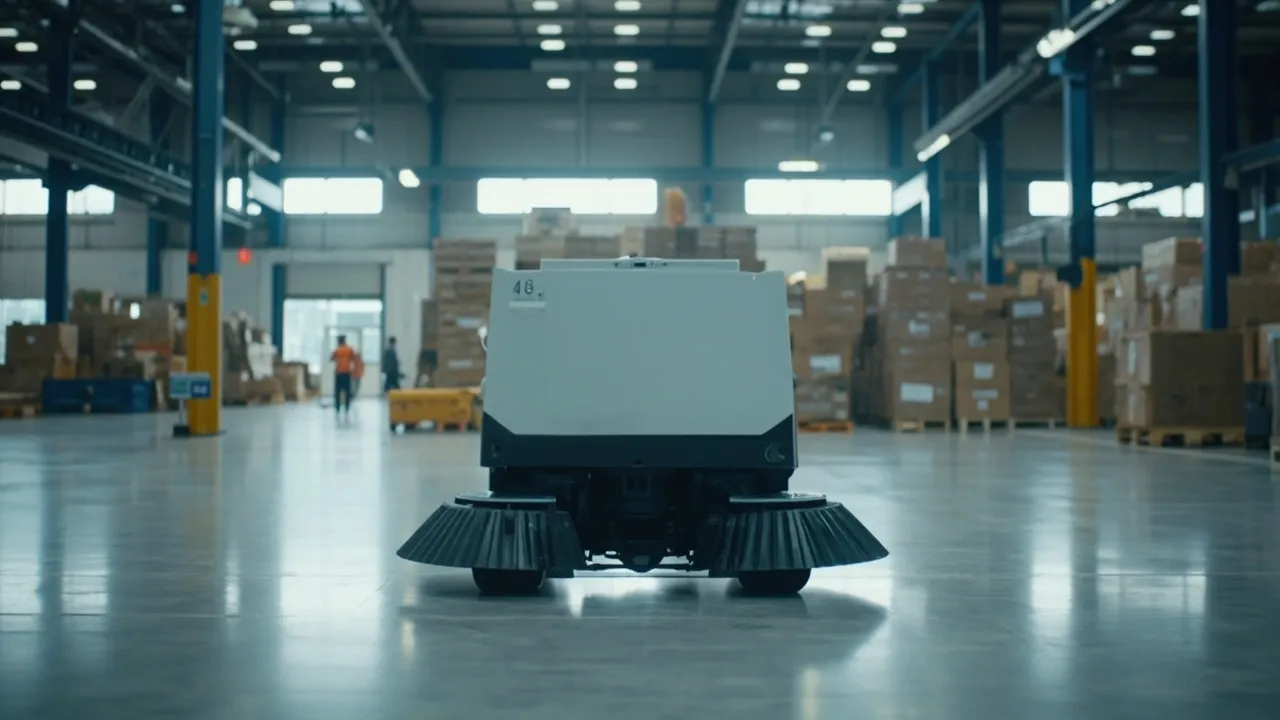
Autonomous floor scrubbers are attracting investment, but buying a robot is not the same as buying a clean facility. The difference is a service-level agreement that defines where the machine must operate, what outcome it must produce, how exceptions are resolved, and which evidence proves the work was completed.
The category is moving quickly. Modern Materials Handling reports that Peppermint Robotics raised $10.5 million to develop and deploy autonomous cleaning systems. A separate MMH report projects the warehouse cleaning robot market will reach $1.2 billion by 2036. That momentum creates a procurement risk: facilities may compare navigation features, battery life, and hourly labor savings while leaving hygiene performance undefined.
Warehouse operators should treat an autonomous cleaner as a facilities-control system. Like a transportation control tower or a warehouse management system, it needs structured work orders, measurable service levels, exception ownership, and an auditable record.
Segment Missions by Operational Risk
A single target such as “clean 100,000 square feet per shift” is too crude. Not every square foot carries the same contamination risk or operational constraint. Divide the building into mission classes before setting performance thresholds.
High-risk zones may include food handling areas, pharmaceutical staging, employee welfare spaces, battery charging stations, or locations exposed to leaking freight. These areas require tighter cleaning frequency, approved chemicals, rapid spill response, and stronger verification. Main travel aisles need missions coordinated around lift-truck traffic. Dock aprons may require heavier soil removal. Mezzanines and narrow pick aisles may remain manual because of access or safety constraints.
Each mission definition should include:
- zone boundaries and excluded spaces;
- floor material, cleaning method, and approved chemical concentration;
- required frequency and completion window;
- minimum coverage and overlap standards;
- traffic, pedestrian, and equipment restrictions;
- triggers for human handoff; and
- sanitation or inspection requirements after completion.
This segmentation prevents an easy, open area from masking poor performance in the difficult zones that matter most.
Define Evidence, Not Just Activity
Robot dashboards can produce impressive maps and run-time totals, but activity is not an outcome. A facility-hygiene SLA should distinguish four layers of evidence.
First, mission evidence confirms that the correct robot entered the assigned zone during the specified window. Second, coverage evidence records the planned path, actual path, cleaned area, missed area, speed, passes, and dwell time. Third, process evidence captures water and chemical use, brush or pad condition, recovery-tank status, and relevant machine settings. Fourth, outcome evidence verifies that the area met the facility's standard through inspection, ATP testing, particulate measurement, slip-risk checks, or another method appropriate to the operation.
The strongest metric is not “mission completed.” It is “mission accepted.” Acceptance should require the robot record, closure of material exceptions, and any mandated human verification. A dashboard should show accepted area as a percentage of scheduled area, not simply autonomous square footage.
Put Exception Closure on the Clock
Autonomy ends where reality begins: a pallet blocks the route, shrink wrap tangles around a brush, a spill exceeds the machine's capability, or traffic prevents access before the cleaning window closes. These events are normal. An SLA must make them manageable.
Create exception categories with severity, owner, response time, and closure evidence. A critical biohazard or chemical spill may require immediate isolation and escalation. A blocked aisle can generate a task for operations to remove the obstruction and release a recovery mission. A low battery or hardware fault should route to facilities or the service provider with a defined restoration target.
Useful exception measures include:
- percentage of missions completed without intervention;
- mean time to acknowledge and mean time to close an exception;
- scheduled area recovered within the same shift;
- repeat failures by zone, obstruction type, or machine; and
- open hygiene exceptions at shift handoff.
An exception is not closed when someone clicks “resolved.” It closes when the missed area is cleaned, inspected where required, and linked to supporting evidence.
Separate Uptime From Hygiene Performance
Uptime matters, but it can mislead. A robot can be available for 98% of a shift and still miss the highest-risk area. It can also log long autonomous runs while using the wrong settings for the floor or soil condition.
Use a balanced scorecard. Track technical availability, mission launch reliability, autonomous completion, accepted coverage, exception recovery, chemical variance, inspection pass rate, safety events, and cost per accepted square foot. Set thresholds by mission class rather than averaging the entire site.
Labor claims deserve the same discipline. The case for automation is real: Inbound Logistics cites the 2026 MHI Annual Industry Report, which found 90% of supply-chain organizations identify talent acquisition and workforce issues as a top challenge. But “hours displaced” should not be treated as savings unless managers account for setup, refilling, exception handling, maintenance, verification, and any manual cleaning that remains.
Measure net labor hours per accepted mission and redeploy people deliberately. A sensible model moves staff away from repetitive open-floor scrubbing toward spill response, high-detail cleaning, inspections, machine care, and exception closure.
Make the SLA Part of the Purchase
Before deployment, run a baseline period using the current cleaning process. Record scheduled area, accepted area, inspection failures, labor hours, chemical and water use, safety incidents, and rework. Then pilot the robot across representative zones and shifts rather than only in the cleanest demonstration area.
The commercial agreement should specify data ownership, export access, system availability, maintenance response, consumable responsibilities, software support, cybersecurity expectations, and performance-review cadence. It should also define what happens when the robot repeatedly misses a service level: corrective action, retraining, route redesign, replacement equipment, service credits, or termination rights.
Finally, connect the cleaning record to facility operations. Shipment schedules, dock appointments, labor plans, and maintenance windows determine when zones are accessible. CXTMS helps logistics teams coordinate those operational signals so cleaning windows and exceptions can be managed alongside the freight activity that creates them.
Autonomous cleaners can improve consistency and relieve a difficult labor problem. The winning implementation, however, will not be the facility with the most robot hours. It will be the one that can prove every critical zone was cleaned to standard—and recover quickly when it was not.
Ready to coordinate cleaner facility windows with the transportation activity moving through your network? Request a CXTMS demo.