Cabless Autonomous Haulers: Qualifying Closed-Course Freight Before Public-Road Deployment

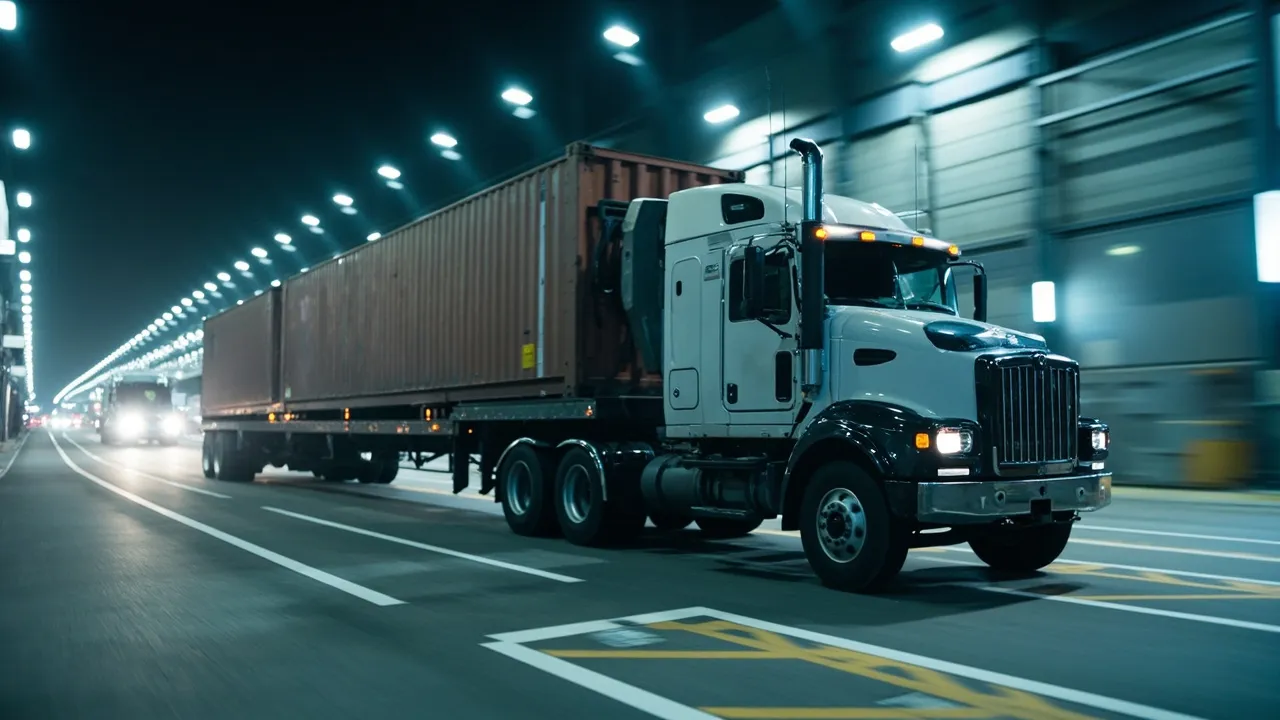
Cabless freight vehicles invite a dramatic question: when will they operate on public roads? For logistics operators, the more useful question is less theatrical: can one execute the same constrained move safely and reliably, hundreds of times per shift, inside a port, plant, yard, or terminal?
That is the opportunity behind Humble Robotics' latest funding. The company raised a $51 million Series A to move its cabless electric Humble Hauler into customer pilots, testing, validation, and early manufacturing. According to FreightWaves, the round brings total funding to $75 million after a $24 million seed round six months earlier.
Capital does not qualify a vehicle for production. A disciplined closed-course program does. Operators should treat the pilot as an evidence-building exercise with explicit gates for route, payload, mixed traffic, energy, and recovery—not as a technology demonstration that gradually becomes permanent.
Closed courses make the operating domain measurable
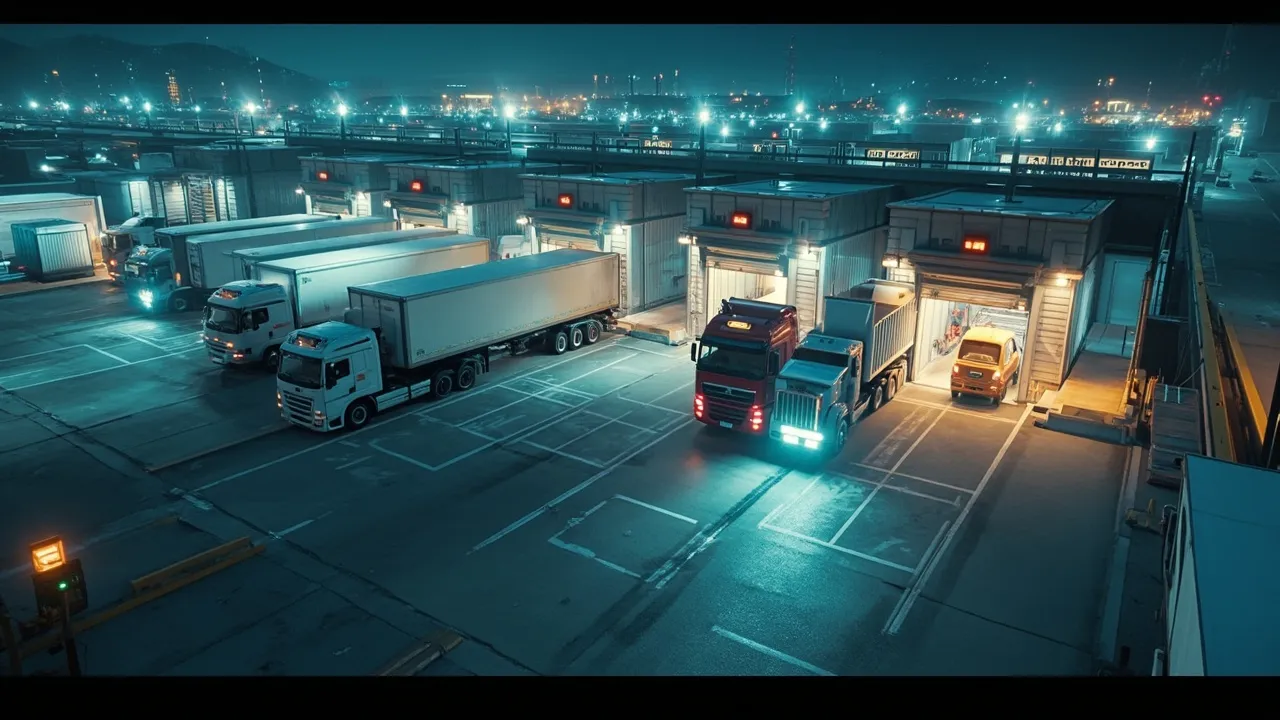
A closed course does not mean an empty test track. Real facilities contain hostlers, forklifts, pedestrians, contractors, blocked lanes, damaged pavement, temporary barriers, changing light, and bad weather. The advantage is that these conditions can be mapped, governed, and changed by the operator.
That creates a narrower operational design domain: the defined set of routes, speeds, weather, traffic rules, loads, visibility conditions, and infrastructure within which the vehicle may operate. Unlike a public highway, a terminal can impose one-way segments, geofenced stops, pedestrian exclusion zones, scheduled crossing windows, and a maximum speed. It can also position trained responders nearby.
The commercial case is substantial. FreightWaves reports that Humble targets regional routes under 250 miles, a category representing 87% of U.S. truck tonnage in 2021; movements under 100 miles represented 44%. The vehicle is listed with a 200-mile maximum range and 55 mph top speed. Yet those headline specifications are only boundaries. Qualification must prove performance against the facility's actual duty cycle.
Gate 1: Prove every route segment
Start with a route register, not a map screenshot. Divide each movement into segments and record lane width, grade, turn radius, surface condition, stopping distance, communications coverage, pedestrian interfaces, gate interactions, and alternate paths. Test every segment in daylight, darkness, glare, rain, and any other permitted condition.
The pass criterion should be quantitative: completed missions, interventions per 100 missions, maximum position deviation, stop accuracy, and time outside the planned cycle. Temporary construction or a failed gate should force a safe stop or an approved alternative—not improvisation beyond the operating domain.
Version-control the route. A moved barrier, repainted crossing, new trailer staging row, or degraded wireless zone can change the risk profile. Material changes require revalidation before autonomous service resumes.
Gate 2: Qualify the payload envelope
The Humble Hauler's skateboard-style platform is designed for 40-foot international and 53-foot domestic containers and is described as 20% lighter than a traditional tractor-trailer. That may improve payload economics, but operators still need to qualify their own freight envelope.
Build test cases across empty, typical, and maximum authorized weights; different container lengths; high and uneven centers of gravity; load shift risk; wind exposure; and twist-lock or securing conditions. Measure braking, cornering, stability, energy consumption, and placement accuracy. A load outside the approved envelope must be rejected automatically or routed to a manual exception process.
The gate closes only when each payload class has traceable evidence and an owner-approved limit. "Container compatible" is not a usable production rule.
Gate 3: Control mixed traffic
Mixed traffic is where a polished demo becomes an operating system. SupplyChainBrain notes that yard workers share space with equipment weighing up to 80,000 pounds and estimates drivers worldwide enter and exit yard trucks roughly 6 billion times annually to connect air lines. Automation may remove some exposure, but it can introduce unfamiliar movement and new human assumptions.
Test predictable encounters first: a hostler approaching an intersection, a forklift crossing a lane, a pedestrian at a marked crossing, or a truck reversing from a dock. Then test degraded cases such as an obscured vest, a vehicle violating right-of-way, or an object falling into the lane.
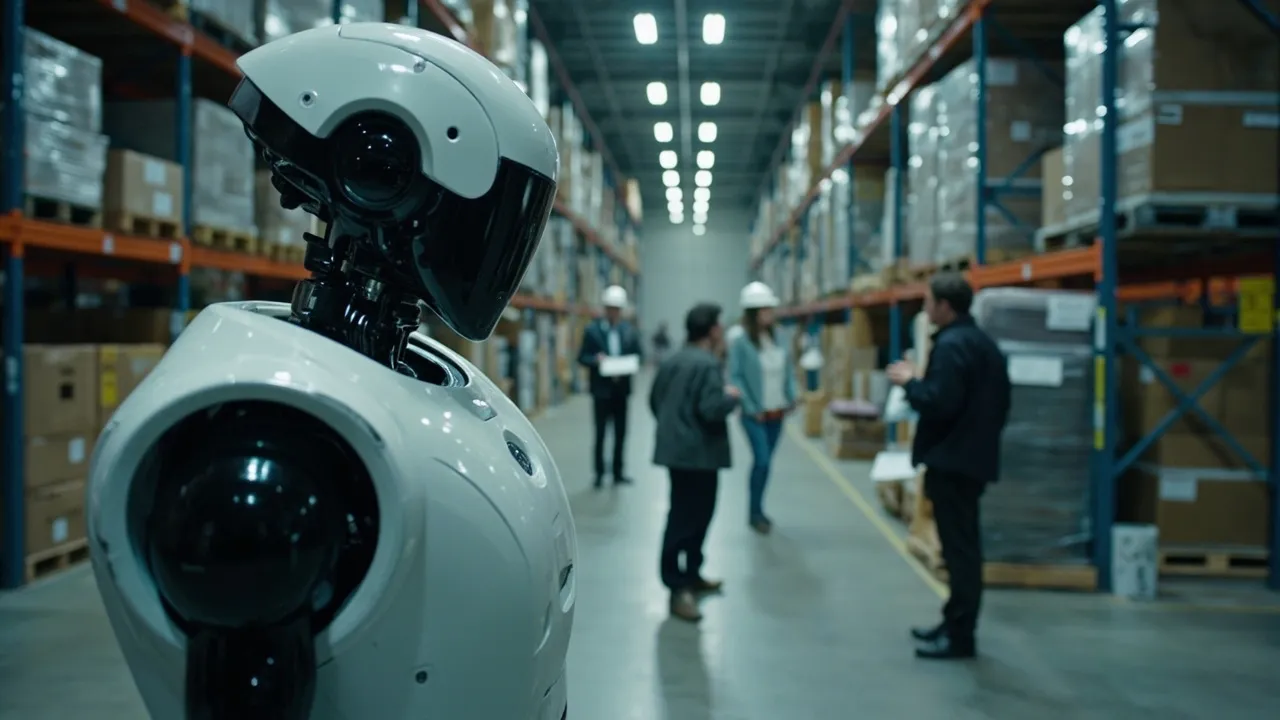
Pass criteria should cover detection distance, controlled-stop distance, false-stop frequency, near misses, and rule violations. Facility rules must specify who has priority, how humans recognize vehicle intent, and which zones remain physically separated. Training must include employees, drivers, and contractors—not only the pilot team.
Gate 4: Demonstrate charging and throughput
Electrification fits repetitive short moves because energy demand is more predictable and the vehicle returns frequently to known infrastructure. But nameplate range is not shift capacity.
Measure kilowatt-hours per loaded and empty mission, charge time, queue time, connector failures, performance at temperature extremes, and capacity degradation assumptions. Model the worst planned shift, not the average day. The charging plan must survive a delayed break, a blocked charger, and one charger out of service without missing the required move count.
Set a production gate around completed moves per hour and energy availability at the end of each operating window. If dispatch must constantly protect the vehicle from demanding assignments, the duty cycle is not qualified.
Gate 5: Make recovery routine
Autonomy is dependable only when exceptions are operationally boring. Define who receives an alert, who may authorize remote assistance, when an onsite responder is dispatched, and how the vehicle is made safe before anyone approaches it. Establish maximum response and route-clearance times for a stopped vehicle, lost communications, sensor fault, damaged container, charging failure, or emergency stop.
Every intervention belongs in a shared ledger. Record timestamp, route segment, payload, environmental conditions, software and map versions, fault code, responder, time to recovery, safety impact, root cause, and corrective action. Distinguish assistance requested by the system from intervention initiated by a human; both affect readiness.
The ledger should drive a weekly pilot review. Repeated faults require corrective action and regression testing. A severe event can suspend only the affected route or condition if the operating domain is well defined; otherwise, the whole pilot may need to pause.
Promote on evidence, not enthusiasm
A production decision should require all five gates to remain within threshold for a defined number of missions and shifts. Operations, safety, maintenance, IT, security, and finance should sign the decision together. The output is a qualified operating domain, an exception playbook, and an auditable evidence package—not a vague declaration that the technology works.
Public-road deployment adds regulators, uncontrolled road users, emergency scenes, and nearly limitless edge cases. Closed-course qualification is valuable precisely because it avoids pretending those problems are already solved. It gives logistics teams a bounded place to learn whether cabless freight can deliver safe, repeatable, supportable economics today.
CXTMS helps logistics teams coordinate routes, milestones, exceptions, assets, and performance evidence in one operational record. Request a CXTMS demo to build a controlled pilot workflow that can support a defensible production decision.