The U.S.–Denmark Maritime Pact Needs a Shipyard Supplier Readiness Map

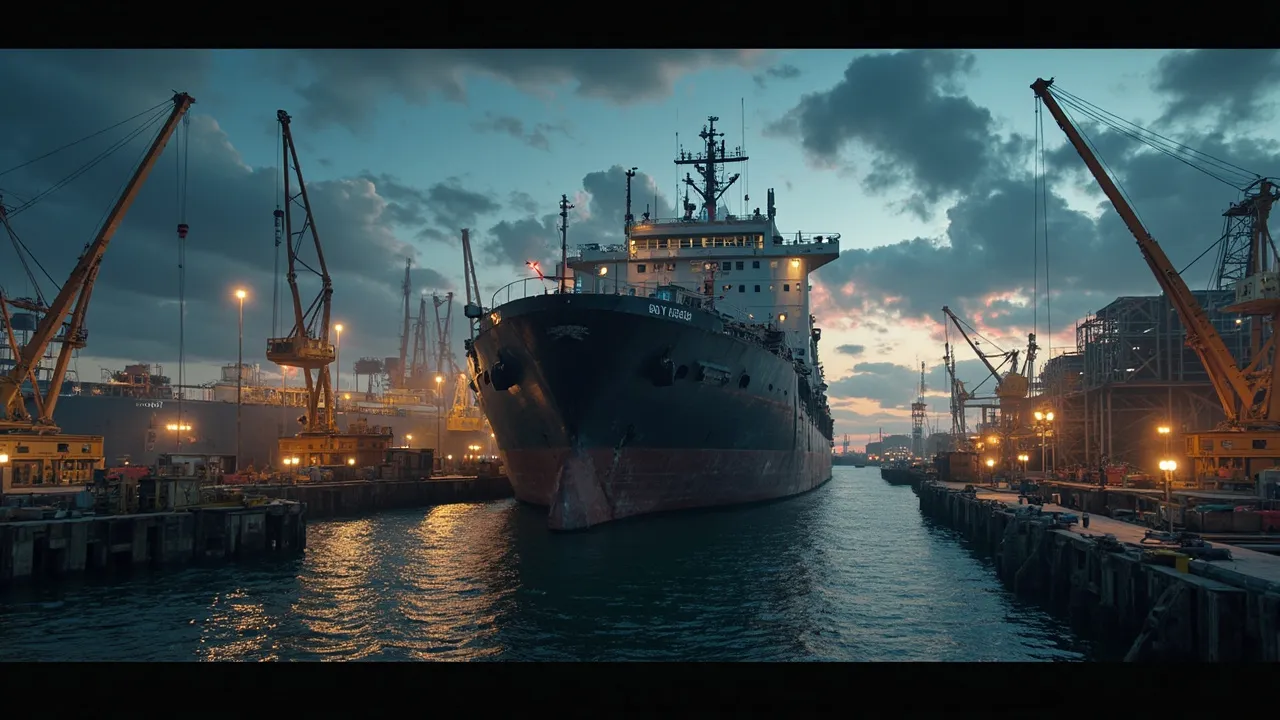
The new U.S.–Denmark maritime agreement is strategically ambitious: combine Danish capital and maritime expertise with American shipyard capacity, workers, vessel construction, and repair demand. But a signed pact does not make a shipyard production-ready. The difficult work begins when thousands of tons of steel, propulsion systems, electronics, prefabricated modules, and specialist labor must arrive in the right sequence.
FreightWaves reports that the agreement is intended to expand the U.S. shipbuilding workforce, attract Danish investment into American yards, and accelerate vessel construction and repairs through technology sharing. Those goals should be managed as a supplier-readiness program, not simply a portfolio of announced investments.
The distinction matters because the competitive gap is enormous. Reuters reported that the U.S. share of global commercial shipbuilding had fallen below 1%, while Chinese yards captured 53% of global ship orders by tonnage during the first eight months of 2025. Closing even part of that gap requires dependable material flow and production control long before a completed vessel reaches the water.
Translate maritime policy into inbound flows
A shipyard is a large assembly operation with unusually constrained space, lifting equipment, waterfront access, and work sequencing. Each policy commitment should therefore be translated into physical inbound flows.
Steel and fabricated sections. Plate, profiles, pipe, and preassembled blocks require mill allocation, certification, cutting and coating capacity, heavy transport, and laydown space. Material arriving too early consumes scarce yard capacity; arriving late can stop multiple trades.
Propulsion and machinery. Engines, gearboxes, propellers, pumps, and auxiliary systems are high-value, long-lead assets. Their dimensions and lifting requirements may limit the usable route, port, gate, crane, and installation window.
Electrical and digital systems. Switchboards, sensors, navigation equipment, cables, and control systems need configuration control as much as transportation. The yard must know which software, drawing revision, vessel zone, and test certificate belongs to every item.
Modules and specialist labor. Prefabrication can compress dockside work, but it shifts risk upstream. A module must be dimensionally accurate, complete, safely transportable, and synchronized with welders, electricians, commissioning teams, and lifting crews at the yard.
That creates a logistics network, not a purchasing list. Every critical package needs an origin, qualified supplier, transport design, customs plan where applicable, storage rule, installation milestone, and accountable owner.
Build the supplier-readiness map
A practical readiness map should rank suppliers and material packages across five controls.
- Qualification. Record approved drawings, material standards, class-society requirements, cybersecurity obligations, weld procedures, quality audits, and first-article status. A purchase order is not evidence that a supplier can deliver accepted shipboard equipment.
- Lead time. Separate quoted lead time from engineering approval, raw-material reservation, production, testing, transport, and yard acceptance. Track the constraint inside the lead time rather than one estimated delivery date.
- Port and route access. Confirm berth capability, bridge clearance, road permits, escorts, axle limits, rail geometry, gate dimensions, and weather restrictions. Oversized cargo can be complete and still be unusable because its final route was never proven.
- Heavy-haul execution. Assign the trailer, crane, rigging plan, lifting points, crew, permits, and contingency date before release. Match delivery windows to the yard's lift plan so expensive equipment does not wait unsecured.
- Yard staging. Give every package a designated zone, preservation requirement, maximum dwell time, and installation sequence. Barcode or RFID identity should connect the physical item to drawings, certificates, inspection results, and the vessel work package.
Use a red-amber-green status only after defining the evidence behind each color. “Green” should mean qualification complete, capacity reserved, route validated, documents accepted, and installation window confirmed—not that a supplier verbally expects to deliver.
Distinguish announced capacity from production-ready capacity
Investment announcements are useful leading indicators, but they are not output. Programs need milestones that expose the conversion from intent to repeatable production.
Start with committed capacity: funding approved, site selected, contracts signed, and accountable organizations named. Then measure enabled capacity: facilities built, utilities connected, equipment installed, workers trained, and required approvals obtained. Next comes qualified capacity: representative components have passed inspection, systems can exchange current technical data, and inbound routes have completed trial moves. Only then should a program claim production-ready capacity—labor, materials, tools, drawings, transport, and yard slots are available together for a released vessel schedule.
Track milestone dates at work-package level. Useful measures include engineering-release adherence, supplier qualification completion, long-lead coverage, on-time arrival to required date, first-pass inspection yield, heavy-lift slot adherence, staging dwell, material shortages, and labor-hours lost waiting for parts. A yard can add floor space while these indicators deteriorate; that is expansion without throughput.
Create one control record from supplier to vessel
Shipbuilding partnerships cross company and national boundaries, so email chains will quickly fragment the operating picture. Each critical package needs one shared control record containing:
- supplier, purchase order, vessel, block, system, and work-package identifiers;
- drawing revision, approvals, certificates, inspection holds, and nonconformance status;
- promised, required, forecast, ship, port, yard, and installation dates;
- dimensions, weight, handling points, preservation rules, and storage location;
- mode, carrier, permits, customs status, route validation, and lift reservation;
- exception owner, recovery action, decision deadline, and downstream work at risk.
The control tower should alert teams when a technical approval threatens fabrication, a permit threatens the required date, or an installation change leaves material occupying a constrained staging zone. It should also preserve the event history needed to compare suppliers, forecast completion, and support later vessel programs.
The U.S.–Denmark pact can bring valuable investment, skills, and technology into American shipbuilding. Its operational test, however, is simple: can each yard receive accepted material and qualified labor exactly when the vessel schedule needs them? A supplier-readiness map makes that test visible before shortages become dockside delays.
Building a maritime supplier network across vendors, ports, carriers, and shipyards? Request a CXTMS demo to manage milestones, inbound moves, exceptions, and delivery evidence in one operational view.