Perry Ellis Cut Order Discrepancies 17%: Put RFID Validation After Picking

Picking technology can guide an operator to the right location and quantity, yet the order can still leave the warehouse wrong. A unit may land in the wrong carton, an extra item may be added, or a relabeling error may break the connection between the physical contents and the order. When a retailer discovers the problem, the supplier absorbs more than a correction: chargebacks, rework, store shortages, and disputed evidence all follow.
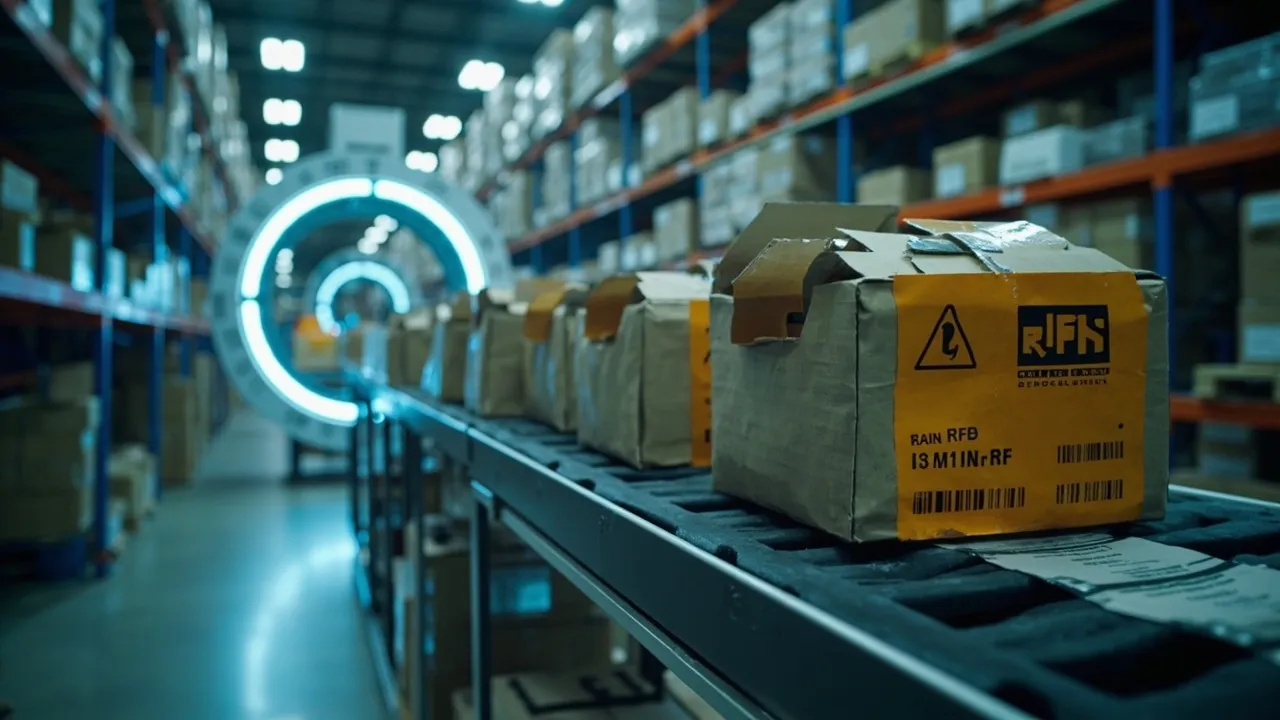
Perry Ellis International has inserted a control at exactly that gap. According to Modern Materials Handling, the apparel company deployed RAIN RFID tunnels after picking and before shipment at its Atlanta-area distribution center. Since go-live, discrepancies detected downstream of the tunnels have fallen 17%, while fewer non-compliant shipments have reached business customers.
The lesson is not simply “install RFID.” It is to make final validation a distinct, measurable release decision between warehouse execution and transportation execution.
Validate the physical carton against the digital order
Perry Ellis already used pick-to-light technology. The remaining weak point was final verification, which depended heavily on manual checks. The new tunnels read the tagged items inside each open carton and compare the observed electronic product codes, or EPCs, with the order expected by the warehouse management system.
The reported system can process up to 1,000 boxes per hour and read as many as 600 items per box. Middleware integrates the tunnel with Perry Ellis' Manhattan WMS, and only compliant orders proceed toward shipping. That last detail matters: a read is useful only when its result controls what happens next.
RFID makes this kind of checkpoint practical because it does not require a worker to expose and scan every barcode individually. A separate MMH review of warehouse RFID notes that most RFID readers do not need line of sight. The same report describes fixed readers on conveyors and dock doors, and says UPS added RFID functionality at more than 1,000 distribution sites, eliminating 20 million manual barcode scans per day. Those figures show the scale available, but throughput should never outrank control quality.
Define the item-carton-order contract
An RFID tunnel does not know whether a carton is correct unless the surrounding systems give it an authoritative expectation. Before automation, define a data contract shared by the WMS, RFID middleware, parcel or shipping system, and TMS.
At minimum, the validation record should contain:
- order, shipment, wave, carton, and license-plate identifiers;
- expected SKU, size, color, style, quantity, and serialized EPC where applicable;
- EPCs observed, read count, tunnel, conveyor lane, and validation timestamp;
- result code such as pass, shortage, overage, unexpected item, duplicate read, or unreadable tag;
- label version, carrier service, destination, and retailer routing-guide version;
- operator actions, recount result, corrected carton contents, and release authorization.
The physical carton ID is the join key. Without it, a perfect RFID read can become detached from the shipping label, or the corrected carton can inherit the evidence from the failed one. Require each repack, split, consolidation, or relabel event to create an explicit relationship rather than silently overwriting the original record.
Keep both expected and observed data. A simple “passed” flag cannot answer a retailer claim weeks later. A defensible record shows what the WMS expected, what the tunnel observed, which business rule was applied, and who released the carton.
Route exceptions instead of stopping the building
The release rule should be strict, but the exception process must be fast. A mismatch should divert the carton to a controlled lane and create a work item automatically. It should not leave an operator deciding whether to push a questionable box forward to protect throughput.
Use a short exception sequence:
- Contain. Block shipment confirmation and divert the carton without losing its order association.
- Diagnose. Compare missing, excess, duplicate, and unexpected EPCs. Check for a damaged tag or an adjacent-carton read before changing inventory.
- Correct. Recount, remove or add units, replace a label if authorized, and record the reason code.
- Revalidate. Send the corrected physical carton through a new validation event. A manual override should not substitute for a clean second read except under a documented contingency.
- Release. Update carton contents, shipment status, and transportation documents from the same accepted result.
Create separate procedures for equipment downtime and integration failure. If the tunnel is available but the WMS expectation is stale, continuing to scan produces convincing but invalid evidence. The fallback should specify when manual verification is permitted, how samples are chosen, who approves shipment release, and how records are reconciled when systems recover.
Measure prevention, not just read rate
Reader accuracy and cartons per hour are engineering measures. Operations leaders also need business outcomes. Perry Ellis' 17% reduction in downstream discrepancies is valuable because it measures what escaped the automated checkpoint, not merely how often the equipment produced a read.
Track the funnel from attempted validation to customer outcome:
- first-pass yield and exception rate by wave, SKU family, picker, and tunnel;
- false reject, no-read, cross-read, and duplicate-read rates;
- average exception resolution time and cartons awaiting release;
- discrepancies found after validation per 1,000 cartons;
- chargeback count and value by reason, customer, and routing guide;
- store shortage claims and perfect-order performance;
- trailer or carrier cutoff misses caused by validation exceptions.
Segment the results. An overall improvement can hide a size-color combination with weak tags, a conveyor lane with interference, or a customer rule that produces repeated relabeling. Compare performance before and after deployment using the same discrepancy definition and a large enough period to account for seasonal volume.
The economics should also include avoided manual scans and investigations, but do not count every tunnel detection as a saved chargeback. Some errors would have been caught later in the process. Use verified downstream discrepancy and claim data to keep the business case credible.
Connect warehouse proof to shipment execution
Post-pick validation becomes stronger when the accepted carton record follows the freight. The TMS should prevent tender or manifest completion for blocked cartons, retain the validation timestamp with the shipment, and expose exceptions that threaten a pickup cutoff. If a carton is reopened after passing, its validation status should expire automatically.
CXTMS can connect the WMS release, carton evidence, carrier booking, pickup milestone, and customer claim in one shipment record. That lets warehouse and transportation teams manage the tradeoff between correction time and departure commitments without weakening the compliance gate.
The practical principle is simple: trust the pick process, then verify the carton before it becomes freight. Perry Ellis' result shows that a well-placed RFID checkpoint can turn item-level data into fewer downstream discrepancies and fewer chargeback opportunities.
Ready to connect warehouse validation with shipment release? Request a CXTMS demo to build traceable order-accuracy controls from the final pick through customer delivery.