Mexico's National Trucking Strike Needs a Border-Crossing Recovery Sequence

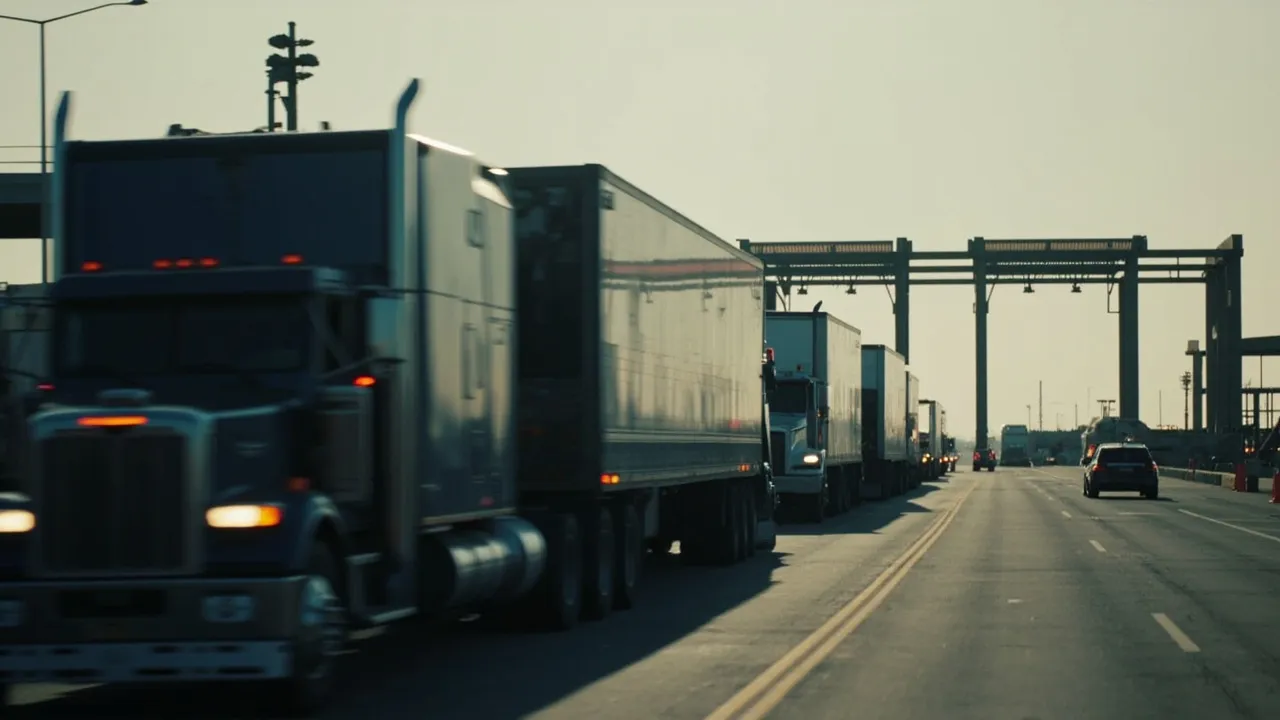
Mexico's national trucking strike is not merely a road-capacity problem. It is a sequencing problem. When blockades and demonstrations interrupt the approaches to major freight hubs, dispatchers can quickly lose control of which loads are moving, which are waiting, and which should never have left secure parking.
FreightWaves reports that truckers launched an indefinite nationwide strike over highway security, cargo theft, violence against drivers, deteriorating roads, towing fees, regulatory burdens, and operating costs. Planned activity included major logistics centers and Nuevo Laredo, opposite Laredo, Texas—the leading U.S. inland port of entry.
The response should not be “move everything as soon as a lane opens.” That merely transfers congestion from highways into yards, customs queues, and receiving docks. Cross-border operators need one control record and a deliberate recovery order based on cargo consequence and actual crossing readiness.
Stop feeding the queue before it becomes the problem
A disruption at the border propagates in both directions. Southbound components miss Mexican production windows; northbound finished goods and perishables miss appointments in the United States. Trailers accumulate at plants, transfer yards, and secure lots. Drivers run out of legal or practical working time, while customs documents and delivery appointments age.
The risk is already measurable. During an earlier 2026 Mexican strike, FreightWaves found that outbound tender rejection rates in Laredo were 37% higher year over year as blockades and congestion continued into a second day. That is a warning against assuming that reopening a road instantly restores usable capacity.
Before dispatching another truck toward a constrained hub, divide loads into three states:
- Hold: freight without a confirmed carrier, valid documents, safe staging location, or realistic receiving appointment.
- Reprioritize: freight whose production, shelf-life, or customer consequence justifies scarce crossing capacity.
- Shift: loads that can use another gateway, mode, departure date, consolidation point, or inventory source without creating greater risk elsewhere.
A hold is not passive. It should identify where the trailer will wait, how long the cargo can remain there, who guards it, and what event releases it. Sending freight into an uncertain corridor because it was already scheduled is not progress; it is unmanaged inventory in motion.
Rank recovery loads by consequence and readiness
Build the recovery queue at shipment level rather than by customer volume or original pickup time. Score each load on four dimensions.
Perishability. Record remaining shelf life, temperature requirements, reefer fuel status, inspection exposure, and the latest viable delivery time. Food and pharmaceutical loads may deserve priority, but only when the consignee and inspection process can receive them.
Production risk. Link each inbound component to the consuming plant, line, on-hand quantity, consumption rate, and estimated line-stop time. A small shipment capable of preventing a shutdown can outrank a full trailer of replenishment inventory.
Appointment scarcity. Identify delivery, customs, inspection, and transload slots that cannot easily be replaced. Do not release a load merely because its original appointment is close; confirm that the facility will honor it after the disruption.
Customs readiness. Verify commercial invoices, classification, permits, broker acceptance, inspection status, and any shipper or carrier documentation. A high-consequence load with incomplete entry data should not occupy the first available crossing slot.
Use these factors to create a simple sequence: protect life and temperature first; prevent imminent production stoppages second; preserve scarce confirmed appointments third; then restore routine freight by age. Within every tier, customs-ready loads move ahead of incomplete ones.
This matters because cross-border volume supports downstream networks, not just the crossing itself. FreightWaves recently estimated that Mexican avocado imports generate $641 million in U.S. trucking and warehousing activity. A border delay therefore consumes capacity at ripening centers, cold stores, drayage providers, and final-mile operations well beyond the port of entry.
Keep one border control record
Phone calls and chat threads are useful for escalation, but they are a poor system of record. Each shipment needs one shared control record that operations, brokers, carriers, security teams, and customer service can read.
At minimum, capture:
- carrier acceptance, tractor and trailer assignment, driver contact, and last confirmation time;
- current location, route, border gateway, crossing status, and estimated queue time;
- secure parking location, security restrictions, reefer condition, and next welfare check;
- customs broker, document-complete flag, inspection state, and release reference;
- original and revised appointments, delivery promise, customer notification, and promise owner;
- hold, reprioritize, shift, or release decision, with reason, approver, and timestamp.
Security cannot be an afterthought. Another FreightWaves analysis reported that trucks intercepted in transit account for more than 60% of cargo-theft incidents in Mexico. Recovery plans should therefore avoid improvised roadside waiting, unverified detours, and public disclosure of high-value load locations. A route reopening should trigger a security check as well as a capacity check.
Reopen the network in controlled waves
When movement resumes, release freight in waves small enough to observe. First validate the route, crossing hours, carrier capacity, customs staffing, secure parking, and destination appointment. Then release the highest-ranked ready loads and monitor five events: departure, arrival at secure staging, customs presentation, border crossing, and delivery acceptance.
Pause the next wave if queue time breaches the agreed threshold, a crossing status becomes unreliable, milestone data disappears, or receiving capacity falls behind. Recalculate revised delivery promises from actual gateway throughput—not from the moment authorities announce that a road is open.
Finally, preserve the event history. Compare planned versus actual release order, crossing time, missed appointments, detention, spoilage, premium transport, and production downtime. That evidence turns the next disruption plan from intuition into a tested operating playbook.
Mexico's strike highlights real driver-safety and operating-cost grievances. For shippers, the practical response is disciplined control: stop feeding uncertainty, rank cargo by consequence, verify readiness, and restore flows in observable waves.
Need one operational view of cross-border loads, carrier confirmations, customs milestones, and revised promises? Request a CXTMS demo and build a recovery queue your entire team can execute.