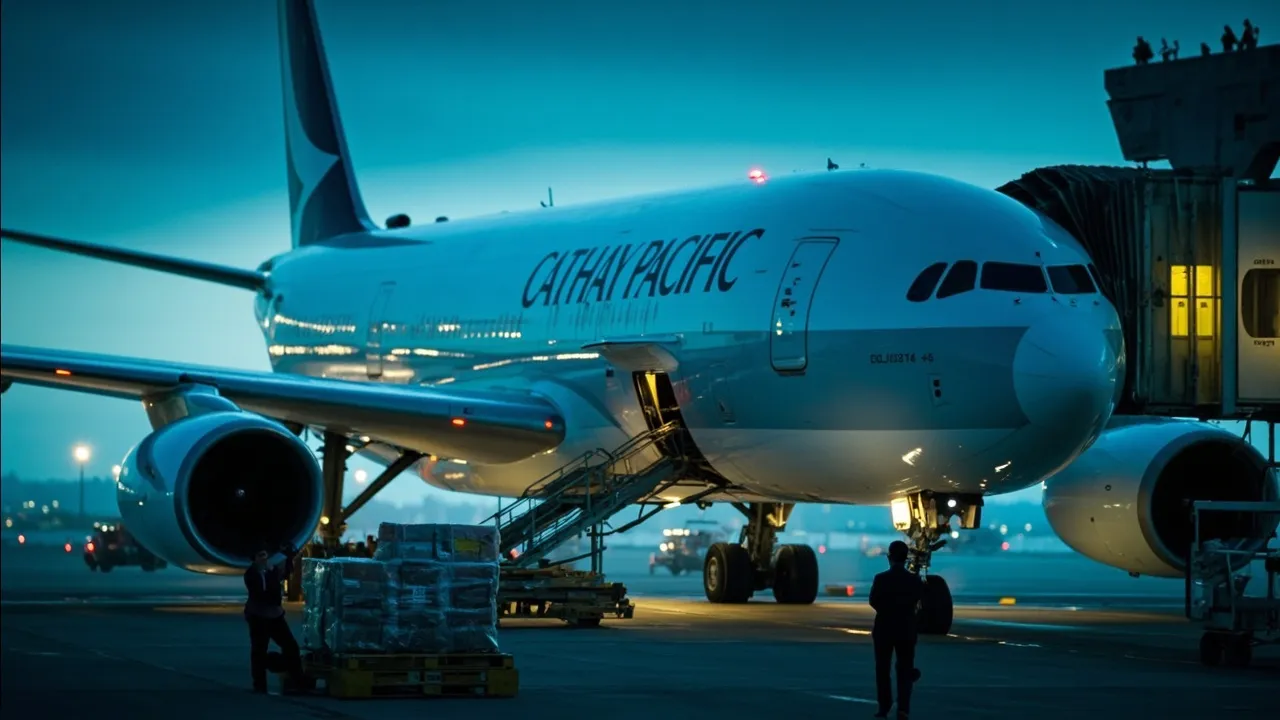
JAL's Outsourced 747 Freighters Need a High-Tech Cargo Allocation Rule

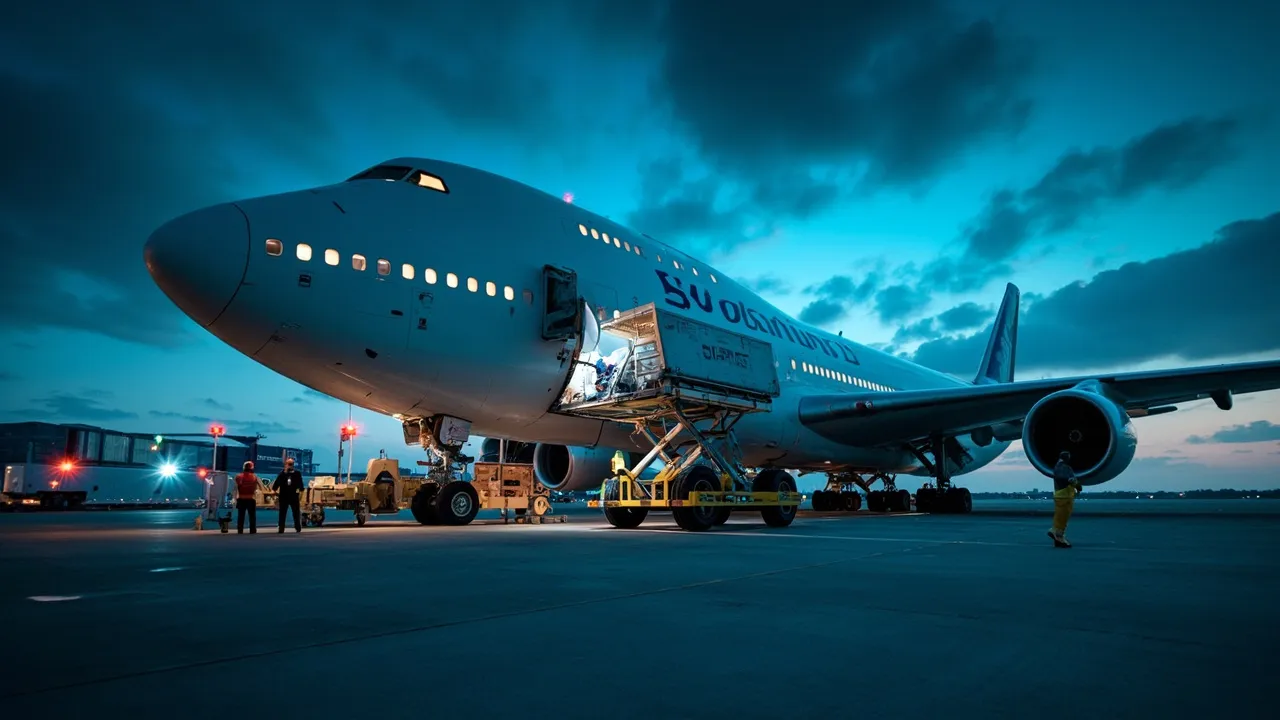
Japan Airlines is adding something scarce to the high-tech supply chain: scheduled access to Boeing 747 freighters. But a large aircraft does not make the capacity decision simple. When semiconductors, server racks, manufacturing tools, and digital infrastructure compete for the same main deck, the best allocation is not necessarily the booking with the highest rate per kilogram.
The real question is which shipment creates the greatest business loss if it misses the flight.
A 100-ton aircraft can still have unusable capacity
JAL has contracted Atlas Air, Kalitta Air, and Cargolux to operate long-term charter services linking Tokyo Narita with Chicago, Los Angeles, and Luxembourg. It also uses Atlas capacity for a Nippon Express circuit connecting Los Angeles, Narita, Taipei, and Singapore. According to FreightWaves' account of the expansion, the 747s offer about 100 tons of capacity and answer demand for servers, semiconductor equipment, and electronic components on routes where few large freighters operate.
Yet payload is only one constraint. A flight can have weight remaining while lacking the correct main-deck position, contour, floor-loading tolerance, or handling window for the next shipment. A tall server rack may require upper-deck access. Sensitive lithography equipment may need shock controls, specialist loading, and tightly managed custody. Dense components can reach a position's weight limit before they fill its volume.
That is why planners need to distinguish available capacity from usable capacity. The second figure must reflect aircraft position, dimensions, weight distribution, handling capability, security requirements, and connection feasibility—not just kilograms left in the booking system.
High-tech demand raises the cost of a bad allocation
The AI investment cycle has changed the economics of air cargo. A separate FreightWaves analysis of AI-related trade reported that semiconductors, data-transmission equipment, and data-center hardware produced 42% of global goods-trade growth in 2025 and about 76% in the first quarter of 2026.
The same analysis cited industry estimates that AI-related products represented 53.5% of the value of goods transported by air during the first half of 2026 while accounting for only 7% of volume. That imbalance is the heart of the allocation problem: a relatively small quantity of cargo can carry enormous financial and operational consequences.
Demand is visible in forwarder results too. FreightWaves reported that Kuehne+Nagel's air cargo volume rose 10% year over year in the third quarter, versus market growth of about 6%, with cloud-infrastructure and semiconductor customers among the main drivers. Much of the increase moved on dedicated freighters.
When premium capacity is scarce, accepting freight first-come, first-served can strand a factory-critical tool while carrying cargo that had a viable later departure. Revenue-only ranking can be just as shortsighted if a lucrative booking consumes the sole position suitable for a shipment whose delay would stop a production line.
A four-factor allocation score
JAL, its operating partners, and forwarders should apply a shared score before freight is confirmed to a specific flight. Four factors deserve explicit weight.
1. Production-line risk
Give the highest priority to shipments tied to a documented line-down event, installation milestone, or constrained replacement part. The score should capture the affected facility, the inventory runway at destination, and the estimated cost per hour of delay. A component needed in 18 hours should outrank replenishment stock with two weeks of cover.
2. Value density
Use declared value per chargeable kilogram alongside security and insurance limits. High value density strengthens the economic case for air transport, but it should not operate alone. Planners also need to consider whether concentrating several exceptionally valuable shipments on one flight creates an unacceptable exposure.
3. Handling constraints
Record dimensions, contour, floor load, center of gravity, orientation, dangerous-goods status, temperature range, shock sensitivity, and required loading equipment. The system should reserve scarce nose-door or main-deck positions for freight that genuinely needs them. Cargo that can travel in a lower hold or on another aircraft should not displace an outsized unit with no alternative.
4. Delivery-window cost
Translate lateness into money. That includes contractual penalties, installation labor waiting on site, missed onward connections, expediting expense, and delayed data-center revenue. Comparing these costs with the premium for the planned flight makes the decision auditable rather than subjective.
A practical rule can weight production risk and delivery-window cost most heavily, then use handling feasibility as a hard gate and value density as a tie-breaker. Every score should include its evidence, timestamp, and owner. If conditions change—inventory falls, a connection closes, or an alternate flight opens—the ranking should recalculate automatically.
The event trail must cross company boundaries
Outsourced lift makes event quality as important as the scoring model. JAL sells the service, another carrier operates the aircraft, handlers control physical movement, and a forwarder manages the customer's promise. A status update trapped in one party's system is not operational visibility.
Four event groups should feed one shipment record:
- Booking events: request received, dimensions validated, allocation score approved, aircraft position assigned, and booking confirmed.
- Custody events: freight accepted, security screened, build-up completed, handed to the operating carrier, and loaded.
- Connection events: arrived at gateway, customs released, transferred to the next handler, and uplift protected on the onward segment.
- Exception events: offload risk, handling mismatch, damaged packaging, temperature or shock excursion, missed connection, and revised recovery plan.
Each event needs a standard timestamp, location, shipment identifier, responsible party, and reason code. Exceptions should trigger a new capacity decision, not merely a notification. If a high-risk semiconductor tool is rolled, the platform should immediately compare recovery routes and identify which lower-priority shipment could move later.
Turn capacity into a controlled promise
The 747 network gives JAL and its partners a valuable answer to the AI hardware boom, but the commercial advantage will depend on how precisely they allocate it. A transparent scoring rule converts a 100-ton headline into controlled, shipment-level promises—and gives customers a defensible explanation when priorities change.
CXTMS brings booking data, capacity constraints, custody milestones, and exception workflows into one operational view. Request a CXTMS demo to see how structured allocation rules can protect high-value freight across airline and forwarder handoffs.