Maersk and Hateco’s $3.5B Vietnam Network: Qualify Rail-to-Port Handoffs Before Capacity Arrives

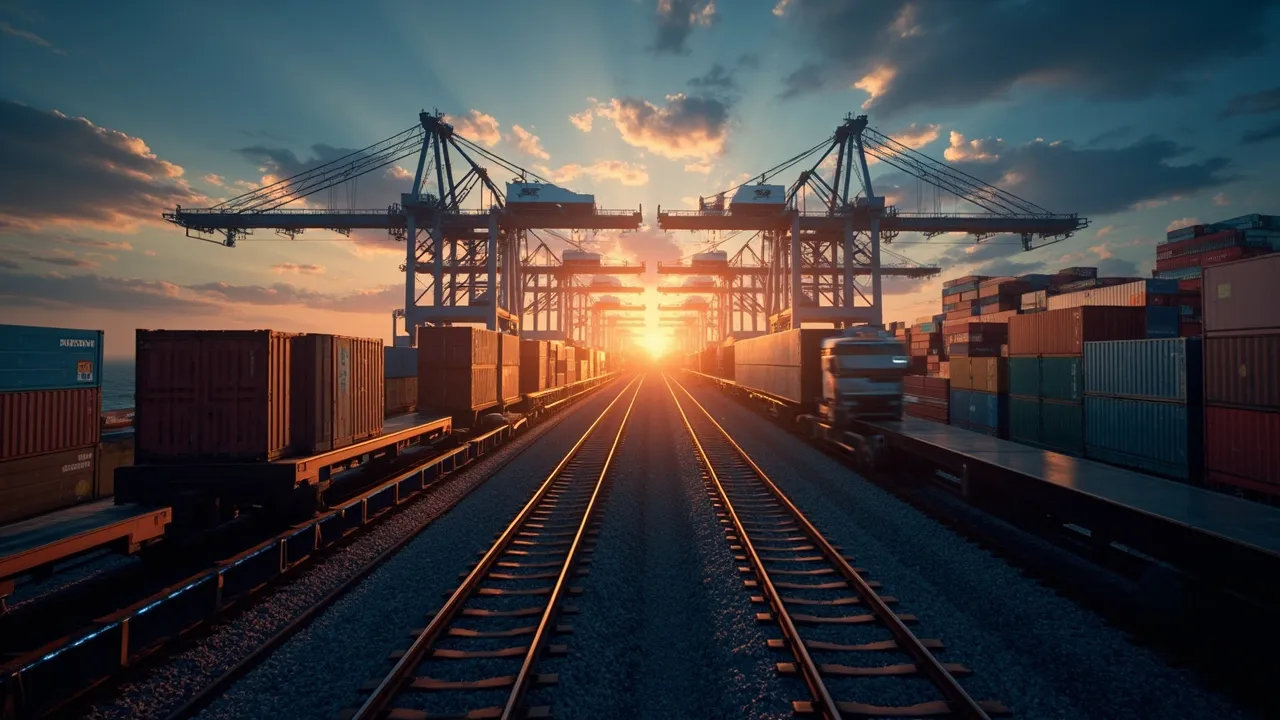
APM Terminals, the ports business of A.P. Moller–Maersk, and Vietnam’s Hateco Group have signed a non-binding agreement to study a rail-freight terminal network in northern Vietnam. The announcement is significant, but it is not yet capacity a shipper can put into a routing guide.
Reuters reports that the plan covers development and operation of rail-freight terminals and would bring the companies’ total Vietnam investment to an estimated $2.5 billion to $3.5 billion. The proposed system includes a terminal in Haiphong plus three container facilities in northern provinces. Its ambition is clear: connect industrial parks, logistics hubs, and production zones more efficiently with major transport gateways.
For manufacturers and forwarders, however, an investment headline is only the first signal. The useful question is whether every physical, customs, equipment, and data handoff can perform reliably enough to support a production schedule and an ocean cutoff.
Announced infrastructure is not bookable capacity
The agreement is explicitly non-binding and focused on study. That distinction matters. Site selection, permits, track access, terminal design, equipment procurement, operating rules, and commercial service terms must still become concrete before dependable capacity exists.
The project also sits within a much larger rail buildout. In December 2025, Reuters reported that Vietnam had begun work on a 391-kilometer Lao Cai–Hanoi–Haiphong railway priced at 203.2 trillion dong, or about $7.72 billion. The line is intended to connect the Chinese border through Hanoi to Haiphong, northern Vietnam’s largest seaport. That national corridor strengthens the long-term case for rail, but it also adds dependencies involving construction progress, network interoperability, and access allocation.
Shippers should therefore build a milestone register rather than insert the announced network into a future routing plan as a certainty. Track regulatory approval, land availability, construction award, groundbreaking, track connection, equipment delivery, trial operations, customs authorization, published schedules, and commercial launch separately. Assign each milestone an evidence source, owner, expected date, and confidence level.
Map every handoff from factory to vessel
A rail option succeeds or fails between nodes. Start at the factory or industrial park and document the complete operating chain:
- empty-container release and positioning;
- factory loading, seal capture, and drayage to the inland terminal;
- terminal gate-in, weighing, inspection, and train loading;
- rail departure, line-haul movement, and exception handling;
- arrival in Haiphong, discharge, customs status, and port transfer;
- container acceptance at the marine terminal and connection to the booked vessel.
At every step, name the party that has custody, the system that records the event, the document that authorizes movement, and the deadline that protects the next connection. “Arrived at terminal” is not precise enough if operations cannot distinguish gate arrival, grounded status, customs release, rail loading, port acceptance, and vessel load confirmation.
SupplyChainBrain’s coverage says the proposed network would include the Haiphong rail terminal and three northern container facilities. A multi-node design can shorten drayage for factories, but it also creates more possible operating models. Each inland facility may have different gate hours, documentation rules, train frequency, equipment pools, and recovery options. Qualification must occur by origin-terminal-port pairing, not once for the network as a whole.
Qualify customs and equipment before promising transit time
Customs processes should be tested as an operational sequence. Determine where export declarations are lodged, where seals can be inspected or replaced, whether containers move under bond, which status authorizes rail departure, and how holds are transmitted to the terminal and carrier. Establish who corrects a mismatch among the booking, declaration, container number, and seal record—and how late that correction can occur without missing the train.
Equipment deserves the same discipline. Confirm compatible container types, wagon capacity, axle and weight restrictions, lift equipment, reefer plugs and monitoring, dangerous-goods acceptance, and empty-container supply. A terminal may advertise throughput while lacking the right wagon slots, chassis, reach-stackers, or refrigerated connections for a specific shipment profile.
Run trial shipments by commodity and equipment class. Measure factory release to inland gate, gate-to-train dwell, rail transit, port transfer, customs-release latency, and cutoff compliance. Record the 50th, 90th, and 95th percentile rather than relying on an average that hides missed connections.
Score lanes against truck-only service
Rail should earn volume lane by lane. A practical scorecard can weight four outcomes:
- Drayage reduction: kilometers and hours removed from the road move, plus avoided tolls and empty repositioning.
- Reliability: percentage of containers reaching port before the required cutoff and variability around that result.
- Schedule fit: train frequency, booking lead time, receiving windows, and buffer before vessel departure.
- Recovery: availability and cost of trucking, alternate trains, alternate terminals, or rebooking after disruption.
Do not count rail’s theoretical line-haul advantage while ignoring terminal dwell. A lane that saves six road hours but adds an unpredictable day at an inland facility is not an improvement for cutoff-sensitive freight. Conversely, a slightly longer planned transit may be valuable if departures are consistent, customs status is visible, and recovery rules are clear.
Create qualification thresholds before launch: minimum weekly frequency, maximum gate dwell, target cutoff success, maximum exception-response time, and confirmed truck fallback. Begin with controlled volume and expand only after several operating cycles meet those thresholds.
Keep capacity assumptions versioned
The investment range should remain context, not a capacity forecast. In CXTMS, teams can maintain a versioned lane record that links infrastructure milestones, service schedules, terminal rules, equipment eligibility, customs requirements, rates, and trial results. Each planned shipment can then reference the currently approved service version instead of a slide deck or announcement.
This approach prevents two costly mistakes: routing freight against facilities that are not operationally ready, and overlooking useful rail capacity once it has passed qualification. Northern Vietnam’s rail-port network could materially improve factory access to Haiphong. The shippers that benefit first will be those that turn each promised connection into a tested, measurable handoff.
Preparing northern Vietnam lanes for new rail capacity? Request a CXTMS demo to qualify terminal handoffs, manage milestones, and compare rail-port options in one operational record.