Avocado Imports Generate $641M for U.S. Logistics: Build a Border-to-Ripening Capacity Map

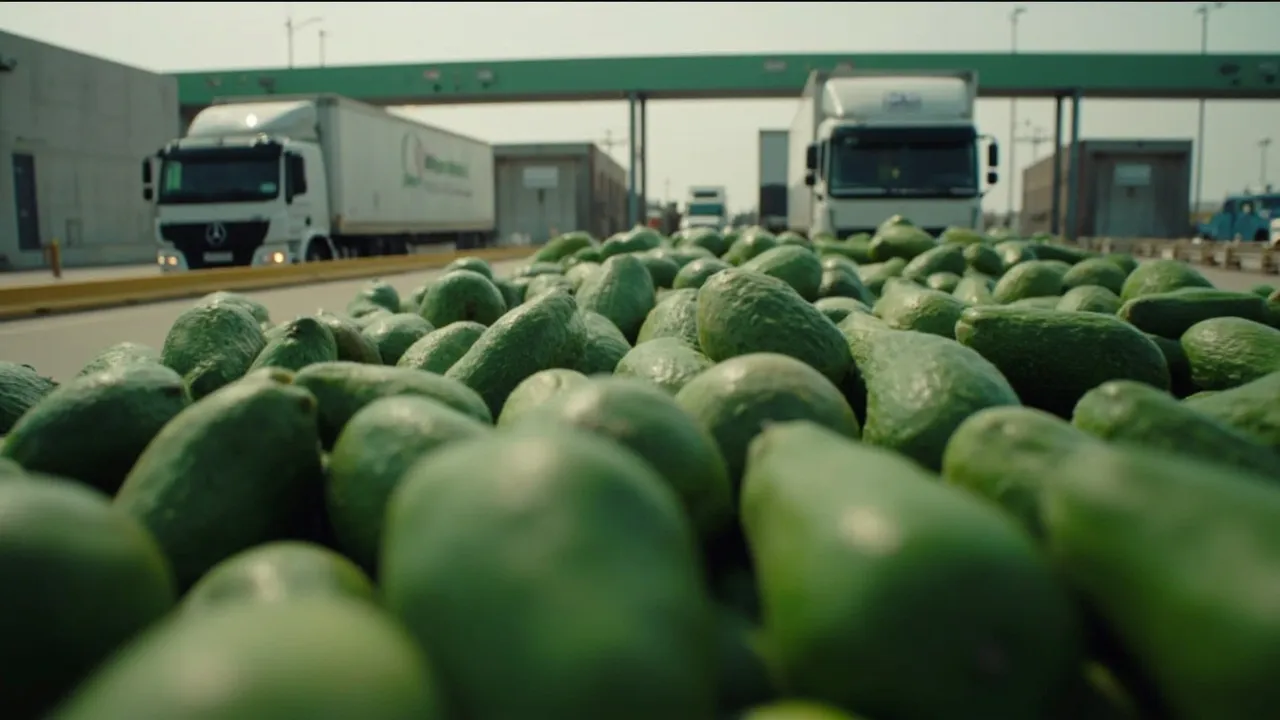
An avocado shipment does not simply cross the U.S.–Mexico border and become retail inventory. It passes through inspections, refrigerated transportation, cold storage, ripening rooms, distribution centers, and tightly scheduled store deliveries. Every handoff consumes time from a product whose commercial value changes as it matures.
The scale makes that operating challenge economically important. FreightWaves reports that Mexican Hass avocado imports generated an estimated $641.5 million in U.S. transportation and warehousing activity and supported more than 4,150 jobs in fiscal year 2025–26. That spending is not just a market headline. It represents a large, time-sensitive network that needs capacity planning from the border all the way to the ripening room.
For importers, forwarders, and produce distributors, the practical response is a border-to-ripening capacity map: one operational view of crossings, inspections, refrigerated assets, maturity, warehouse space, and customer appointments.
Start with the border, not the destination
The first layer of the map should cover each approved crossing and the resources required immediately around it. Record operating hours, broker coverage, inspection processes, transfer-carrier rules, reefer parking, fuel access, cross-dock options, and the time required to recover from a hold.
Do not represent border transit as one average duration. Separate the milestones: arrival on the Mexican side, document acceptance, inspection selection, physical examination, release, trailer transfer, U.S. pickup, and departure from the border zone. Track normal, 90th-percentile, and peak-season dwell for each step. A two-hour delay before inspection and a two-hour delay after release create different recovery choices.
The map also needs alternate paths. For every primary crossing, identify which loads can legally and operationally move through another gateway, how much notice a broker and carrier require, and what extra miles or appointments the diversion creates. An alternate border with no available reefer tractor is not a usable contingency.
Treat temperature history as planning data
Avocados are living inventory. Temperature affects respiration and ripening, so two pallets with the same harvest date may have different remaining shelf life after different journeys. Food Logistics explains that temperatures that fall too low can produce gray chilling marks, while elevated temperatures accelerate ripening and can leave fruit overripe before it reaches the customer.
Capture set point, supply-air temperature, return-air temperature, door events, and sensor excursions against the shipment record. Combine those readings with variety, harvest information, pulp-temperature checks, firmness, and maturity inspection results. The goal is not merely to prove that a reefer ran. It is to estimate which delivery promise the fruit can still meet.
That estimate should influence routing. A load with limited temperature exposure and firm fruit may tolerate a longer move to a distant ripening center. A load that experienced warm dwell at the border may need priority pickup, a closer facility, or a revised retail allocation. Exception rules should convert temperature and maturity observations into an action before quality deteriorates further.
Make ripening rooms visible as finite capacity
Cold-storage pallet positions do not equal ripening capacity. Ripening rooms have their own limits: room count, pallet positions, temperature zones, airflow requirements, ethylene cycles, sanitation windows, inspection labor, and outbound staging space. A facility can have warehouse room while lacking the chamber and labor capacity needed to produce ready-to-eat fruit for a specific order date.
The physical scale can be substantial. Food Logistics reported on a 262,000-square-foot avocado ripening, cold-storage, and distribution center. Another Food Logistics facility-planning article notes avocado ripening operations using rooms across a 40–70°F range for different stages. Those figures illustrate why a single generic warehouse-capacity number is inadequate.
Build a time-phased calendar by room, not just by building. Show inbound appointment, conditioning start, expected release, quality check, packing or repacking, staging, and outbound appointment. Include cleanup and changeover time. Then link each inbound lot to a specific room window and customer demand, preserving enough flexibility to resequence fruit when maturity differs from forecast.
Connect maturity to retail appointments
Retail delivery windows are the final constraint, but they should shape decisions upstream. For each order, work backward from the appointment through staging, conditioning, inbound receiving, line-haul travel, border release, and origin dispatch. The result is a latest-safe milestone for every handoff.
Create decision triggers rather than relying on dispatchers to improvise. Examples include:
- reroute when predicted border release would miss the ripening-room intake window;
- swap room assignments when measured firmness differs from the planned maturity band;
- prioritize a reefer when cumulative temperature exposure reduces remaining shelf life;
- move an order to another distribution center when the original retail appointment cannot be recovered;
- escalate when equipment supply falls below the next 48 hours of planned releases.
Each trigger needs an owner, a response deadline, approved alternatives, and a record of the commercial impact. That structure lets teams act while the shipment still has options.
Build peak-season contingencies before the surge
Peak demand compresses every part of the chain at once. Border queues grow, refrigerated trailers become scarce, ripening rooms fill, and retail windows remain fixed. A useful contingency plan models combined failures instead of testing one disruption at a time.
Run scenarios for a one-day inspection hold, a reefer shortage at the primary crossing, a full ripening facility, and a regional demand shift that requires inventory reallocation. For each scenario, prequalify alternate brokers, transfer carriers, refrigerated yards, ripening partners, and delivery facilities. Record their cutoffs, rates, capacity commitments, food-safety requirements, and activation contacts.
Monitor leading indicators daily: loads approaching the border, inspection holds by age, available reefer tractors and trailers, room occupancy by day, fruit maturity by lot, and retail orders at risk. A capacity map becomes valuable when those signals update the same plan rather than living in separate emails and spreadsheets.
The $641.5 million generated by avocado transportation and warehousing reflects a sophisticated logistics chain. Protecting its value requires more than tracking a truck location. It requires connecting border status, equipment, temperature history, biological maturity, ripening capacity, and customer appointments in one decision model.
Ready to coordinate perishable freight from border release through final delivery? Request a CXTMS demo to manage cold-chain milestones, capacity, and exceptions in one operational workspace.