Wind-Turbine Import Talks Replace a Tariff Decision—Keep Project Cargo Scenarios Alive

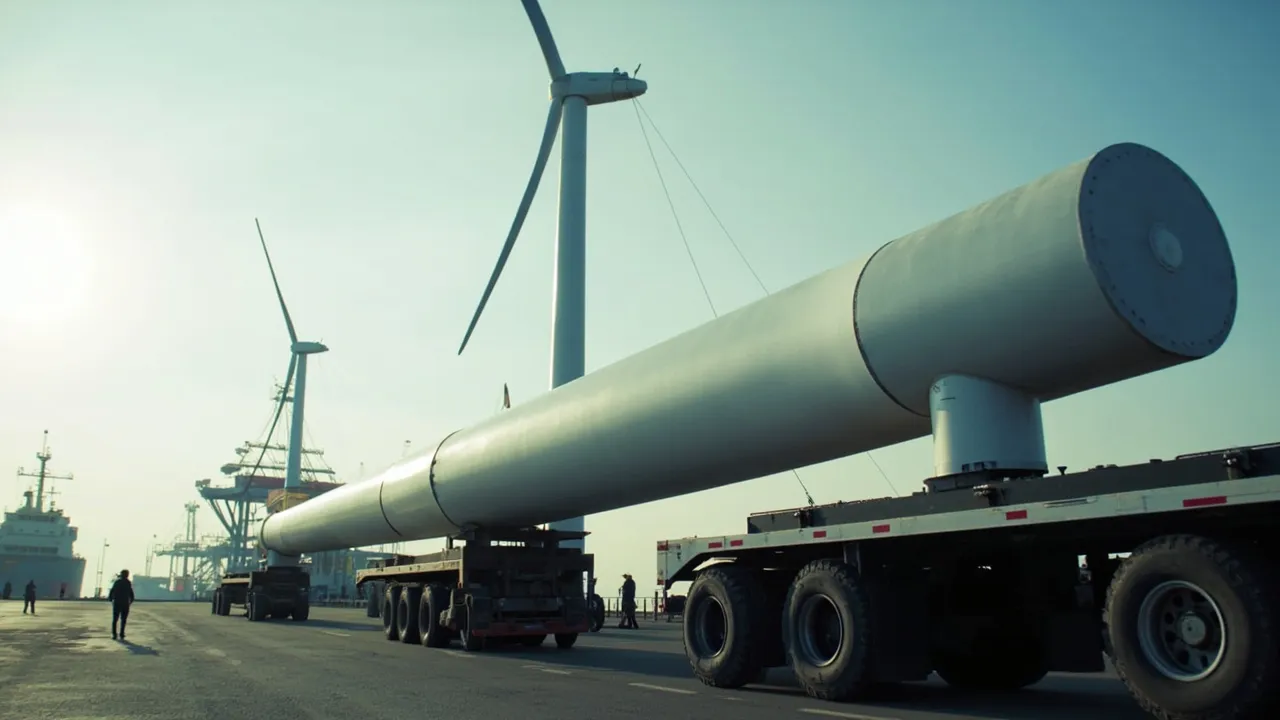
The United States has chosen negotiation, rather than an immediate tariff, after its Section 232 investigation into imported wind turbines and components. That removes one near-term decision but does not remove the commercial uncertainty facing renewable-energy projects.
According to Supply Chain Dive, the president directed cabinet officials to negotiate with trading partners and report on progress within 180 days. The underlying investigation began in August 2025. During that window, importers still must price equipment, reserve vessel space, secure heavy-haul capacity, and protect construction milestones without knowing the final duty treatment.
The practical response is not to guess one tariff rate. It is to maintain several executable scenarios and preserve the assumptions behind every sourcing, routing, and booking decision.
A deferred tariff is still a live project risk
Trade talks create a decision horizon, not a cost guarantee. Negotiations could end with no new action, country-specific arrangements, quotas, product exclusions, or duties that differ by component and origin. Existing steel, aluminum, and country-of-origin rules may also interact with any eventual measure.
That uncertainty matters because a wind project commits cash and capacity long before cargo reaches a U.S. port. Manufacturing slots, breakbulk sailings, terminal labor, cranes, escorts, permits, and site crews have tightly linked lead times. A policy change after a purchase order or vessel booking can alter landed cost; a delayed booking made in pursuit of certainty can jeopardize the installation season.
Finance, procurement, customs, and logistics teams therefore need one shared policy clock. The 180-day reporting period should appear beside supplier milestones, estimated port arrival, customs entry, inland permits, and required-at-site dates. A project can then see which commitments fall before, during, or after the next potential policy decision.
Model exposure by component and origin
A turbine is not one simple import. Blades, tower sections, nacelles, hubs, generators, controls, fasteners, and service parts can have different origins, tariff classifications, values, and transport plans. Reuters reported when the investigation opened that the United States was self-sufficient in nacelle assembly and tower supply but had limited blade-manufacturing capacity. That distinction makes component-level exposure essential.
For each purchase-order line, record:
- country of origin and supporting evidence;
- tariff classification and customs value;
- applicable duty programs and the date they were checked;
- manufacturing and export milestones;
- port, vessel, terminal, and inland route;
- responsibility for duty, delay, demurrage, and re-routing costs.
Do not infer origin from the supplier's headquarters, invoice address, or port of loading. Customs teams need bills of material, production records, and supplier declarations that support the actual determination. The evidence must stay connected to the shipment record so a late classification or origin change does not remain trapped in an email thread.
Build three landed-cost scenarios
Every active project should carry at least a base, adverse, and mitigation case. The base case uses the treatment supported by current law. The adverse case applies a documented planning rate or range to exposed components. The mitigation case tests lawful alternatives such as a different qualified origin, domestic production, a product-specific exclusion, or adjusted delivery timing.
Each version should calculate more than duty. Include ocean freight, port handling, storage, customs fees, bonds, cranes, specialized trailers, escorts, route surveys, permits, utility work, and schedule-driven site costs. Record the source and effective date of every assumption. When policy changes, analysts can update the affected variable instead of rebuilding a multimillion-dollar model from memory.
Sensitivity should be visible at both turbine and project level. If one component's treatment changes, the team needs to know the effect on cash requirements, cost per installed turbine, contingency consumption, and the delivery milestone—not merely the percentage increase on an import line.
Keep the transport plan executable
Tariff exposure is only one part of the risk. FreightWaves notes that the largest turbines can weigh up to 700,000 pounds fully assembled and typically require about 10 loads: three blades, multiple tower sections, and a nacelle hauled on specialized equipment. A sourcing change can therefore invalidate the booked port, trailer, route, or permit plan.
Oversized cargo cannot be shifted like containerized inventory. Blade length controls turning radii and road geometry. Tower diameter affects bridge and overhead clearance. Nacelle weight drives axle configuration and structural reviews. Permit timing, police escorts, utility moves, seasonal road limits, and delivery windows can become the critical path.
The scale of coordination is easy to underestimate. In a report on German wind-project delays, Reuters cited a VDMA study finding an average of 150 permits for transporting a turbine, including 100 to 120 for cranes and 60 for turbine components. U.S. requirements differ by jurisdiction, but the operational lesson travels: permits are a network of dependencies, not a clerical afterthought.
Use decision gates, not a frozen plan
CXTMS can connect the trade decision to the physical move. Create a scenario identifier for each cost version, then attach it to the relevant purchase orders and shipments. Track customs-review completion, vessel cancellation deadlines, port reservations, route approval, permit issuance, site readiness, and delivery as linked milestones.
Set explicit gates. Before a nonrefundable vessel booking, confirm origin evidence and the current duty assumption. Before port discharge, confirm trailer and crane availability. Before inland dispatch, verify every permit and route restriction. Alerts should identify the owner, the last responsible decision date, and the financial or schedule exposure if no action occurs.
Negotiations may eventually deliver clarity. Until then, the best project plan is not the one with the most confident tariff forecast. It is the one that can change a sourcing or policy assumption and immediately show the consequences across customs, cost, transport capacity, and site delivery.
Planning wind-energy or other oversized project cargo? Request a CXTMS demo to manage scenario assumptions, customs evidence, bookings, permits, and delivery milestones in one operational record.