Apple Added U.S. Titanium and Film Suppliers—Qualify Domestic Capacity Beyond the Press Release

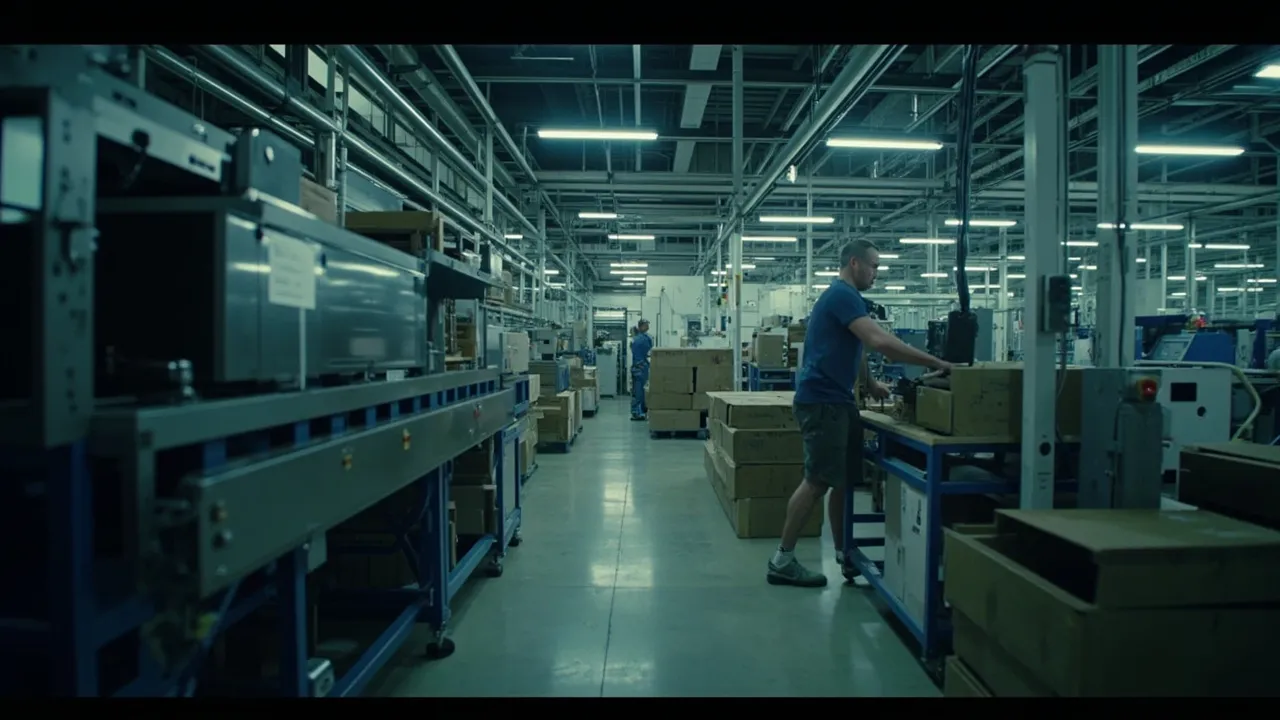
Apple has added domestic titanium capacity and expanded an advanced-film partnership for its newest iPhones. The announcement is strategically important, but a signed agreement is not the same thing as qualified, available output.
Supply Chain Dive reports that Apple will commit up to $100 million over three years to Pennsylvania titanium producer Perryman Company. Perryman melts, forges, and rolls titanium containing at least 80% recycled material for the iPhone Duo. Apple also expanded its agreement with Delaware-based Qnity Electronics, which makes advanced films for the variable-aperture camera system in the iPhone 18 Pro.
These deals sit within Apple's four-year, $600 billion U.S. manufacturing commitment. They are strong demand signals. For supply chain teams, however, the operational question is narrower: when can each supplier repeatedly deliver approved material, at usable yield, on the production schedule—and can inbound transportation support the ramp?
Separate investment headlines from usable capacity
Capital commitments describe intent and funding. They do not establish how many production-ready units can ship next week. A supplier can have equipment installed while it is still completing process validation, correcting dimensional variation, or waiting for customer approval of production samples.
Qualification should therefore distinguish at least five capacity states:
- Announced: commercial intent exists, but the production plan is not yet validated.
- Installed: equipment and tooling are physically available.
- Validated: the process has demonstrated that it can meet the specification.
- Approved: customer testing and documentation are complete for production use.
- Available: conforming output remains after yield loss and other customer commitments.
That final number is the one logistics planners need. Nameplate capacity can overstate shippable supply when a new line has low first-pass yield, constrained inspection capacity, or long changeovers. Committed capacity can also be misleading if it lacks a time bucket. Ten thousand units per month do not help a launch that needs most of them in one week.
Build a supplier-ramp scorecard
A useful scorecard connects engineering readiness to physical flow. Begin with sample approval: record the drawing or specification revision, sample lot, test result, open deviation, owner, and promised closure date. Then track pilot and production milestones with evidence rather than a simple red-yellow-green opinion.
For titanium, the evidence may include recycled-content certification, melt traceability, chemistry, forging records, dimensional results, surface quality, and lot genealogy. For advanced optical films, it can include coating uniformity, thickness, optical performance, contamination control, conversion yield, and handling requirements. Each material should have explicit acceptance rules and a disposition path for nonconforming lots.
Add four measures that expose whether the ramp can support demand:
- Approved weekly output: units or kilograms that passed every required gate.
- First-pass yield: conforming output before rework divided by total output.
- Schedule attainment: actual approved output versus the frozen weekly plan.
- Recovery time: days required to replace a rejected or delayed lot.
Do not let a high aggregate score hide a blocking failure. Missing traceability, incomplete product approval, or unavailable freight capacity should remain a hard gate even if every other measure is green.
Qualify the inbound route with the material
Domestic sourcing can reduce ocean exposure without automatically shortening the total lead time. The origin plant may be farther from the assembly or finishing site than expected. Specialized material may need controlled packaging, secure handling, dedicated equipment, or intermediate processing before it becomes production-ready.
Define the route from the actual ship-from point through every processor and consolidation node. Capture pickup cutoffs, transit commitments, weekend coverage, appointment rules, packaging limits, insurance, proof-of-delivery requirements, and alternate carriers. Test the route during the pilot stage with representative weight, dimensions, packaging, and documentation—not an easy parcel shipment that bears little resemblance to production freight.
The stakes are visible in the product market. SupplyChainBrain reported that shipping estimates for the $1,999 iPhone Duo had slipped into 2027 ahead of its October 23 release. A domestic supplier may improve resilience over time, but current product scarcity is a reminder that geography alone does not prove near-term availability.
Protect the ramp with contingency inventory
Inventory policy should follow qualification risk rather than a universal days-of-supply target. Early production deserves buffers for variable yield, inspection delays, carrier failures, and approval holds. The buffer can decline only after the supplier demonstrates stable output and transit performance across an agreed number of consecutive lots.
Segment inventory into usable states: raw, in process, awaiting inspection, approved, in transit, and quarantined. Counting all six as available creates false confidence. Link each buffer to a specific failure mode and review trigger. If improved yield removes the risk, release excess deliberately; if a single inspection station remains a bottleneck, finished inventory elsewhere may not solve the problem.
Contingency plans should identify the approved alternate source or process, the lead time to activate it, required customer waivers, reserved carrier capacity, and the person authorized to invoke the plan. Run the scenario before the launch. A backup that has never produced an approved lot is an aspiration, not a contingency.
Use milestones to verify the reshoring benefit
CXTMS can turn the supplier ramp into a chain of timestamped, accountable events: sample dispatched, sample received, approval completed, production lot released, pickup requested, carrier accepted, freight collected, intermediate processing completed, destination received, and material accepted.
Planned and actual timestamps expose where lead time accumulates. Reason codes separate supplier production delay from quality hold, missed pickup, linehaul failure, and receiving congestion. Lot numbers and documents preserve the evidence behind every movement. A control tower can then show available approved supply, freight at risk, and the downstream orders or production windows affected.
Measure the domestic program against a pre-agreed baseline. Compare order-to-availability lead time, variability, first-pass yield, expedited freight, damage, inventory days, and recovery time. Domestic sourcing has delivered an operational benefit only when those outcomes improve reliably—not when a press release appears.
Apple's expanded supplier network demonstrates substantial commitment: nearly 100 components for its latest phones are manufactured by U.S. companies across more than a dozen states, according to Supply Chain Dive. Turning that footprint into resilience requires disciplined qualification at the intersection of engineering, production, inventory, and transportation.
Ready to govern supplier ramps from approval through delivery? Request a CXTMS demo to connect supplier milestones, inbound execution, and exception recovery in one workflow.