Autonomous Yard Trucks as a Service: What the ISEE–Holman Model Changes for Buyers

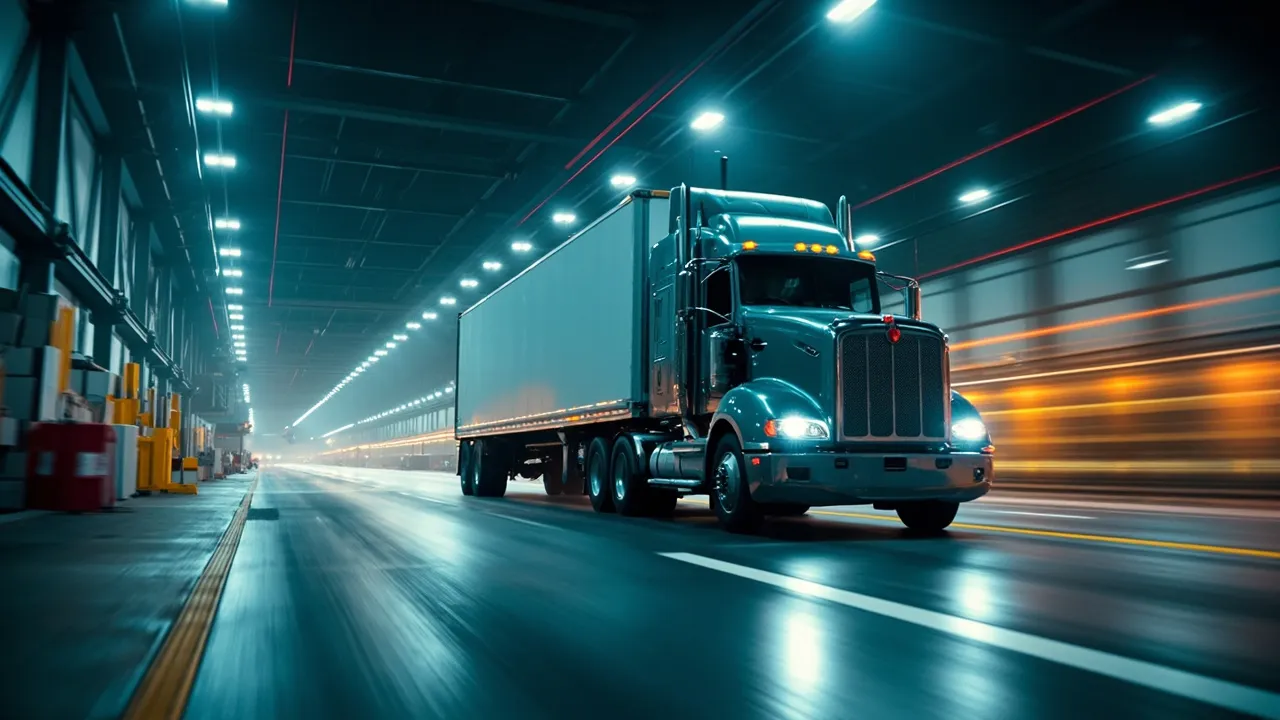
Autonomous yard trucks are moving from technology pilots toward an operating-service decision. ISEE's new partnership with Holman matters because it separates the autonomy purchase from the burden of sourcing, financing, retrofitting, and maintaining the vehicle beneath it.
Under the arrangement, Holman will lease, retrofit, and maintain trucks running ISEE's autonomy system in North America. Customers can automate tractors they already own, lease trucks through Holman, or receive autonomous-ready vehicles supplied by ISEE. FreightWaves reports that Holman's financing, fleet-management capabilities, nationwide shops, and technicians support the offering across the vehicle lifecycle.
That creates a more useful buying question than “Should we purchase a robot?” The question becomes: “Which party should own each risk required to deliver a completed yard move?”
The Commercial Model Is as Important as the Autonomy
An outright purchase gives an operator control over the tractor, its useful life, and its maintenance schedule. It also puts the operator on the hook for upfront capital, retrofit compatibility, technician training, software coordination, insurance treatment, and the residual value of specialized equipment. That can work for large, stable facilities with established fleet shops and predictable volumes.
A conventional lease reduces the initial capital requirement and may bundle vehicle maintenance, but the operator can still carry integration and performance risk. If the autonomy system and the tractor have separate support paths, every outage can become an argument about whether hardware, sensors, software, site conditions, or maintenance caused it.
The ISEE–Holman approach is closer to lifecycle capacity. One partner brings autonomy while another supplies financing, retrofits, fleet management, shops, and technicians. It does not automatically make performance risk disappear, but it gives buyers a practical opportunity to contract around availability rather than merely acquire equipment.
The timing is significant. ISEE says it can automate existing vehicles sooner while factory-built units produced through its TICO collaboration are expected from 2027. The same FreightWaves report says multiple Fortune 100 customers are interested in deployments that could reach thousands of autonomous yard trucks over the next several years. Procurement structures must therefore work beyond a one-tractor pilot.
Compare Ownership, Lease, and Service on Five Risks
Buyers should build a responsibility matrix before evaluating price.
Uptime risk. Define available hours, planned maintenance windows, response time, mean time to repair, replacement-vehicle rules, and exclusions. A monthly lease payment offers little protection if the truck sits idle while the dock schedule slips.
Maintenance risk. Assign responsibility for the base tractor, autonomy sensors, compute hardware, calibration, tires, batteries or diesel systems, and damage. Require one escalation path even when several parties perform the work.
Software risk. State which releases are mandatory, when regression testing occurs, how maps and workflows are updated, and who pays when a software change requires new site validation.
Insurance and liability risk. Document custody, permitted operating areas, incident-data access, cybersecurity responsibilities, and the treatment of damage involving employees, visiting drivers, trailers, docks, and cargo.
Residual-value risk. A buyer that owns a retrofitted tractor may carry uncertainty about resale value or future hardware generations. Leasing or service pricing can transfer some of that exposure, but only if return conditions and early-termination charges are explicit.
Site Readiness Must Be Proven With Evidence
Private yards simplify autonomy because speeds are lower and access is controlled, but they are not uniform laboratories. Each facility needs a readiness file built from actual operations.
Start with a verified geofence covering travel lanes, parking areas, dock approaches, fueling or charging points, maintenance zones, and prohibited spaces. Test boundary behavior, temporary closures, construction changes, poor weather, glare, darkness, and loss of connectivity. Record the safe-stop location for each route so one stopped tractor does not block the entire yard.
Next, test trailer identification and coupling across the real fleet mix. Trailer length, tandem position, load weight, lighting, damage, and connector condition all create variation. ISEE told FreightWaves that load weight can range from 10,000 to 45,000 pounds and that its system achieves one-stop, one-shot parking more than 98% of the time. That is a useful benchmark, but a buyer still needs results by trailer type, dock, and operating condition at its own site.
Exception recovery deserves equal weight. Define how the system handles an unknown trailer, blocked lane, misplaced equipment, failed coupling, pedestrian intrusion, network loss, or a tractor that cannot complete a move. Name the remote or on-site responder, response target, fallback process, and authority to resume operation.
Finally, validate human safety with workers and visiting drivers—not only a technical team. ISEE says more than 20 autonomous vehicles currently execute thousands of moves per week with no reported safety incidents, and that its safety case was assessed against ISO 26262 and ISO 21448. Buyers should review the relevant safety evidence while also running site-specific drills, signage checks, training, near-miss reporting, and emergency-stop tests.
Measure Cost per Completed Move, Not Robot Utilization
Robot utilization can reward the wrong behavior. Keeping a vehicle busy is not valuable if it performs low-priority moves, creates trailer queues, or waits for doors and instructions. Build the business case around completed, accepted moves and available productive hours.
Use a fully loaded cost model:
- Fixed monthly lease or depreciation and financing
- Autonomy software and support fees
- Maintenance, energy, insurance, connectivity, and site infrastructure
- Human supervision and exception-recovery labor
- Replacement capacity and downtime cost
- Damage, claims, and avoided incident cost
- Integration with yard, warehouse, and transportation systems
Divide that total by moves completed within the required service window, not every attempted movement. Track cost per move by shift and workflow, plus tractor availability, exception minutes, manual interventions, dock wait, empty travel, and moves completed per available hour.
The market is developing quickly: Modern Materials Handling cited an ABI Research forecast projecting a 52.7% compound annual growth rate for autonomous yard trucks from 2022 through 2030. Rapid growth increases the importance of contract portability, performance data, and exit rights. Buyers should avoid locking their yard process to equipment that cannot be economically upgraded or replaced.
The strongest procurement is therefore not the cheapest tractor or the most impressive demo. It is a contract that links payment to safe, available capacity; assigns lifecycle risk clearly; and exposes the operating evidence needed to improve every move.
Connect Autonomous Yard Capacity With CXTMS
CXTMS helps logistics teams connect yard events with appointments, trailer status, shipment milestones, dock priorities, and transportation exceptions. Request a CXTMS demo to see how one operational record can turn autonomous yard capacity into measurable freight performance.