Mrs. Gerry's Packaging Automation: A Throughput Model for Prepared-Food Plants

Packaging automation is easy to justify with a headline labor number. It is harder—and far more useful—to prove that the investment protects throughput across product changes, quality checks, cold-chain staging, and customer cutoffs.
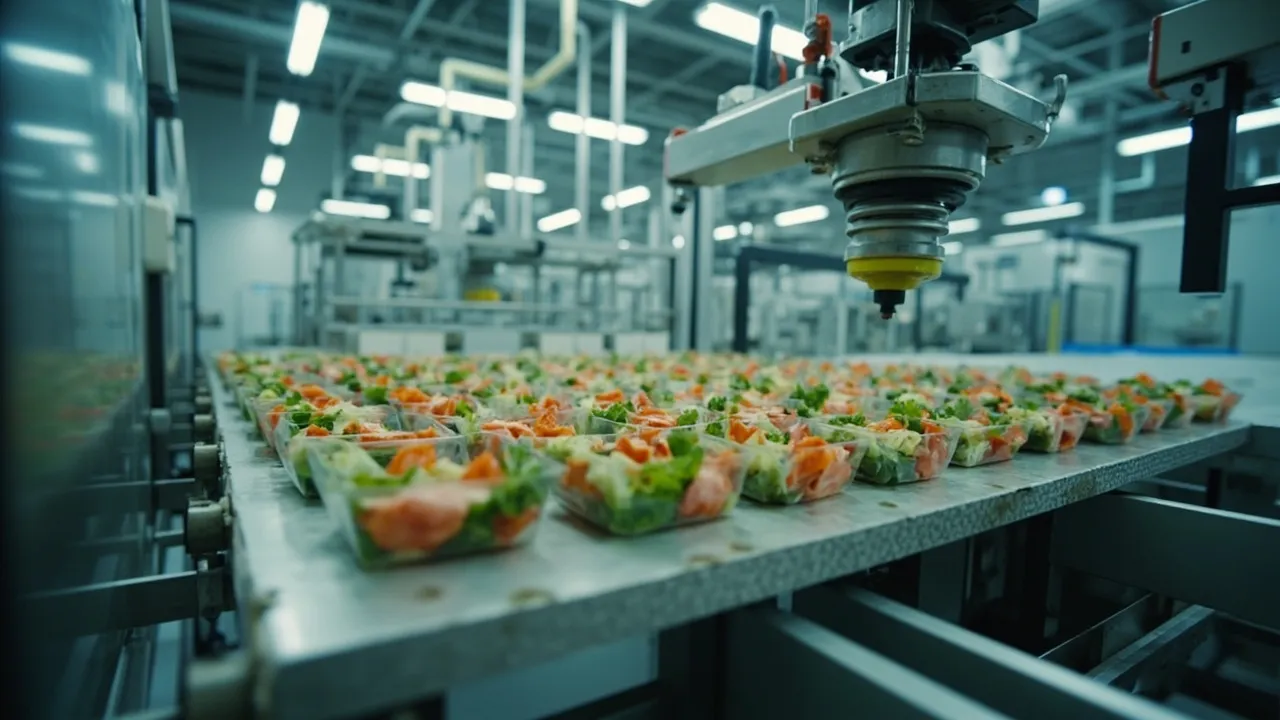
Mrs. Gerry's, a Minnesota producer of refrigerated salads and side dishes, offers a strong operating case. According to Modern Materials Handling, its manual packaging process required as many as 12 employees. A new automated line reduced that requirement to two or three people, supports approximately 36 million pounds of annual production, and reached full production within 10 days of installation.
Those results matter. But they should not be reduced to “nine or ten people saved.” Prepared-food plants need a throughput model that explains whether automation converts chilled product into saleable, traceable, dispatch-ready inventory more reliably.
Measure the constraint, not the fastest machine
The Mrs. Gerry's line creates a continuous flow from the spiral chiller through product orientation, case forming, case packing, sealing, and robotic palletizing. That end-to-end design is crucial. A high-speed case packer produces little value if it starves for correctly oriented bags, overwhelms palletizing, or builds finished inventory faster than refrigerated staging can absorb it.
Start with good output at the line's actual constraint. Track saleable cases per scheduled hour after subtracting sanitation, planned changeovers, minor stops, quality holds, and rejected packages. Units per minute can diagnose a machine, but good cases released per shift measures the operating system.
The baseline should include at least four weeks of representative production by SKU family. Record scheduled time, run time, good units, rework, scrap, staffing, and delayed releases. Separate chronic losses from unusual events. Otherwise, an acceptance test conducted on an easy, long production run may validate a rate the plant rarely achieves in normal mixed-SKU operation.
Treat changeovers as a first-class throughput metric
Mrs. Gerry's switches among products and package formats several times a day, including moves between 2-pound and 5-pound bags. That variability is where a nominally fast system can lose its business case.
Measure changeover from the last good unit of the outgoing SKU to the first good unit of the incoming SKU at stable rate. Break that interval into cleaning, tooling or recipe selection, film and label change, test production, quality approval, and ramp-up. The total matters, but the components show where improvement is possible.
Also measure first-pass yield during the first 15 to 30 minutes after restart. A quick mechanical setup followed by seal failures, label errors, or unstable weights is not a successful changeover. For each format, establish a target median time and a maximum acceptable time, then review the tail of the distribution rather than celebrating the best run.
Put quality and giveaway beside labor savings
Prepared-food packaging protects product, shelf life, and brand reputation. The throughput dashboard therefore needs seal integrity, checkweigher rejects, label accuracy, damaged bags, case-count errors, and quality holds alongside output.
Weight giveaway deserves its own measure. A line can meet case-rate targets while dispensing more product than the declared quantity requires. Track average net weight and variation by SKU and shift, then convert excess weight into annual ingredient cost. Even a small per-package overfill compounds across millions of pounds.
Automation can make performance more repeatable, but repeatability only helps when settings and materials are controlled. Record film lot, recipe version, temperature, seal parameters, and reject reason with the production lot. This evidence makes it possible to distinguish a machine problem from incoming-material variation or an incorrect setup.
Connect production lots to the refrigerated dispatch clock
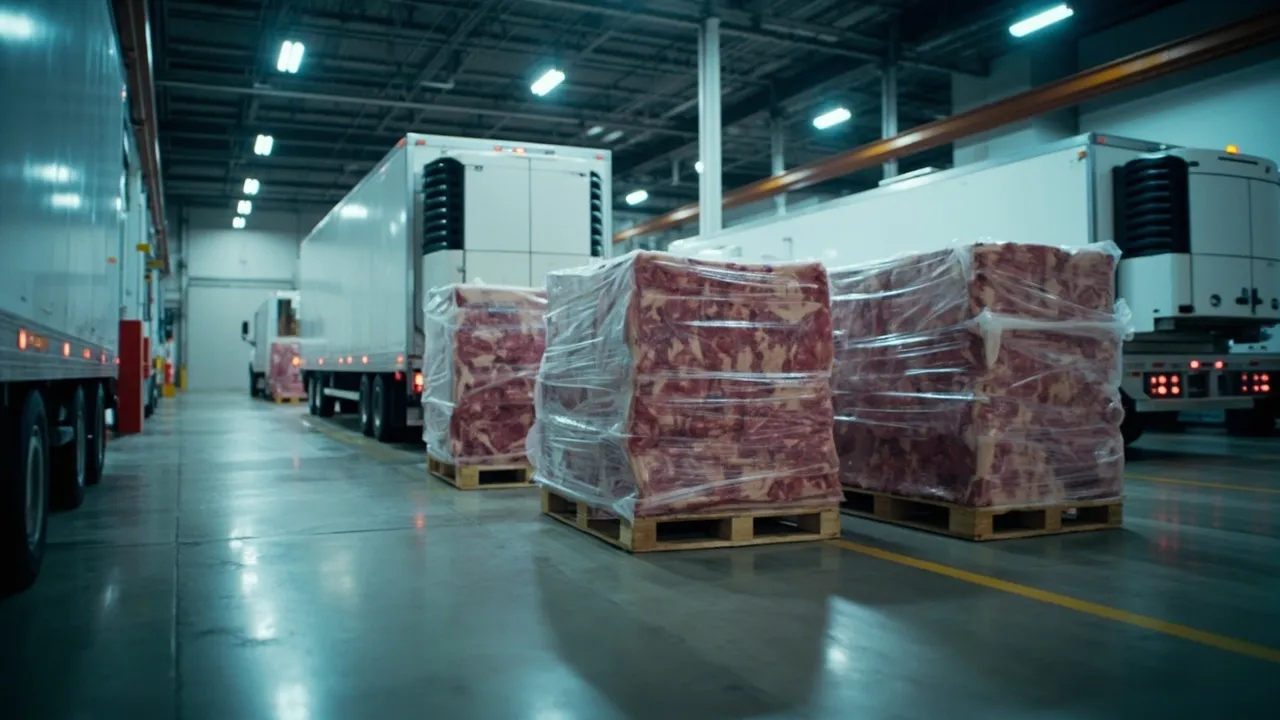
For chilled prepared foods, a finished pallet is not truly complete until it is released, staged at the right temperature, assigned to an order, and loaded before its cutoff. Packaging data and transportation data should therefore share the same lot and pallet identifiers.
Track the time from chiller exit to packaging completion, quality release, refrigerated staging, and trailer loading. Flag dwell that consumes shelf life or causes a shipment to miss its appointment. A line that increases output but creates a staging queue may simply move the bottleneck downstream.
This broader view aligns with Food Logistics' discussion of food-and-beverage automation, which describes a connected flow in which product is packaged, cased, palletized, stored, and delivered to shipping docks with each step electronically controlled and traceable. The operational prize is not isolated machine speed; it is coordinated flow.
Dispatch planning should ingest expected completion times by lot, not just daily production totals. If a changeover slips or a quality hold opens, transport planners need the revised pallet-ready time before tender and appointment decisions become expensive. Conversely, packaging supervisors need visibility into trailer cutoffs and available refrigerated capacity so they can sequence urgent orders intelligently.
Use a phased acceptance test
Mrs. Gerry's reached full production within 10 days—an impressive ramp-up that underscores the value of a defined acceptance plan. Other plants should resist declaring success after one supplier-led demonstration.
Use four gates:
- Factory and installation verification: confirm safety, recipes, interfaces, sensors, reject handling, and recovery after a stop.
- Rate and quality test: run a representative SKU long enough to measure sustained good output, seal quality, giveaway, and minor stops.
- Mixed-SKU shift: perform normal changeovers with plant operators, sanitation routines, actual materials, and downstream pallet movement.
- Cold-chain dispatch test: trace lots through quality release, staging, order allocation, and on-time trailer loading.
Define pass/fail thresholds before testing. Include sustained good-case rate, maximum changeover time, first-pass yield, unplanned downtime, staffing, reject rate, data capture, and recovery time. Run the system across different crews and shifts. Close critical defects before adding more SKUs; do not hide unfinished integration behind an average throughput figure.
Build the business case around controllable flow
Labor reduction may fund the project, but reliable flow determines its lasting value. Review weekly performance by SKU family and compare it with the original baseline. Quantify labor hours, overtime, output, giveaway, scrap, quality holds, shelf-life loss, missed pickups, and premium freight. That scorecard shows whether automation improved the entire fulfillment path or only one production step.
CXTMS connects planned orders, refrigerated capacity, shipment cutoffs, lot-linked milestones, and exceptions so production gains translate into dependable customer delivery. Request a CXTMS demo to see how transport visibility can turn packaging output into controlled cold-chain throughput.