Norfolk Southern’s Houston Environmental Exposure: Add Remediation Events to the Rail Shipment Record

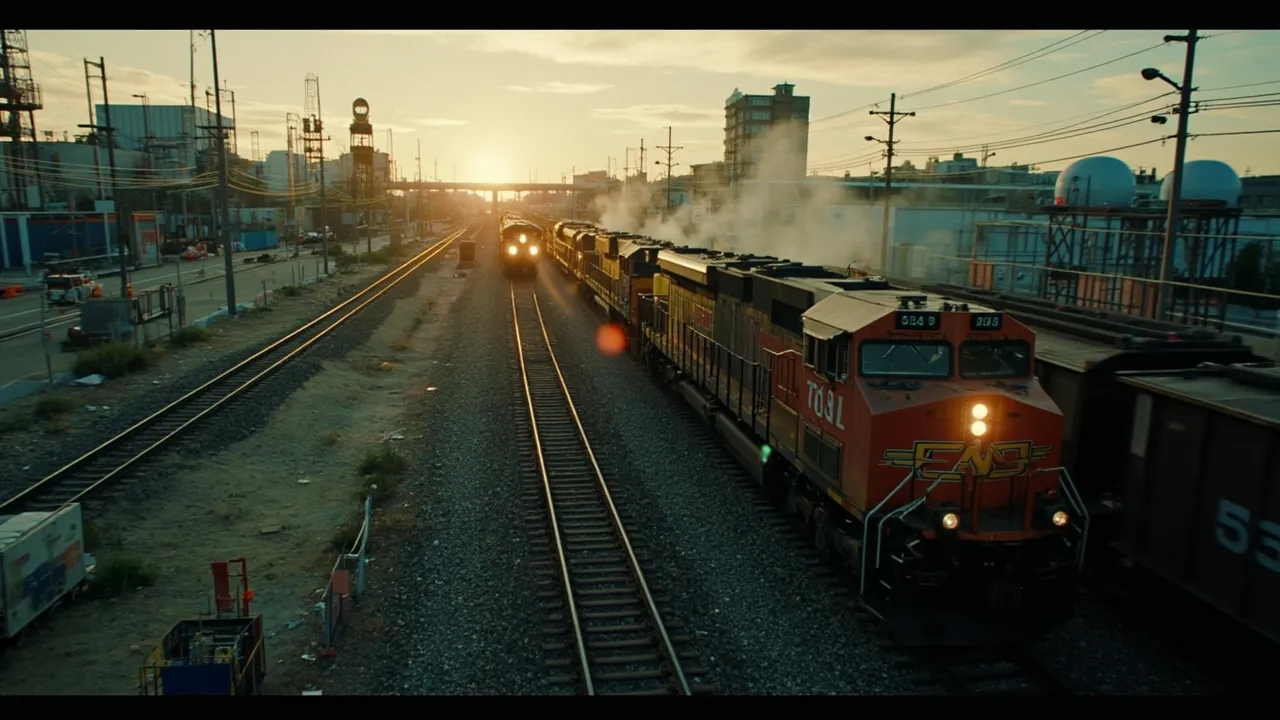
Environmental remediation near an active rail corridor is not merely a legal matter. It can alter site access, inspections, switching windows, crew movements, interchange performance, and the confidence behind a promised delivery time. Shippers therefore need remediation events in the same operational record as rail milestones—not isolated in an environmental team's files.
The ownership details matter. Houston's Fifth Ward wood-preserving site is a Union Pacific legacy asset, not a Norfolk Southern property. Norfolk Southern enters the Houston risk discussion through Union Pacific's proposed acquisition of the eastern railroad and the operating dependencies that a combined network would create. Reuters reported that regulators paused review of the proposed $85 billion transaction in May 2026 while seeking more information, including within the environmental-review process. In August, Reuters reported that the review had resumed.
That distinction is more than a footnote. It demonstrates why shipment systems must identify the actual asset owner, operating carrier, interchange carrier, affected geography, and source of a restriction. A shipper should not label a Houston incident "NS disruption" if Union Pacific owns the location. But if the shipment depends on a future combined service plan, an NS-origin lane, or an interchange feeding Houston, the exposure still belongs in the shipment's risk model.
Map the operational radius, not just the cleanup boundary
A remediation map drawn for environmental compliance will not automatically show which freight is vulnerable. Logistics teams should overlay the affected property with yards, industry tracks, customer sidings, terminals, grade crossings, crew access points, and interchange routes. Then connect every active and planned shipment touching those nodes.
Start with lanes and commodities. Hazardous materials, temperature-sensitive cargo, export cutoffs, automotive sequences, and high-value loads require different escalation thresholds. Record the origin and destination, serving and interchanging carriers, planned yard sequence, commodity code, car type, promised date, and customer-specific constraints.
Next, identify operational dependencies that sit outside the formal site. A truck entrance may be open while a sampling crew limits access to a nearby track. A train may pass through the corridor but lose its normal switching window. A yard may accept cars while an alternate interchange accumulates dwell. Those are material service changes even when no track is formally closed.
The proposed Union Pacific–Norfolk Southern transaction magnifies the need for precise dependency records. Reuters has reported that the merger would create the first coast-to-coast U.S. freight rail network and that regulatory review could take roughly 12 to 18 months. Shippers should not assume a future network design or approval outcome. They should document today's handoffs and model proposed ones as scenarios.
Give remediation events operational fields
A useful remediation event is structured data, not a PDF attachment. Each event should contain:
- The affected facility, track, gate, yard zone, or interchange
- The authority or responsible party issuing the notice
- Start time, expected end time, review time, and confidence level
- Restriction type: closure, speed limit, inspection, escort, access control, or reduced operating window
- Affected commodities, equipment, trains, customers, and shipment IDs
- Required evidence, including permits, release documents, inspection results, and chain-of-custody records
- Alternate route or interchange, capacity limit, incremental transit time, and cost
- Owner for carrier coordination and customer communication
These fields convert a broad environmental concern into executable exceptions. A location-based rule can flag every car scheduled to enter the operational radius during the event window. A commodity rule can raise the priority for regulated loads. A time rule can identify shipments whose new estimated arrival will miss a vessel cutoff, production slot, or customer appointment.
Confidence must be explicit. "Expected to reopen Tuesday" is not the same as a confirmed unrestricted release. Preserve the source, timestamp, and confidence behind each status so dispatchers do not turn a provisional estimate into a customer promise.
Build early warnings around changing access
The first useful signal is often not a closure. It may be a notice of expanded sampling, a contractor mobilization, a regulator inspection, a revised work plan, or a change in site-access hours. Link those notices to future shipment demand before service deteriorates.
Practical triggers include a missed switch, an interchange dwell increase, a track-inspection notice, a restriction overlapping a planned arrival, or an alternate gateway reaching a capacity threshold. The response should be proportional. Some events require monitoring only; others justify holding a car at origin, changing the interchange, shifting to truck for the final leg, or notifying a customer that the commitment is at risk.
Measure the response with operational metrics: cars exposed, hours of added dwell, missed appointments, reroute acceptance rate, incremental cost, and time from notice to customer communication. That evidence helps teams improve thresholds instead of reacting to every notice with the same level of urgency.
Preserve custody through a contingency move
Environmental restrictions can create extra handoffs precisely when documentation quality matters most. Every reroute should retain the car number, seal status, commodity description, hazardous-material documentation when applicable, inspection results, interchange timestamps, and identities of the parties accepting custody.
The contingency workflow should begin with an impact assessment, identify authorized alternatives, confirm capacity with the carrier, record commercial approval, update the ETA, and send a consistent customer notice. If no viable route exists, the system should name a safe hold point and the conditions required for release. Email threads alone cannot provide that control or a reliable audit trail.
Treat environmental status as shipment visibility
Rail visibility is incomplete when it shows car locations but omits the conditions governing whether those cars can move. Houston's remediation issues—and the uncertainty surrounding a proposed transcontinental rail combination—show why ownership, environmental events, network dependencies, and shipment milestones must be connected.
The result is not a prediction that every cleanup event will stop service. It is a disciplined way to identify exposed freight early, distinguish confirmed restrictions from rumors, preserve chain of custody, and communicate before a missed milestone becomes a surprise.
Ready to connect rail exceptions, alternate routes, documents, and customer updates in one workflow? Request a CXTMS demo to see how structured shipment records support faster, defensible contingency decisions.