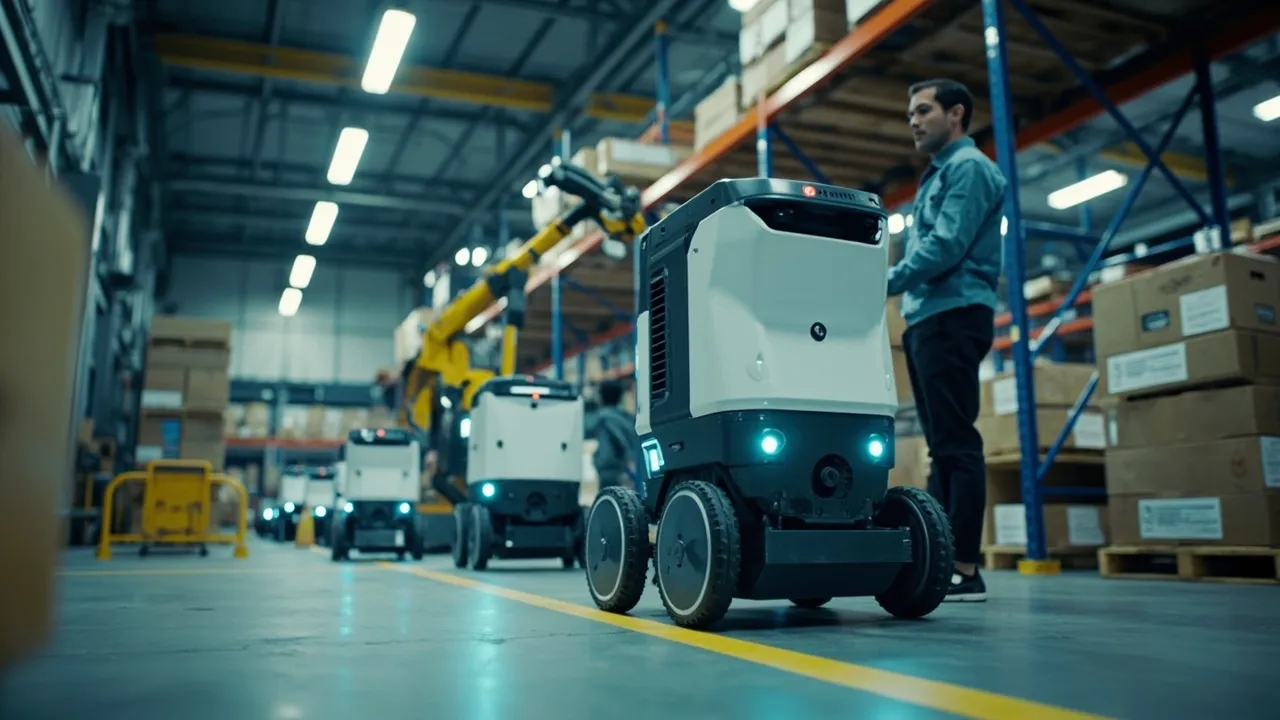
Material-Handling Robotics Training Needs a Verified Skills Matrix

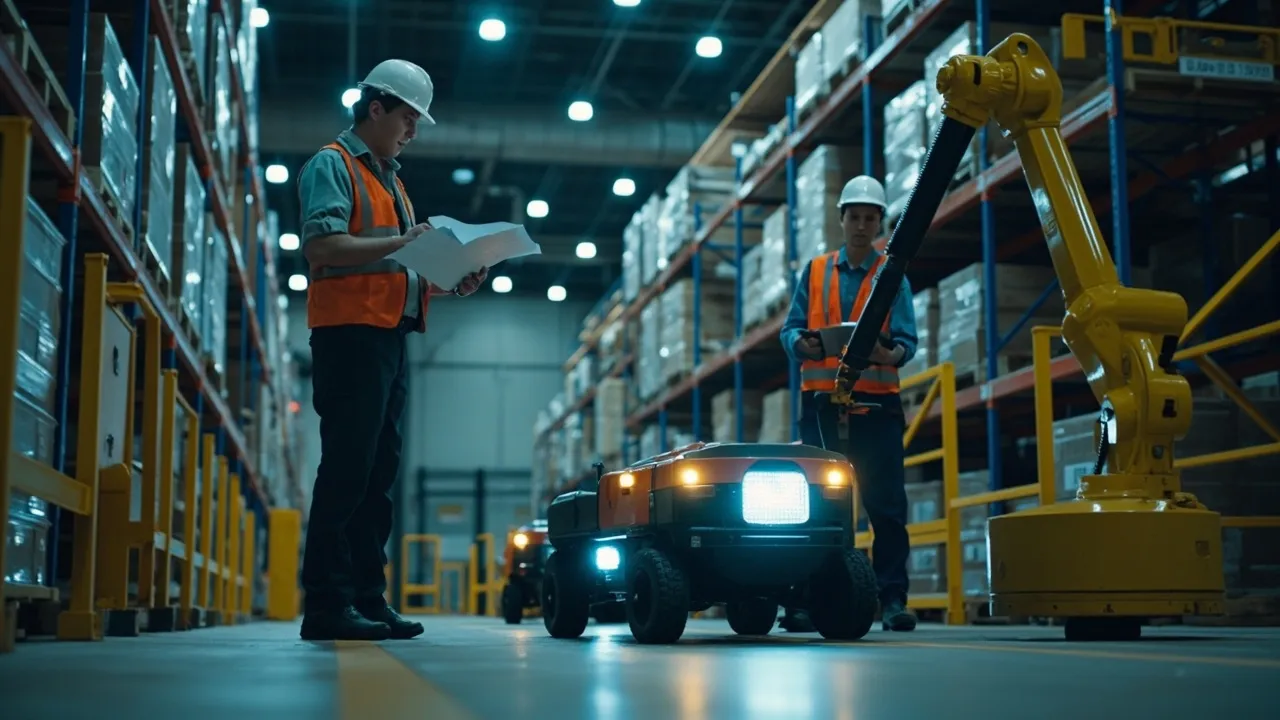
Buying warehouse robots is a capital decision. Operating them reliably is a workforce-system decision. Too many distribution centers treat the second problem as a vendor-led training event: employees attend a class, names go into a spreadsheet, and the project moves toward go-live.
That record proves attendance. It does not prove that every shift can recover a stopped robot, isolate hazardous energy, diagnose a controls fault, or escalate a vendor issue with the right evidence. A verified skills matrix closes that gap by connecting each person, role, competency, equipment class, and authorization date to the operation the facility expects them to perform.
Robotics adoption is moving faster than training governance
The need is becoming more urgent as adoption grows. A 2025 Logistics Management outlook survey found that 13% of responding companies used robotic solutions such as industrial robots or articulating arms, up from 10% the prior year. Another 32% planned to evaluate those systems, up from 24%. Those increases represent more sites entering the difficult transition from demonstration to daily production.
The scale of the upside also raises the cost of weak readiness. Reuters reported on a logistics network using 5,000 robotic order pickers and achieving a 180% increase in items picked per hour. When automation becomes that productive, an avoidable outage can strand a large share of a shift's planned throughput.
Training capacity is beginning to follow the technology. Modern Materials Handling reported that Northeast Texas Community College completed the Yaskawa Motoman Endorsed Robotics Instructor Training program. The school became a certified training center for YRC1000 Basic Programming and Basic Programming with Material Handling. That is important: local, hands-on instruction can make industrial robotics skills more accessible to both students and nearby manufacturers.
But a certificate is an input to operational readiness, not the final control.
Separate five competency layers
A useful skills matrix should distinguish what employees are trained and authorized to do. Combining everyone under “robotics trained” creates unsafe assumptions and slow response during a failure.
Operators need to understand normal startup and shutdown, human-machine interface messages, safe interaction zones, replenishment rules, obstruction removal limits, and when to stop rather than intervene. Their qualification should be specific to the robot type and work area.
Technicians need mechanical and electrical inspection skills, preventive-maintenance procedures, component replacement limits, lockout/tagout knowledge, and structured fault diagnosis. A technician qualified on conveyors is not automatically qualified on an autonomous mobile robot or robotic arm.
Controls specialists need authorization for programmable logic controller logic, safety circuits, network communications, sensor calibration, backups, and change control. Their matrix should identify whether they may observe, reset, modify, test, or release a system back to production.
Safety personnel must validate risk assessments, guarding, safe zones, emergency stops, energy isolation, near-miss reporting, and post-change reviews. This competency cannot be reduced to general warehouse safety training.
Vendor-escalation owners need a different operational skill: capturing alarm codes, logs, timestamps, software versions, photos, recent changes, and production impact before opening a case. They also need to know support entitlements, severity definitions, contact paths, and response commitments.
Make every authorization verifiable
For each employee and equipment family, record the required course, practical assessment, assessor, completion date, expiration or review date, permitted actions, shift, and facility. Link supporting evidence rather than relying on a free-text note.
Practical validation matters. An operator can demonstrate a safe recovery from a staged obstruction. A technician can diagnose a simulated sensor failure. A controls specialist can restore an approved backup in a test environment. The result should be pass, conditional pass, or retraining required, with the observed evidence retained.
This approach aligns with MHI's implementation guidance. Its discussion of robotics implementation emphasizes training employees during the pilot phase and then integrating robotics with WMS, TMS, and other digital infrastructure as deployment scales. Training should therefore follow the same staged model as the technology: validate capabilities in the pilot, close gaps, and authorize production work only after evidence is complete.
Measure readiness by shift, not by headcount
“Ninety percent trained” can hide the fact that the overnight shift has no controls coverage. Build a readiness score around required coverage:
readiness = fully covered role-equipment-shift cells / total required cells × 100
If a site requires operator, technician, safety, controls, and escalation coverage across three shifts, it has 15 minimum coverage cells before accounting for different robot families. A cell counts as ready only when the required number of currently authorized people are scheduled and an approved backup exists.
Set a commissioning threshold before the installation begins. For example, require 100% coverage for safety and operator cells, full primary coverage plus an on-call path for controls, and at least two qualified technicians across operating hours. Track certification expiry, vacations, transfers, and turnover because readiness can fall after go-live.
The matrix should also connect to maintenance response. Compare mean time to acknowledge and mean time to recover by shift, fault type, and qualification coverage. If trained shifts recover faster, the evidence supports targeted cross-training. If they do not, the gap may be documentation, spare parts, system design, or vendor response rather than employee skill.
Turn the matrix into a commissioning gate
Before go-live, ask four direct questions: Is every required task assigned to an authorized role? Does every operating shift have primary and backup coverage? Can the team demonstrate the highest-risk recovery scenarios? Can an escalation owner deliver a complete vendor case without searching across emails and binders?
If any answer is no, the facility is not operationally ready—even if installation is complete. A verified matrix makes that risk visible early enough to add instruction, adjust schedules, narrow permissions, or extend vendor support.
CXTMS helps logistics teams connect operational responsibilities, shipment workflows, exceptions, and performance evidence in one environment. Request a CXTMS demo to see how disciplined execution data can support more reliable automation-enabled logistics operations.