Smarter Yard Spotting and Shuttling: 10 Controls That Reduce Dock Delay

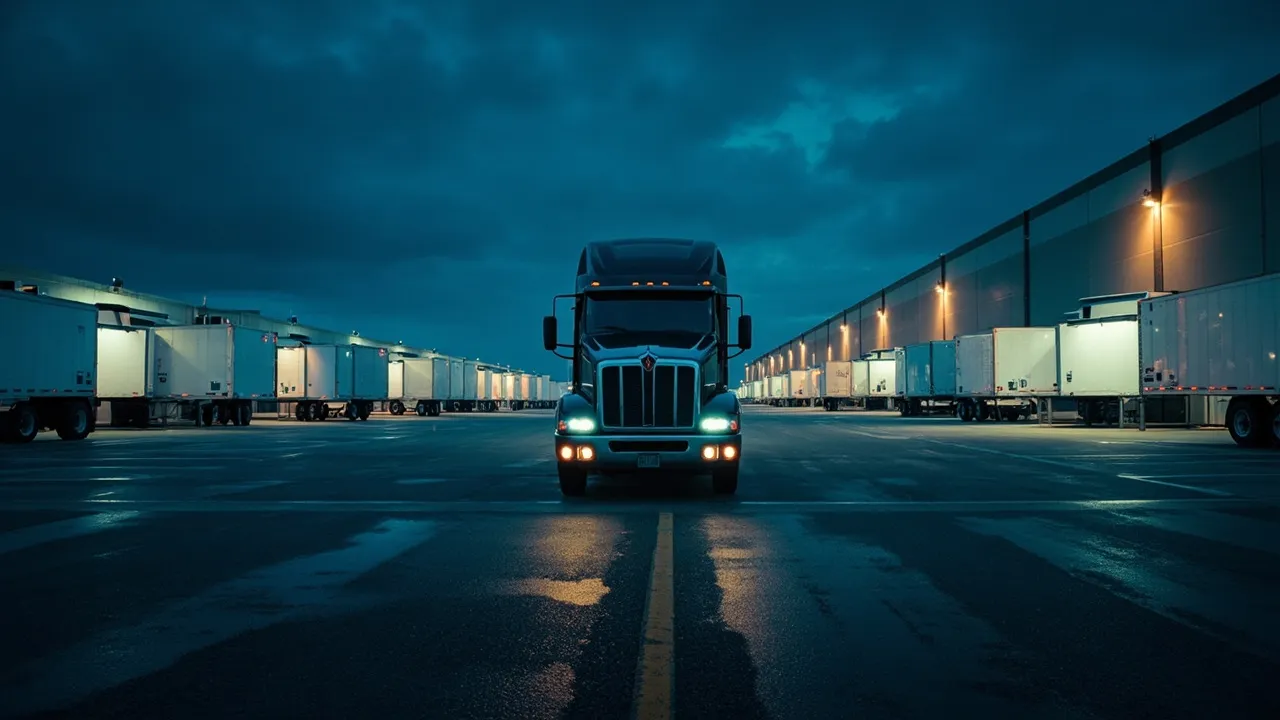
A loaded trailer can arrive on time and still miss production. The failure often happens in the last few hundred yards: the trailer is parked in the wrong row, the move request sits in a radio queue, an empty occupies the needed door, or nobody can prove when responsibility changed hands.
Spotting and shuttling deserve the same operational discipline as linehaul transportation. Spotting covers moves within a facility yard, typically between staging positions and dock doors. Shuttling connects nearby plants, warehouses, overflow lots, or drop yards. Yard moves are not over-the-road capacity, but they directly determine whether that capacity waits, departs, or generates detention.
The solution is not simply adding more terminal tractors. It is controlling the flow of trailers, requests, appointments, and labor as one measurable system.
Why Yard Delay Persists
The yard remains unusually dependent on manual coordination. A 2025 industry update from Logistics Management found that respondents identified inefficient manual processes as a leading dock-and-yard challenge at 39%, followed by yard congestion at 36%, labor shortages at 35%, and lack of real-time visibility at 31%.
Those problems reinforce one another. A dispatcher without reliable trailer locations sends a driver searching. Search time reduces available labor. Fewer productive moves create congestion, which makes locations harder to maintain and appointments harder to protect.
Good providers bring more than drivers and equipment. Inbound Logistics recommends selecting a spotting and shuttling partner around service, safety, visibility, scalability, and continuous improvement. Shippers should translate those principles into controls that can be observed every shift.
Ten Controls for a Faster, Safer Yard
1. Define Responsibility at Every Boundary
Document who owns the trailer at gate arrival, check-in, staging, move assignment, dock placement, unloading completion, empty release, and departure. Define whether the spotter, shuttle provider, warehouse team, or over-the-road carrier acts at each point. This prevents a late move from becoming an argument between vendors.
2. Give Every Trailer One Current Location
Use a standardized location hierarchy—facility, zone, row, slot, and dock door—and require confirmation after every move. A trailer should never appear simultaneously “at door” in the warehouse workflow and “in staging” on the yard board. Record seal, load status, equipment type, and damage condition with the position.
3. Create Digital Move Requests
Replace calls, texts, and radio-only instructions with timestamped tasks. Each request needs a trailer, origin, destination, priority, reason, requester, and required-by time. The system should record creation, acceptance, arrival, completion, and cancellation so delay can be assigned to a real interval.
4. Set a Call-to-Door Service Level
Measure elapsed time from move request to confirmed placement at the door. Inbound Logistics reports that strong spotter teams typically hold move times inside 15 minutes from call to door. A facility may need different targets by priority, but every target should include an escalation threshold and owner.
5. Link Appointments to Trailer Readiness
An appointment is not operationally ready merely because its time has arrived. Confirm that the trailer is checked in, its location is known, the assigned door is available, labor is ready, and the load has cleared any hold. Trigger the move early enough to protect the door start rather than requesting it after the dock team begins waiting.
6. Control Door Dwell
Capture door-in, work-start, work-complete, and door-out timestamps. These distinguish yard delay from warehouse delay. Establish maximum intervals for unloading-to-release and release-to-empty-removal. An empty trailer left at a door consumes capacity just as effectively as a late inbound.
7. Prioritize With Explicit Rules
Define the order for production-critical parts, temperature-controlled freight, live unloads, outbound cutoffs, detention exposure, and routine drop loads. Dispatchers should manage exceptions, not continually rebuild the queue from memory. If two moves share a priority, use required-by time and request age as tie-breakers.
8. Build Safety Into Task Completion
Require pre-use equipment checks, speed and route compliance, trailer brake and landing-gear verification, dock-lock confirmation, and damage capture. Track near misses alongside recordable incidents. Move volume without safety context rewards the wrong behavior; productivity should be reported only with compliance and incident rates.
9. Score the Provider on Outcomes
A weekly scorecard should include median and 90th-percentile response time, on-time door placement, productive moves per labor hour, empty availability, detention events, damage claims, safety exceptions, task cancellations, and location accuracy. Segment results by shift and facility zone so averages do not hide recurring trouble.
10. Run a Closed Improvement Loop
Review the worst delays with their event history, reason code, and accountable process. Fix repeat causes such as premature requests, blocked lanes, unavailable doors, missing empties, or unplanned shuttle peaks. Assign an owner and due date, then test whether the relevant metric improves. Continuous improvement needs a verified before-and-after result, not a list of observations.
Connect the Yard to Transportation Execution
The highest-value workflow links four event streams: dock appointments define demand, gate events establish arrival, trailer locations establish readiness, and move tasks execute the plan. When those streams share identifiers and timestamps, operators can see whether a late departure began with a carrier arrival, a yard move, a dock process, or a release delay.
CXTMS can provide the transportation context around that workflow: shipment status, appointment commitments, carrier responsibility, exceptions, and detention evidence. That makes the yard part of end-to-end execution instead of an operational blind spot between the gate and the warehouse.
The practical goal is simple: the right trailer, at the right door, before labor begins waiting—and a complete event record when performance misses the mark.
Ready to connect yard milestones with transportation execution? Request a CXTMS demo and see how one governed workflow can improve visibility, accountability, and dock performance.