USPS–UPS Volume Is Raising Postal Transport Costs: Build a Tender-Level Cost Ledger

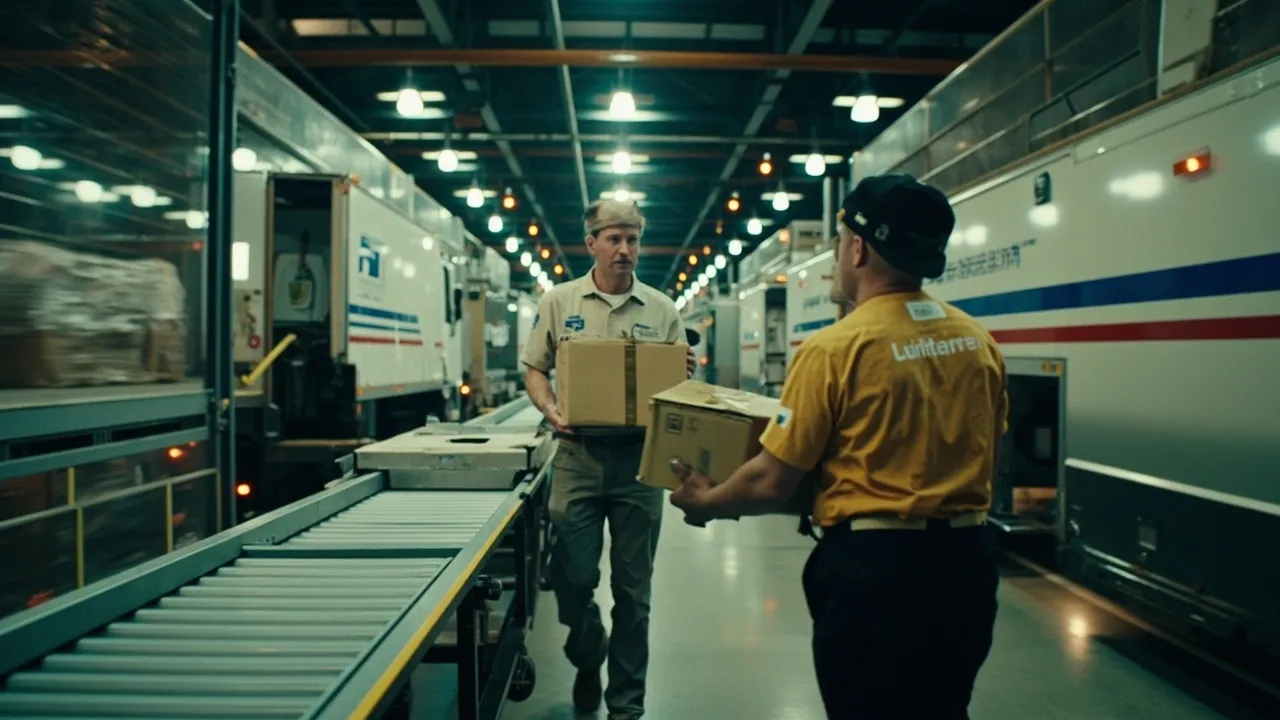
Parcel networks can gain volume and still lose economic clarity. The renewed relationship between UPS and the U.S. Postal Service is a sharp example: millions of daily parcels can improve asset utilization in one part of the network while increasing linehaul, handling, and service-compliance costs elsewhere.
For parcel shippers, the lesson is not to guess whether a carrier's network is becoming more or less efficient. It is to maintain a tender-level cost ledger that shows which shipment characteristics create cost, where those costs enter the journey, and whether the final commercial result remains profitable.
One contract can reshape two transportation networks
UPS began handing Ground Saver packages to USPS again in January 2026. According to Supply Chain Dive's reporting on the ramp-up, UPS tendered about 977,000 parcels per day to USPS in the first quarter, equal to roughly 44% of Ground Saver volume. The planned second-quarter level was approximately 1.5 million parcels per day.
That handoff can lower UPS's last-mile cost per piece by placing qualifying economy parcels into the postal delivery network. Yet the relationship has another dimension: USPS also relies on UPS for air transportation. Meeting volume commitments and service standards can require the Postal Service to change its mode mix, even when the network's broader strategy favors lower-cost ground transportation.
In the quarter ended June 30, USPS air transportation expense between facilities rose 4.7% year over year to $509 million. Highway transportation expense increased 4.1% to nearly $1.6 billion. Supply Chain Dive attributed the increases to higher fuel prices and a shift of certain package volume from highway to air to meet service standards and contract requirements.
Those figures describe network expense, not the profitability of any specific parcel. That distinction matters.
Network cost is not shipment profitability
A quarterly increase in air expense does not prove that every air-routed shipment is unprofitable. Likewise, a dense last-mile induction does not guarantee an attractive margin. Profitability depends on the revenue and attributable costs attached to each tender, including the operational consequences of its promised service.
Consider two parcels with identical weight and dimensions. One is inducted near its destination, moves through a dense zone, and arrives with no exception. The other enters several zones away, misses a planned connection, moves by air to protect its service commitment, and requires manual handling after a label defect. A network-level average can hide the large cost difference between them.
The renewed Ground Saver agreement illustrates this commercial tension. After UPS brought all Ground Saver deliveries in-house in 2025, it raised service rates by nearly 10% on average. Supply Chain Dive reported that the renewed postal handoff should reduce UPS's cost for some volume, but that did not automatically mean lower shipper rates.
A shipper therefore needs its own evidence rather than treating a carrier's average cost improvement as a promised discount.
The minimum viable tender-level ledger
The ledger should assign a durable identifier to every parcel tender and preserve the commercial quote alongside actual operational events. At minimum, capture five field groups:
- Tender: tender ID, ship date and time, customer, origin, destination, billed weight, dimensions, product, quoted charge, contract version, and manifest ID.
- Induction: facility, induction timestamp, entry method, label type, scan quality, presort level, and the party transferring custody.
- Zone: origin and destination ZIP Codes, calculated zone, delivery density class, rural or extended-area indicators, and any address correction.
- Equipment and mode: planned and actual linehaul mode, trailer or air container, route, capacity allocation, fuel basis, and every mode conversion.
- Service: committed date, actual delivery, transit days, exception codes, rehandling events, claims, refund eligibility, and final-mile provider.
The ledger should then reconcile quoted revenue with base transportation, fuel, handling, accessorial, exception, claim, and adjustment costs. Keep both the original plan and the actual journey. Overwriting planned mode with actual mode destroys the variance evidence needed to explain why a shipment became expensive.
Convert the ledger into early-warning metrics
Shippers should monitor the ledger weekly rather than waiting for a carrier announcement or quarterly invoice review. Five measures deserve priority:
- Air-conversion rate: the percentage of parcels planned for ground that ultimately move by air, segmented by product and lane.
- Cost per tender: total transportation and handling cost divided by accepted tenders, with separate views for zones, induction points, and service levels.
- Exception cost per piece: rehandling, address correction, relabeling, and claims expense assigned to affected shipments.
- Contribution margin by lane: net shipment revenue minus attributable cost, not simply the difference between quoted and base rates.
- Service-cost elasticity: the cost change required to gain one point of on-time performance in each lane or customer segment.
Add alert thresholds for rapid changes. A persistent rise in air conversion, fuel cost per piece, manual-handling incidence, or cost-to-serve for lightweight parcels can precede new surcharges, tighter parcel-measurement enforcement, or a service redesign. USPS's 8% temporary package price increase in April 2026 is a useful reminder: pricing can move quickly when fuel and network pressures converge. In the third quarter, USPS package shipping revenue rose 7.7% year over year even as volume declined 3.4%.
Make contract reviews evidence-based
A tender ledger gives procurement and operations the same fact base. Procurement can model a proposed surcharge against actual shipment attributes. Operations can see whether late induction, poor label quality, or unexpected mode conversion caused the variance. Finance can reconcile invoices without forcing every anomaly into an average cost bucket.
It also improves negotiations. Instead of arguing that rates “feel high,” a shipper can identify the exact zones, induction methods, and service promises where cost and performance diverge. That evidence supports targeted changes such as a later pickup price, a different induction point, revised eligibility rules, or a volume commitment limited to economically suitable parcels.
The USPS–UPS relationship will continue to evolve as volume, fuel, and service requirements change. Shippers cannot control that network redesign, but they can control whether its effects remain visible. A tender-level cost ledger turns a complex carrier relationship into measurable shipment economics.
Want clearer parcel costs from tender through delivery? Request a CXTMS demo to see how unified shipment events, charges, and exceptions support faster transportation decisions.